








Alpine solar panels could address Swiss energy gap
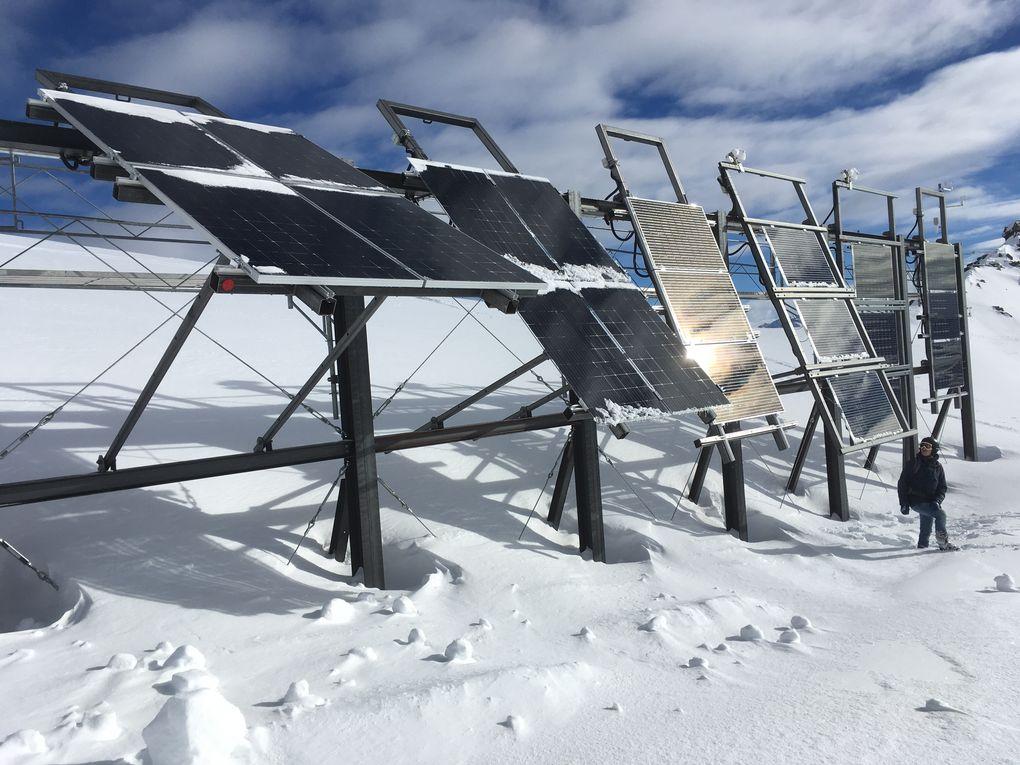
The snow-capped Swiss Alps may help compensate for projected energy shortfalls as the country switches from nuclear to renewable energy sources. Researchers propose erecting solar panels on mountain tops to bridge the energy gap.
New findings from the WSL Institute for Snow and Avalanche Research (SLF) and Lausanne’s Federal Institute of Technology (EPFL) suggest that alpine photovoltaic (PV) systems can provide a home-grown means of replacing a significant amount of lost power – particularly in winter. This is because mountains often poke above low-lying fog and panels at high altitudes can capture sun rays that bounce off the snow.
Such a system could maintain year-round solar power more efficiently than storing excess energy from low altitude photovoltaic panels, which are only effective in the summer, the researchers state.
Scientists used data captured by remote sensing satellites to estimate how much solar radiation reaches the ground across the country. They are also testing solar panels in the ski resort of Davos in southeastern Switzerland. The tests include finding the right angle at which to tilt panels to best capture solar radiation while allowing snow to naturally slide off them.
“Our study shows that PV systems in the mountains, compared with installations on the roofs of buildings in the Swiss Plateau, are much more capable of overcoming the supply shortfall,” said SLF researcher Annelen Kahl in a statement. “Per square metre, solar panels at high altitudes produce electricity not only in larger quantities, but also when it is needed.”
Switzerland has decided to decommission its five nuclear energy plants that provide one third of the country’s power. The plan is to fill this hole by reducing energy consumption and increasing the share of renewable sources by 2050.
But renewables, other than hydropower, currently account for under 3% of total energy output. Some research institutions, such as the Paul Scherrer Institute, suggest that the 2050 energy gap can only realistically be bridged by buying renewable energy from Europe through North Sea wind farms or solar plants in southern Europe.

In compliance with the JTI standards
More: SWI swissinfo.ch certified by the Journalism Trust Initiative

You can find an overview of ongoing debates with our journalists here . Please join us!
If you want to start a conversation about a topic raised in this article or want to report factual errors, email us at english@swissinfo.ch.