








Switzerland today
Greetings from Lausanne!
Talk has shifted from storms and floods to waves. Could Switzerland experience a fourth wave of Covid infections that is bigger than that of last autumn?
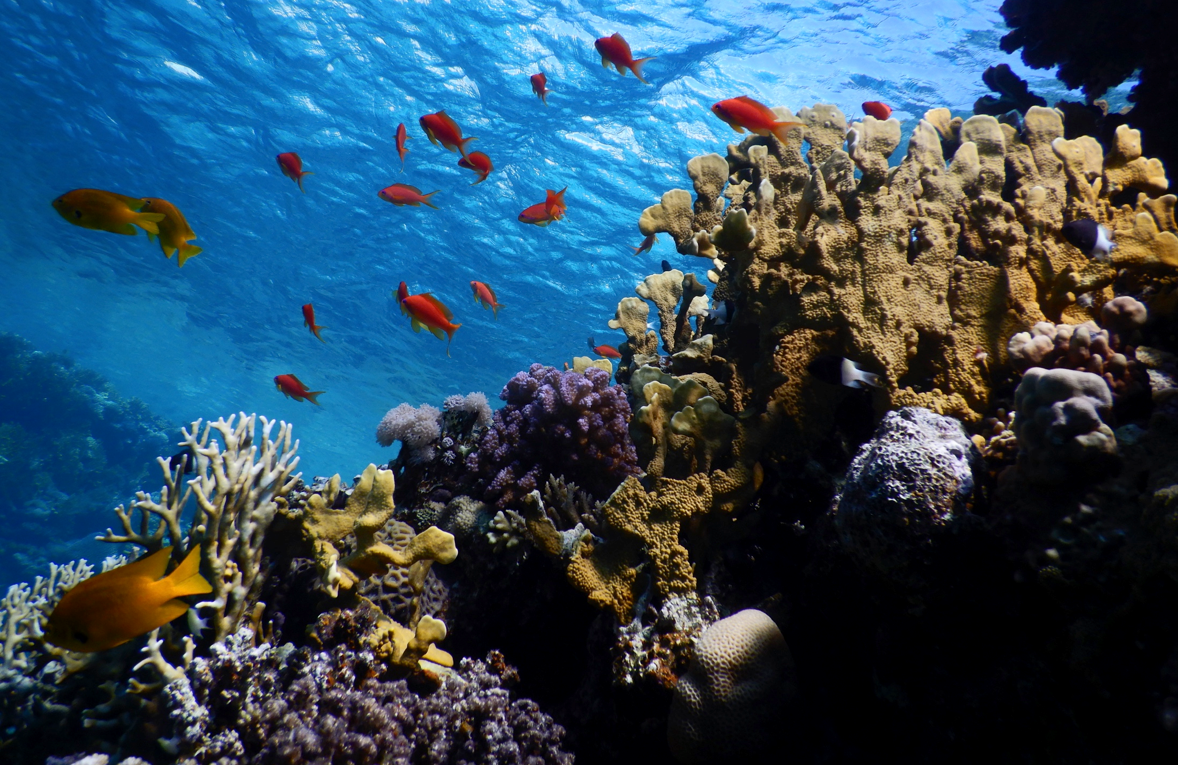
Today, we also look at how hikers and bikers are helping boost the economy. And we plunge into an international “science diplomacy” project in the Red Sea that aims to protect coral and encourage cooperation between neighbours.


From our news desk: Hiking, cycling and mountain biking have grown in popularity in recent years.
This is also good news for the economy. A new report shows that six out of ten Swiss adults regularly go hiking – a 20% increase compared to 2007. Hikers spend an average of CHF60 ($65.1) per day, pumping CHF3.6 billion into the economy.
Switzerland is due to pull the plug on FM radio by January 2023 and make the switch to digital audio broadcasting (DAB+). But some people are not happy with the idea. A petition signed by 60,000 people was lodged today asking the government to rethink its plans. They say if the change goes ahead the Swiss Broadcasting Corporation (SWI.swissinfo.ch’s parent organisation) won’t be able to fulfill its mandate of providing a radio service to the population.
Last week torrential rains hit Germany, initially mainly the western states of North Rhine-Westphalia and Rhineland-Palatinate. Thunderstorms at the weekend also hit parts of Bavaria and Baden-Württemberg in the south. At least 170 people have died in Germany’s worst natural disaster in more than half a century, and thousands were missing. Swiss citizens living in parts of Germany hard hit by the recent floods and storms can now access a relief fund run by the Organisation of the Swiss Abroad (OSA) in Germany.
Meanwhile, the levels of Swiss lakes and rivers continue to fall slowly but the situation remains tense. Officials are trying to drain as much water as possible out of lakes and rivers ahead of another weekend of predicted rainfall. “It will be weeks before the situation in the large rivers of the central Plateau region normalises. The Aare, the Limmat, the Reuss and the Upper Rhine [rivers] are affected,” David Volken, a hydrologist at the Federal Office for the Environment, told 20 MinutenExternal link.

What’s trending in Switzerland. Will there be a big fourth Covid wave this autumn after the summer holidays?
How can the authorities get more people vaccinated to fight the more contagious, fast-spreading Delta variant? Should school children get inoculated or should there be systematic tests? And could the use of Covid passes/certificates be extended to other indoor venues and sectors? These are just some of the burning coronavirus-related questions doing the rounds in the Swiss press and on social media.
Don’t miss this inspiring storyExternal link about Yves Auberson, a Swiss man who hiked over 1,100 kilometres across the Alps to raise awareness about Parkinson’s disease.
There are still many questions around Swiss sprinter AlexExternal link Wilson and whether he broke European and Swiss records last Sunday in the United States. After arriving back in Switzerland on Tuesday, the Basel-based athlete told SRFExternal link how he believes his new carbon spikes helped him clock 9.84 seconds in the 100m, and later run 19.89 seconds in the 200m (possible European and Swiss records). World Athletics has since withdrawn his name from its online list of fastest runners; Wilson’s times are still awaiting full validation by the relevant authorities.

Deep dive: Swiss scientific diplomacy sets sail to save Red Sea coral
Coral from the Red Sea is special for its ability to withstand the effects of climate change. But it is not safe from local pollution, overfishing or physical damage. The problem is that any action by one country in the region can rapidly affect neighbours. And those states – Israel, Saudi Arabia, Sudan, Eritrea and Yemen, as well as Jordan, Egypt and Djibouti – do not have easy relations with each other.
But a new “science diplomacy” project, led by Switzerland, aims to bring scientists from those countries together under a joint project to safeguard Red Sea coral. The project, called the Transnational Red Sea Research Center (TRSC), was created in 2019 together with Swiss Federal Institute of Technology (EPFL) to study and safeguard coral in the Gulf of Aqaba.
On July 13, the sailing ship “Fleur de Passion” – the TRSC’s logistical base – set off from Germany to the Red Sea with a team of international scientists on board. They want to better understand what makes the local coral resistant to rising temperatures. This unique mission seeks to pave the way for transnational collaboration in the region and establish a training network for young scientists. Read more about the project here.

Word from the street: What is the state of Swiss student mobility?
Erasmus+ is a European funding programme that offers university students the possibility of studying or doing an internship abroad in another country. Switzerland has been excluded from the Erasmus+ student exchange programme since 2014 following a vote targeting EU immigration. Campaigners have repeatedly called for the Swiss to re-join the scheme. A new opinion piece looks at the state of student mobility, especially following Switzerland’s recent rejection of the long-term framework agreement with Brussels.

In compliance with the JTI standards
More: SWI swissinfo.ch certified by the Journalism Trust Initiative
