








Switzerland Today
Dear Swiss Abroad,
Chilly regards from Bern. The temperature has dropped but things are looking up for Switzerland!
The Swiss passport has moved up in a passport index ranking and bankers are optimistic for the future of their industry in Switzerland. But are things as good as they seem?
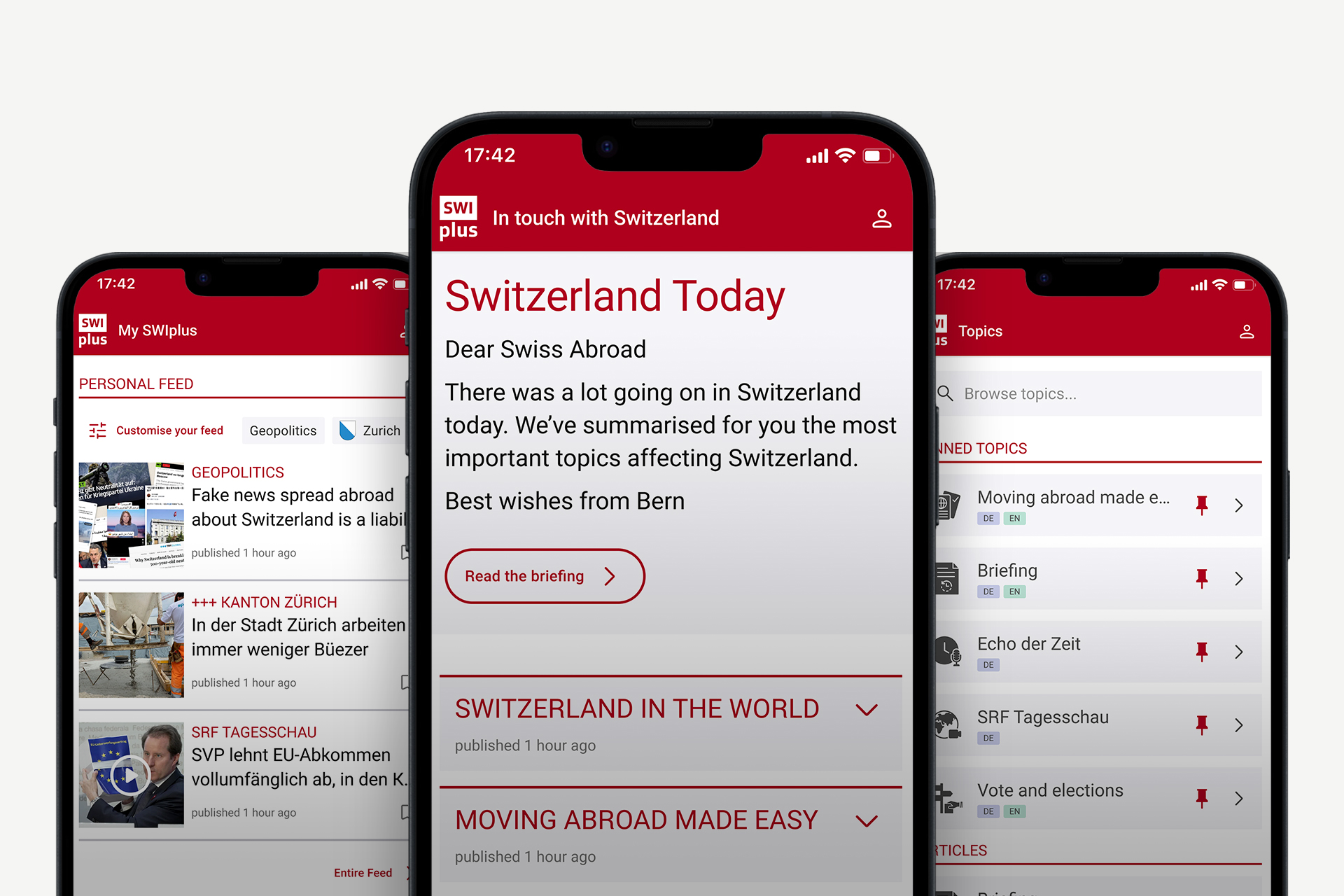
Also – do you want more exclusive stories from Switzerland? Download the SWIplus App for a variety of stories not found on swissinfo.ch. Find the link for our App below!
But first, a look at todays headlines – from Switzerland to you.

In the news: Berset could be headed to Strasbourg, big brother in Switzerland and how 34,000 years of genetics still affects our health today.
- Alain Berset candidates for Council of Europe Secretary General: the Federal Department of Foreign Affairs has spoken to Berset and says he is an excellent candidate.
- Swiss political alliance challenges motorway expansion with referendum: at the end of September last year, Parliament decided to build or expand motorways at a cost of CHF5.3 billion($6.2 billion). Today, the “stop motorway construction mania” alliance submitted a referendum against the expansion.
- Swiss government accused of massive online surveillance: the Swiss Federal Intelligence Service is allegedly monitoring the digital activities of the Swiss population, particularly on their mobile phones and computers, according to the German-language magazine Republik.ch.
- Genetics: 34,000-year-old genes influence our health, with scientists saying they are astonished by the results.
- Cost of living: price watchdog receives most complaints since 2012. “Last year, I received a total of 2,400 complaints, almost twice as many as in 2021,” said the price watchdog in September.
- Chinese Premier Li Qiang to visit Switzerland: he will meet Defence Minister Viola Amherd, who holds the rotating Swiss presidency this year. However, the defence ministry declined to comment on the content of the talks.
Passport travel freedom index
The Henley Passport Index, which has tracked passport travel freedom for the past 19 years based on data from the International Air Transport Association (Iata) has ranked the Swiss passport as the fifth best passport in the world, along with the Greek and Maltese documents.
The Swiss passport ranking has improved by two places compared to previous years. In 2022 it ranked in place seven and last year at place six.
However, several online news media organisations see this as a negative for the small Alpine country. “The Swiss passport is only as good as the passport from Greece and Malta. The Swiss passport falls behind many other European countries,” writes Nau.chExternal link. Blick.ch mirrors this sentimentExternal link writing, “the Swiss passport continues to be one of the best in the world when it comes to global travel freedom. But it’s not enough for the top spot”.
A Swiss passport holder can travel to 190 countries without needing an entry visa or a visa on arrival. Lucky individuals with passports from France, Germany, Italy, Spain and Singapore enjoy visa-free entry on arrival to 194 countries around the world, making these the top passports for global freedom.
The Finnish, Swedish and South Korean passports come second in the ranking, followed by Denmark, Ireland and Austria in third. Fourth place in the ranking goes to Belgium, Great Britain, Luxembourg, Norway and Portugal.
Is there a country you would like to travel to but face visa restrictions?
More

Banking optimism
Swiss banks are doing better than they have for a long time, according to the “Banking Barometer 2024” published today by the consulting firm EY. “High interest rates, low value adjustments and the resilient Swiss economy will lead to record results for the banks surveyed in 2023,” is how Patrick Schwaller, Managing Partner Audit Financial Services, classifies the development.
The majority of banks are also optimistic about the coming years. The analysis writes that 87% of surveyed bankers expect an increase in operating profits. This number increases to almost 90% when asked about the future three or more years from now.
However, the emergency takeover of Credit Suisse by UBS last year will not be without consequences. This is understood in the sector, as the study also shows that the majority of banks expect financial market regulations to be tightened.
But after a tremulous past year and emerging in 2024 with a tarnished image, is it still considered a sexy profession by the younger generations?
SWI swissinfo.ch asked: Do young Swiss still want to become bankers?
Amato Pace, an 18-year-old apprentice in the banking industry from canton Solothurn has always wanted to go into banking. “From about the age of 12, I knew I wanted to be a banker,” Pace says. In Pace’s family, no one he knows is a banker. While he knew it was a slight exaggeration, Pace had somewhat imagined the world of Swiss banking to resemble the film The Wolf of Wall Street.
A SWI swissinfo.ch debate asked our audience: How attractive is banking as a career? A majority of the responses were negative, with one commentor saying “Banks have no future” and another commentor writing, “Bankers earn far too much money, receive too high benefits, and do too little work… My money would be better off under my bed, as there are no bank charges there”.
Although this negative image of banking seems prevalent with the SWI swissinfo.ch user community, a career in banking remains popular with students. In 2023, UBS ranked second behind Google in terms of popularity as an employer among Swiss business and management students, according to the annual survey conducted by Universum, an international specialist in employer branding. However, Credit Suisse, which was still in third place in 2022, plummeted to 13th place in the survey, which was conducted before the takeover.
“Students’ interest in the banking sector remains high,” confirms Rafael Giobbi, the head of education services at the Swiss Bankers Association. If you needed proof of this; all banking apprenticeship positions in the current year have been filled.
That’s not to say this positive trend will continue. Back in 2017, the Zurich University of Applied Sciences predicted that employment in the financial sector, including fintech and related industries, will halve by 2030 if Switzerland lags behind in technological innovation. And even if technological innovation progresses, a decline of 5-15% is still expected.
What industry do you think will have the most interest from students in the coming years?
More

More
The SWIplus app: your connection to Switzerland

In compliance with the JTI standards
More: SWI swissinfo.ch certified by the Journalism Trust Initiative
