








Experts predict Swiss franc will stay strong in 2026
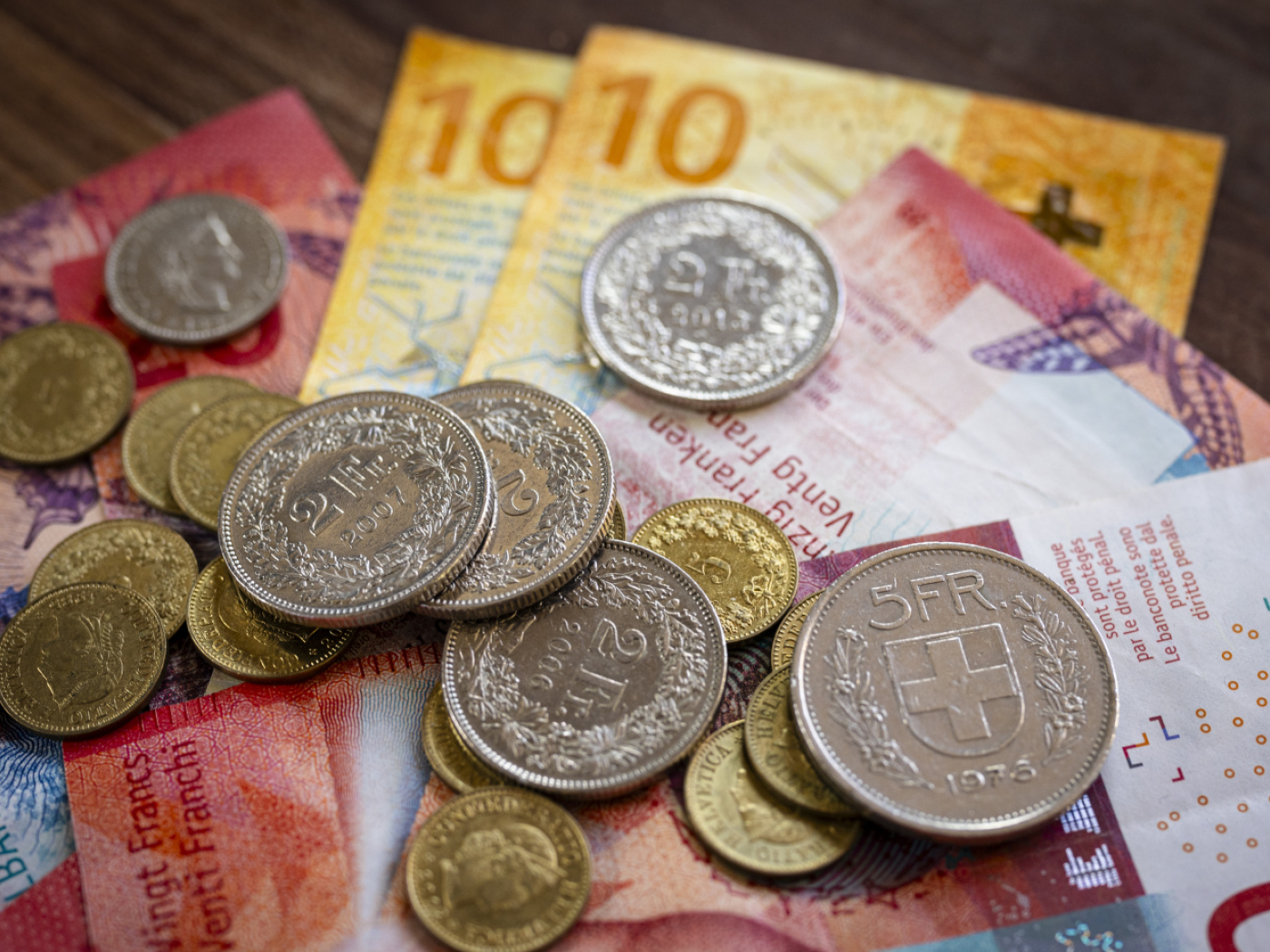
The Swiss franc is not weakening, despite the shock of the US tariffs that threatened to hit the Swiss economy. According to experts, the Swiss currency should continue its upward trend of recent years in 2026.
Select your language
Generated with artificial intelligence.
Listening:
Experts predict Swiss franc will stay strong in 2026
What are the arguments in favour of the franc?
Experts cite political stability, high current account surpluses, low debt, a strong and highly innovative economy and very low inflation in Switzerland as the main pillars of the franc. For these reasons, the franc has for decades been regarded as a safe-haven asset, highly prized in times of crisis.
+Get the most important news from Switzerland in your inbox
Thanks to the recent agreement reached in the customs dispute with the United States, Switzerland has also been able to eliminate a massive threat to its competitiveness in relation to other countries. This danger now seems to have been averted.
What could harm the franc?
The reintroduction of negative interest rates could weaken the franc. Recently, data on negative inflation and uncertainties on the financial markets and in the political arena have fueled speculation on this subject. But these were immediately dispelled by the Swiss National Bank (SNB). Negative interest rates have major side effects, particularly on pension provision, which the SNB wants to avoid.
And the dollar?
The dollar weakened sharply under the impact of US tariffs. Still at CHF0.9132 to the dollar at the start of January, the currency pair fell steadily to reach USD/CHF 0.78960 at the end of December.
But Thomas Stucki, head of investments at St Gallen Cantonal Bank, says to “beware of the dollar. If US President Donald Trump succeeds in taking control of the US Federal Reserve (Fed) and the appointment of Jerome Powell as the Fed’s successor raises fresh doubts about the Fed’s independence, this could further undermine confidence in the dollar”. Stucki believes that a fall in the exchange rate to 75 centimes would not be far off.
More
The world’s strongest currency is also super-competitive
While Valiant Bank expects the Fed to cut interest rates further next year, it continues to see the dollar trading in a range between 79 and 81 cents. UBS, for its part, sees no reason to anticipate further marked weakness in the dollar.
A stable euro?
On the other hand, the euro has proved to be fairly stable overall in 2025. The single currency is currently quoted at CHF0.9287, having started the year at 0.9395 EUR/CHF. However, the exchange rate has been highly volatile, fluctuating between just under 92 and almost 97 centimes. In mid-November, the euro even reached an all-time low of 0.91783 EUR/CHF.
Most experts now expect the euro to move sideways. According to Valiant, one reason for this is that the European Central Bank (ECB) has already incorporated the current interest rate level of 2% into its forecasts for 2026 as a whole.
Although the euro offers higher interest rates than the Swiss franc, Raiffeisen expects the euro-franc exchange rate to fall slightly to 91 centimes by the end of 2026. This forecast is due to the gloomy economic outlook in the EU and the volatility of the markets.
The future course of Europe’s single currency will therefore depend primarily on the effective implementation of Germany’s vast infrastructure programme and its ability, combined with the colossal military spending planned in Europe, to revive the economy. The euro could then recover somewhat, according to Raiffeisen.
Towards a still-strong franc
The Swiss franc is likely to remain strong and represent an ongoing challenge for the export-oriented Swiss economy. “Especially in combination with higher customs duties”, warns Heller. However, the Swiss export economy has proved in the past that it is capable of coping with this situation.
Consumers, for their part, should be delighted, whether they are shopping tourists in neighbouring countries or travelers, thanks to substantial exchange rate effects depending on the destination.
Adapted from Italian by AI/jdp
We select the most relevant news for an international audience and use automatic translation tools to translate them into English. A journalist then reviews the translation for clarity and accuracy before publication.
Providing you with automatically translated news gives us the time to write more in-depth articles. The news stories we select have been written and carefully fact-checked by an external editorial team from news agencies such as Bloomberg or Keystone.
If you have any questions about how we work, write to us at english@swissinfo.ch
External Content

In compliance with the JTI standards
More: SWI swissinfo.ch certified by the Journalism Trust Initiative

You can find an overview of ongoing debates with our journalists here . Please join us!
If you want to start a conversation about a topic raised in this article or want to report factual errors, email us at english@swissinfo.ch.