








Swiss trees stunted by climate change
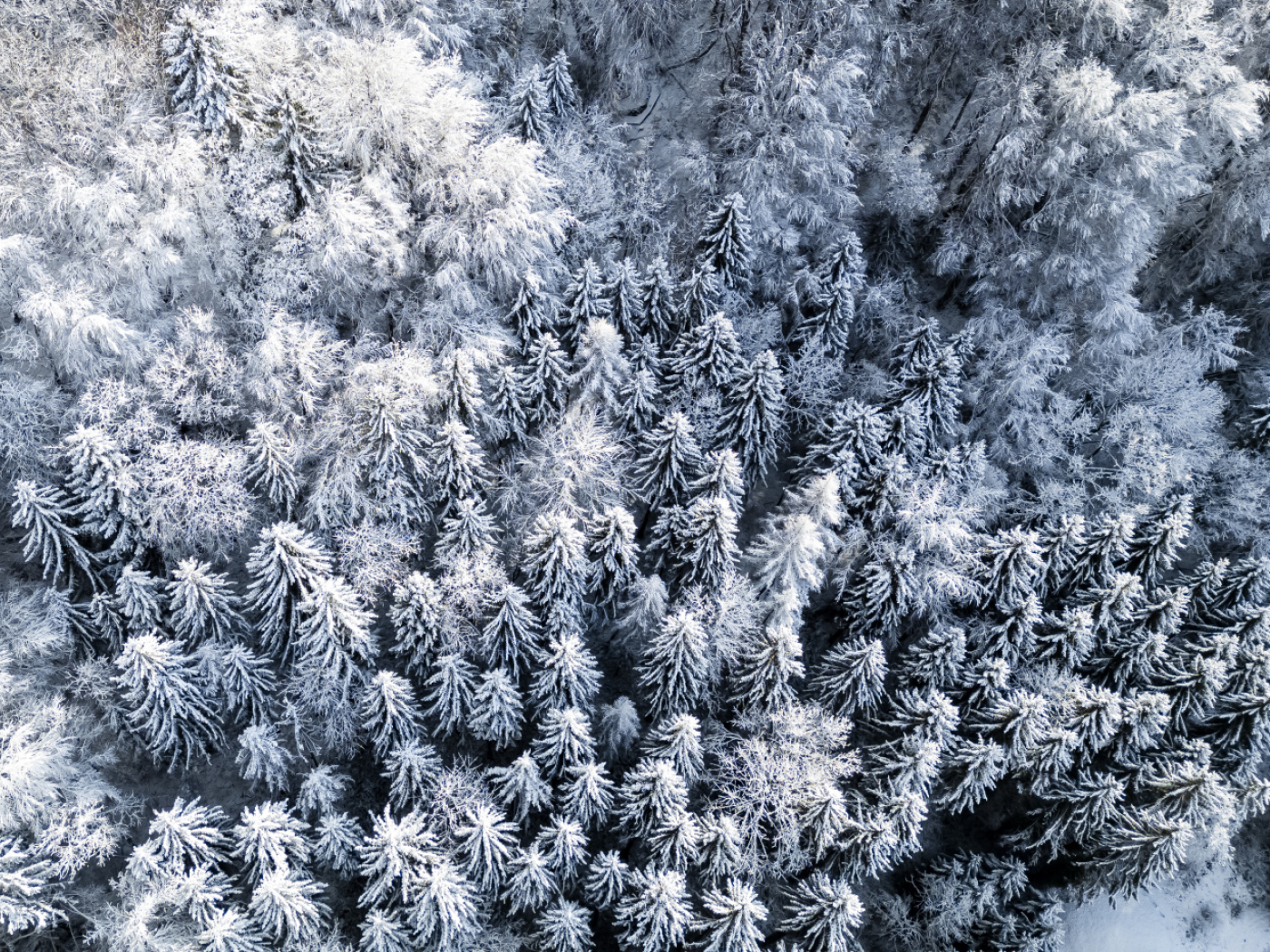
Climate change is slowing down the growth of important tree species in Switzerland, according to a new study.
Select your language
Generated with artificial intelligence.
Listening:
Swiss trees stunted by climate change
+Get the most important news from Switzerland in your inbox
Although trees are starting to grow earlier in the year due to rising temperatures, they are producing less wood overall than ten years ago, said the Swiss Federal Institute for Forest, Snow and Landscape Research WSL.
+ Swiss forests in race against time
This slower growth has consequences: A smaller increase in trunk diameter means that forests absorb less CO2 and are therefore less able to slow down global warming, said WSL.
+ Switzerland’s forests of the future
According to the WSL study, the start of stem growth has been significantly delayed by several days over the last ten years. In some years, the first stem radius increases can even be measured two to three weeks earlier than at the beginning of the 2000s.
At the same time, however, periods of heat and drought are increasing – and it is precisely these that slow down growth.
In fact, between 2012 and 2022, none of the analysed tree species experienced stronger growth. The growth of oaks and pines remained constant, while spruces, silver firs and beeches even grew less.
The reason for this lies in the water balance of the trees. The decisive factor for how strongly a tree grows is not the length of the vegetation period, but the number of days on which stem growth actually takes place.
This depends on whether sufficient water is available. If it is too hot and too dry, more water evaporates than can be absorbed by the roots, the tree comes under stress and growth stops.

More
Swiss trees can’t take the heat
Depending on the species, trees can only really grow on 40 to 110 days per year.
“In the end, individual days and hours determine how much a tree grows,” WSL researcher Arun Bose was quoted as saying in the research centre’s press release. “If some are lost due to increased heat and dry periods, a large part of the annual trunk growth is missing.”
An earlier start is therefore of little use if heat and drought shorten the critical growth phases. Forestry is also affected by this. If the summer months become warmer and drier, forestry companies tend to be able to harvest less wood.

More
Authorities warn of climate risks for Swiss forests
Adapted from German by DeepL/mga
We select the most relevant news for an international audience and use automatic translation tools to translate them into English. A journalist then reviews the translation for clarity and accuracy before publication.
Providing you with automatically translated news gives us the time to write more in-depth articles. The news stories we select have been written and carefully fact-checked by an external editorial team from news agencies such as Bloomberg or Keystone.
If you have any questions about how we work, write to us at english@swissinfo.ch
External Content

In compliance with the JTI standards
More: SWI swissinfo.ch certified by the Journalism Trust Initiative

You can find an overview of ongoing debates with our journalists here . Please join us!
If you want to start a conversation about a topic raised in this article or want to report factual errors, email us at english@swissinfo.ch.