








Gender pay gap widens slightly in Switzerland

Switzerland has moved up one place to 20th in a ranking of equality in the workplace, but its situation is stagnating. The pay gap between men and women has widened to 17.4% and the proportion of women working full-time has fallen, according to the PwC 2026 index.
Select your language
Generated with artificial intelligence.
Listening:
Gender pay gap widens slightly in Switzerland
+ Get the most important news from Switzerland in your inbox
Switzerland has moved up from 21st to 20th place in PwC’s Women in Work 2026 index, but its overall score remains unchanged at 68.7 points. While the female employment rate rose slightly to 80.8%, other indicators show a decline.
The proportion of women in full-time employment fell from 60.7% to 59.2%. The already wide gender pay gap grew further, reaching 17.4%, compared with 17.2% the previous year. The unemployment rate for women remained stable at 4.7%.
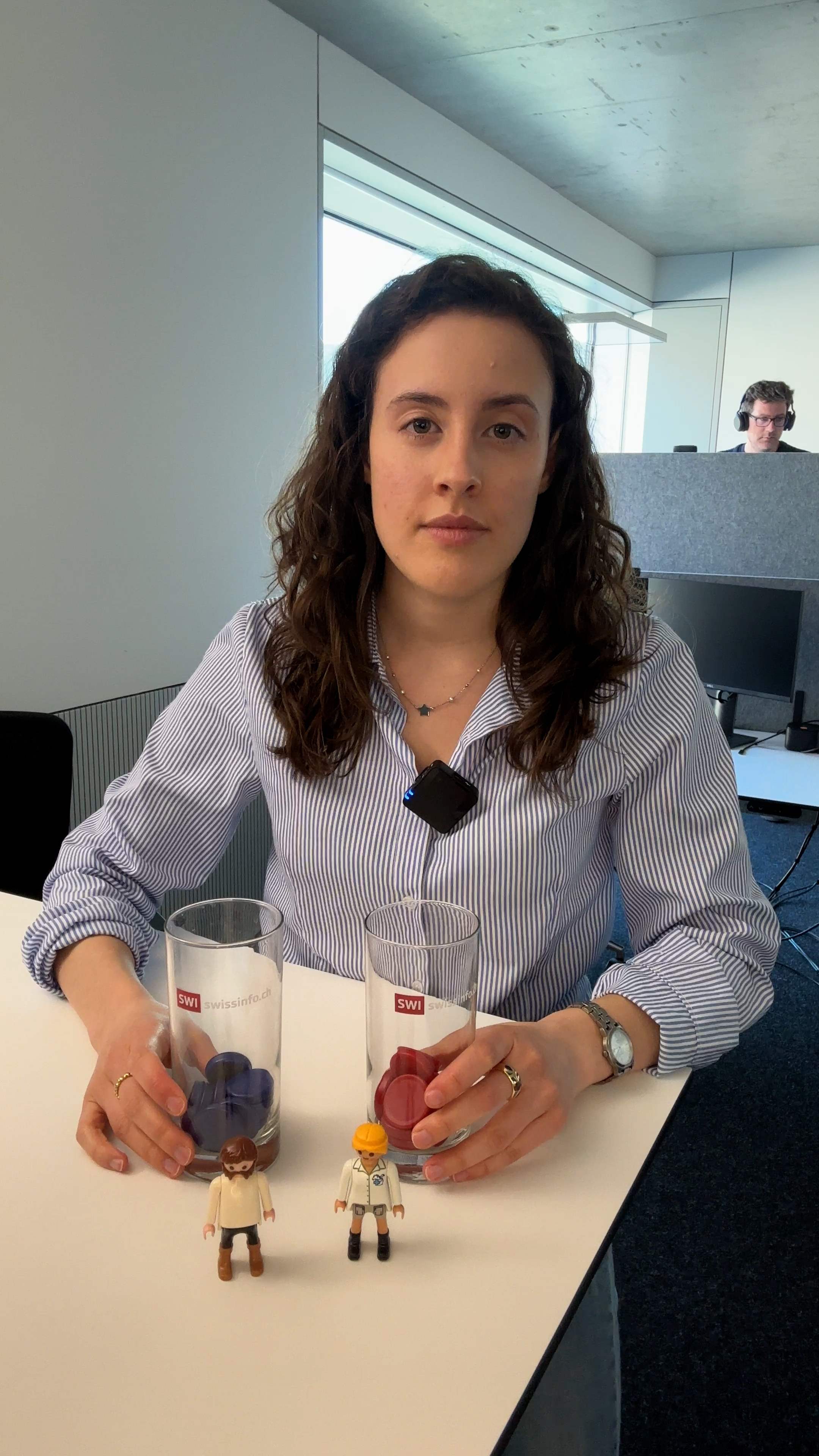
More
Why it’s so hard to be a working woman in Switzerland
According to the experts at PwC, these figures are “alarm signals”. They point out that women face challenges such as limited and expensive childcare. They call on businesses to adopt measures, such as more flexible working models, to promote equality.
Declining employment prospects
The trend observed in Switzerland is part of a general slowdown in OECD countries. The overall index rose by just 0.5 points between 2023 and 2024, half the annual average since 2011.
This deceleration can be explained by a deterioration in employment prospects for women. The female unemployment rate in the OECD has risen to 5.5% and, for the first time, the proportion of women in full-time employment has fallen, from 78.1% to 76.8%. On the other hand, the average pay gap fell by 0.6 points to 12.4%, the biggest fall in five years.
Iceland in the lead, Switzerland lagging behind
For the fifth year running, Iceland topped the rankings, thanks in particular to a female employment rate of 85.1%. Generous parental leave and a family-friendly work culture are cited as success factors. Luxembourg, New Zealand, Slovenia and Sweden round out the top five.
+ Proposal launched for 36-week parental leave in Switzerland
Conversely, Mexico, South Korea, Chile, Italy and Greece are at the bottom of the ranking, due to low female participation in the labour market and significant disparities.
With a pay gap of 17.4%, Switzerland is well above the OECD average (12.4%). The high proportion of women working part-time and the slow pace of progress on equal pay mean that there is still some way to go. While it was still in the top ten of this index in 2016, Switzerland has stagnated to around 20th place since 2020.
The PwC Women in Work Index was first published in 2011 and assesses equality in the labour market in 33 OECD countries. It is based on five indicators: the female labour force participation rate, the gender participation gap, the female unemployment rate, the share of full-time jobs and the wage gap.
Translated from French with AI/gw
We select the most relevant news for an international audience and use automatic translation tools to translate them into English. A journalist then reviews the translation for clarity and accuracy before publication.
Providing you with automatically translated news gives us the time to write more in-depth articles. The news stories we select have been written and carefully fact-checked by an external editorial team from news agencies such as Bloomberg or Keystone.
If you have any questions about how we work, write to us at english@swissinfo.ch.
External Content

In compliance with the JTI standards
More: SWI swissinfo.ch certified by the Journalism Trust Initiative

You can find an overview of ongoing debates with our journalists here . Please join us!
If you want to start a conversation about a topic raised in this article or want to report factual errors, email us at english@swissinfo.ch.