








Cash, cuckoo clocks and confusion with Sweden – Switzerland as seen abroad
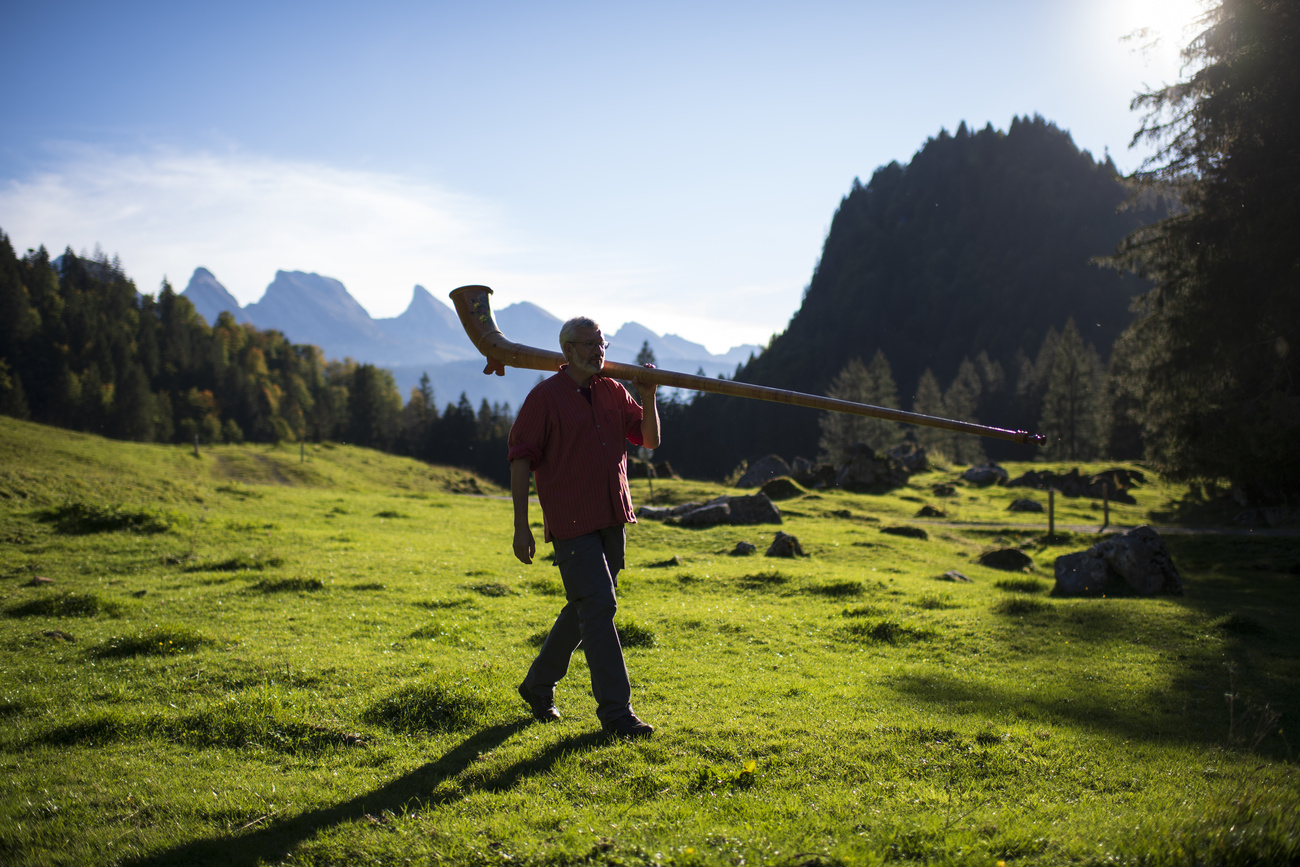
Precision, multilingualism, neutrality, gold, cheese, yodelling and, last but not least, a Swedish accent. We asked our Swiss readers living abroad what stereotypes about Switzerland, true or false, they came up against most often.
Select your language
Generated with artificial intelligence.
Listening:
Cash, cuckoo clocks and confusion with Sweden – Switzerland as seen abroad

All countries are associated with a series of stereotypes or clichés in the minds of the rest of the world. While some of these may reflect reality, or at least in part, they are often the result of misconceptions and a good deal of confusion. Not surprisingly, it is this kind of misguided stereotype that seems to exasperate our readers living abroad the most.
Many of the false ideas about Switzerland that the diaspora finds itself having to refute are, as it happens, actually about Sweden. “You’re Swiss? Why aren’t you tall and blonde?” one of our readers, Angela, was asked. “You make that beautiful car, the Volvo, right?” someone gushed to Petra. “Oh! You are from Switzerland,” Ruth was told. “I can hear your Swedish accent!”
“I don’t think anyone has computed Switzerland right a single time,” writes Mark. “They always think Sweden. Then ask me about Scandinavia. Or get really disappointed when they ask us to speak the language and we go to French or German or Italian; they say no no Swedish.”
It is a situation that takes some getting used to. Such mix-ups can be particularly hard to swallow when national pride also comes into play – as with this blunder by the international organisers of the Winter Olympic Games in Milan and Cortina d’Ampezzo:
External Content
For every Swiss person who has to endure a pointed joke about IKEA, however, there is surely a Swede who gets teased about cheese with holes in it. This confusion between the two countries inspired the Swedish tourist board to produce the following humorous promotional video in 2023:
External Content
While Switzerland also gets mistaken for other countries with arguably similar-sounding names, some major misunderstandings have arisen as a result of film.
“The Sound of Music? Never heard about it until I went abroad,” Sibylle writes. The American musical, famous for songs such as Do-Re-MiExternal link and EdelweissExternal link, is chock-a-block with stunning Alpine views. Only they are Austrian, not Swiss.
And how not to mention here that great invention, the cuckoo clock? Originally from Germany’s Black Forest region, it is the perfect example of what could be called “involuntary cultural appropriation”.
“I kept getting asked about cuckoo clocks,” writes our reader Annie. “Until I started giving lectures about them and then it stopped.” Unfortunately, we don’t have a transcript of Annie’s lectures, but she probably dwelt upon the American actor Orson Welles and his pithy, yet inaccurate (especially to Swiss ears) “cuckoo clock speech”. Those 20 seconds of great cinema in The Third Man are the reason why, in the minds of many, the mechanical wooden clock from Germany will forever be associated with Switzerland.
External Content
Money, money, money
A large number of comments from our readers revolve around the supposed wealth of people from Switzerland. It is true that, in terms of per capita GDP, the country regularly ranks among the top ten worldwide. If we add to this the fame of Swiss banks and luxury watches, then it is not surprising that our reader Denise was told: “Switzerland is rich, you earn CHF7,000 ($9,000) a month. You can even find gold bars lying on the ground.”
Many Swissinfo articles seek to put things into perspective. Poverty exists in Switzerland, too, and the high cost of living is also evident from the comments of some of our readers, for instance Phillippa, who reports having been asked: “It’s expensive in Sweden?”
Meanwhile, Béa, who has often heard the sweeping statement “you’re loaded”, stresses that many Swiss citizens “move abroad because it’s simply impossible to make ends meet in Switzerland on a pension alone”.

More
Why many Swiss choose to emigrate in old age
On the other hand, Felizitas, a Swiss citizen living in Australia, had to laugh when an Australian woman told her “quite frankly” that, if she came “from a poor country like me, she would also try to migrate to a better country”.
What about cleanliness and precision?
An enduring stereotype that crops up in various guises in our readers’ comments is that of a perfect Switzerland. “I don’t see anyone mentioning Switzerland’s legendary cleanliness,” writes Pierre, surprised that this characteristic had not already been highlighted.
Punctuality, order and work well done. These qualities are common positive stereotypes, but they often have a flip side: an image of inflexibility and over-regulation.
Switzerland is “rich, safe, clean, beautiful, cold, precise… and therefore rigid”, sums up Jean Louis. Ramiro echoes him: “I always hear two polar opposite versions, positive and negative: on the one hand, watchmaking culture, precision, order and punctuality; on the other, boring culture, avaricious and rustic people.” Jorg adds that the “Swiss think in terms of limits and prohibitions, not growth and opportunities.”
A cow for Roger Federer
There is also no shortage of Alpine stereotypes. “No, I didn’t grow up in a wooden chalet and no, I can’t yodel,” Alicia has had to clarify on several occasions. “Do Swiss really sleep on hay beds like in Heidi?” Tony was asked. “Don’t you miss the snow and skiing?” people commiserate with Ruth, who feels perfectly at home in Florida and cannot ski at all.
“People assume I love chocolate, love cheese and am a good skier. All are true!” exclaims Stephan on the other hand.
It must be said that Switzerland also does its bit to promote the image of a bucolic, pastoral country abroad. “How come Roger Federer gets a cow when he wins and where does he keep it?” Nick was asked. For those not in the know, this really did happen. After his triumph at Wimbledon in 2003, the organisers of the tournament in Gstaad, canton Bern, gave the tennis champion a cow, named Juliette. In 2013, despite his defeat in England, he was presented with another one, Désirée. The two bovines, however, stayed in the Alpine pastures and have never grazed in the garden of Federer’s villa.

Neutral therefore no army
Neutrality features less often in our readers’ comments than one might expect and is generally linked to an inaccurate vision of Switzerland.
“Neutrality means no army,” writes Jaime, capturing a common belief. By definition, surely a neutral country cannot have armed forces, so the thinking goes. “Switzerland has an army? Is the knife their best weapon?” one person quipped to Victor.
And then there is the confusion between the Swiss flag and the red cross emblem, as mentioned by Christian. This is a misunderstanding that unintentionally bolsters the image of a nation more inclined to mediation than conflict. At other times, however, neutrality is seen as a synonym for opportunism, an excuse used by Switzerland to profit from every situation. This is a criticism that A. brings up in our debate.
More
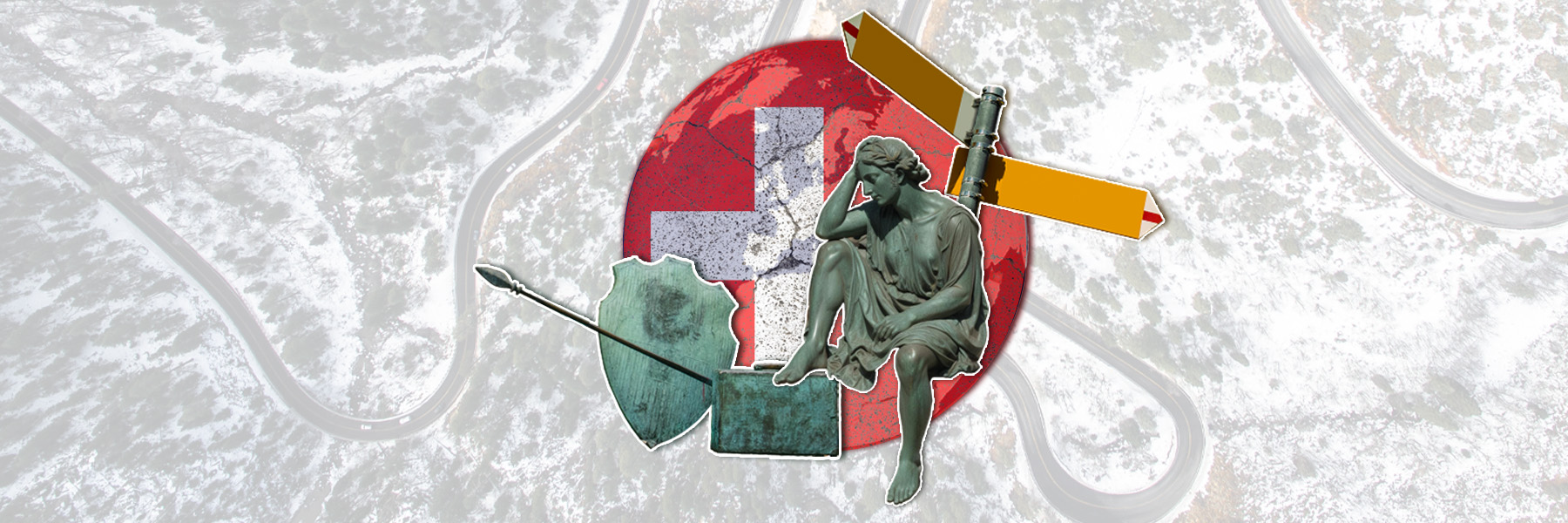
What does the future hold for Swiss neutrality?
Most Swiss people do not keep a secret stash of gold bars in a bank vault, would be incapable of getting a note out of an alphorn and could not milk a cow to save their lives. It is clear from readers’ comments, however, that the Swiss diaspora has become adept at explaining their country of origin to people abroad, often demonstrating a surprising, yet also very Swiss, sense of self-irony in the process.
More

Adapted from Italian by Julia Bassam/ds

In compliance with the JTI standards
More: SWI swissinfo.ch certified by the Journalism Trust Initiative

You can find an overview of ongoing debates with our journalists here . Please join us!
If you want to start a conversation about a topic raised in this article or want to report factual errors, email us at english@swissinfo.ch.