








Foreign disinformation attacks target Switzerland

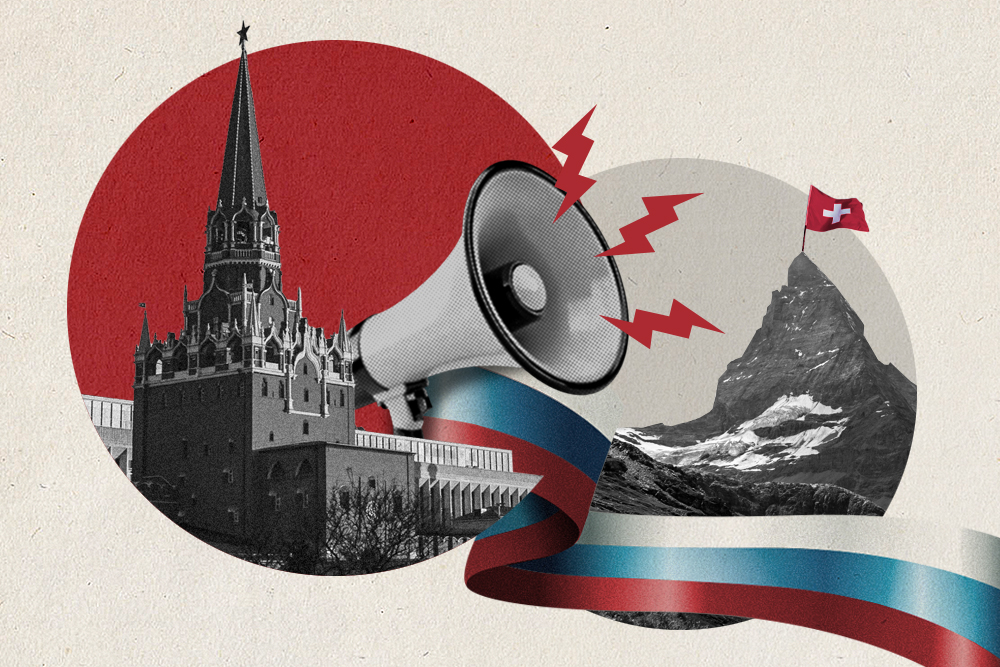
Switzerland has noticed a significant increase in the number of attempts by foreign states to influence Swiss public opinion.
Select your language
Generated with artificial intelligence.
Listening:
Foreign disinformation attacks target Switzerland
+ Get the most important news from Switzerland in your inbox
“The goal is to polarize society, exacerbate existing divisions, and undermine the credibility of institutions and the media. There is also an attempt to shake confidence that objective information even exists,” Pälvi Pulli, Deputy State Secretary for Security Policy, told Swiss public broadcaster SRF.
+ How Switzerland navigates disinformation
Disinformation campaigns to disrupt Swiss elections or referendums have not so far been noticed, Pulli added. But the authorities are aware of such activities in other countries.
Romania held a repeat presidential election a year ago because, according to a ruling by the Constitutional Court, it had been falsified by Russian disinformation campaigns.
More
How Switzerland is caught up in Russia’s propaganda machine
Michael Hermann, managing director of the research institute Sotomo, believes Swiss direct democracy makes the country particularly vulnerable. This is because people rely on accurate information to decide on substantive issues.
Debate defences
But Hermann also has confidence in Switzerland’s resilient against potential risks from disinformation campaigns. “Direct democracy is also an opportunity to counter disinformation because people are discussing the same topic simultaneously,” he said. “If someone claims something false, the other side can correct it.”
“In democracies where the population can only vote, falsehoods can much more easily creep in, become believed by a segment of the population, and never be corrected.”
The European Union is attempting to combat disinformation with the Digital Services Act. By contrast, the Swiss government is very restrained with its regulation.
Digital platforms
For example, the proposed social media law does not require digital platforms to cooperate with law enforcement or to combat disinformation.
The debate about disinformation, including the question of what is disinformation and what isn’t, and whether Swiss democracy needs stronger protection against it, is only just beginning in Switzerland. This is partly because Switzerland is still less affected by disinformation campaigns than other countries.
More

Adapted from German by AI/mga
We select the most relevant news for an international audience and use automatic translation tools to translate them into English. A journalist then reviews the translation for clarity and accuracy before publication.
Providing you with automatically translated news gives us the time to write more in-depth articles. The news stories we select have been written and carefully fact-checked by an external editorial team from news agencies such as Bloomberg or Keystone.
If you have any questions about how we work, write to us at english@swissinfo.ch
External Content

In compliance with the JTI standards
More: SWI swissinfo.ch certified by the Journalism Trust Initiative

You can find an overview of ongoing debates with our journalists here . Please join us!
If you want to start a conversation about a topic raised in this article or want to report factual errors, email us at english@swissinfo.ch.