








Kosovo prime minister visits Switzerland ahead of snap elections
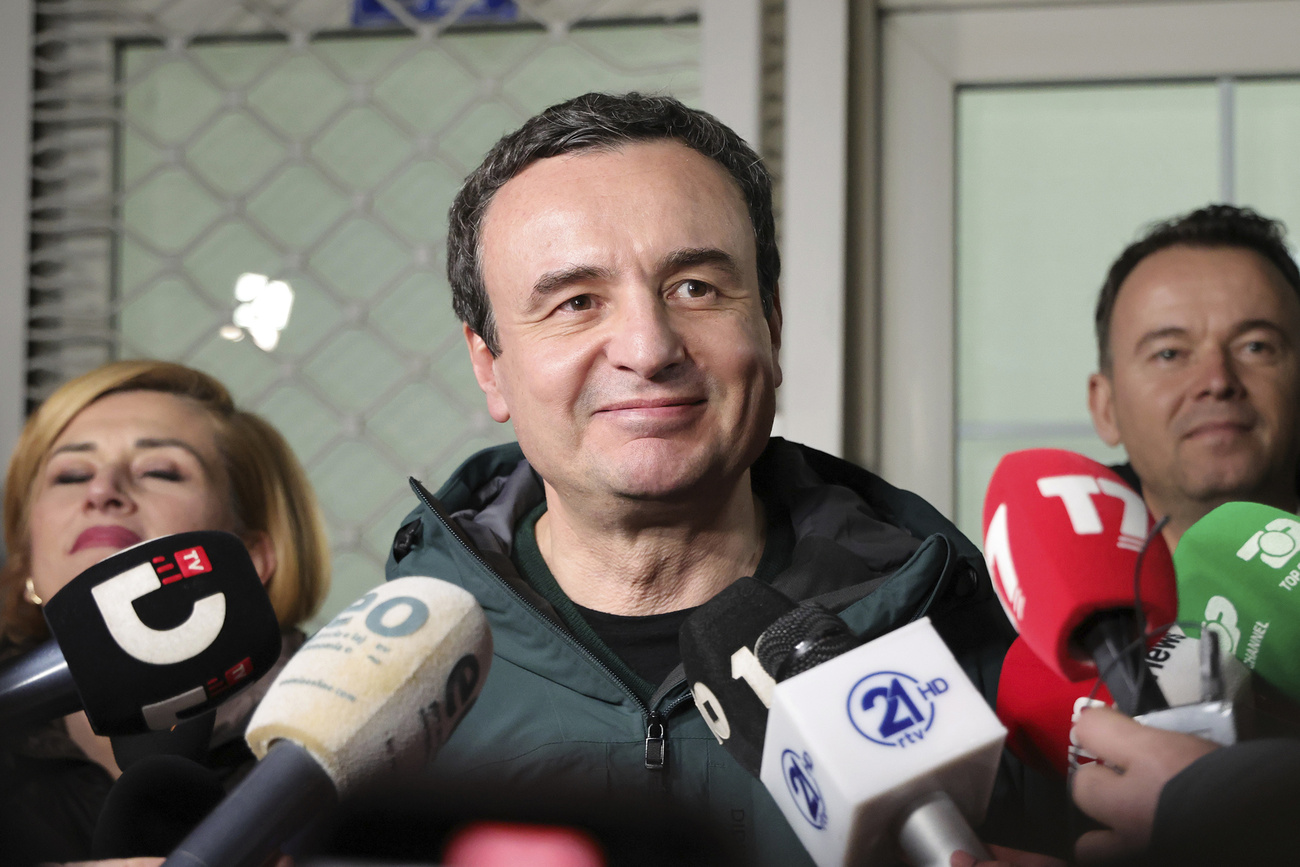
Kosovo’s acting Prime Minister Albin Kurti has made an appearance in Zurich ahead of snap elections in his country.
Select your language
Generated with artificial intelligence.
Listening:
Kosovo prime minister visits Switzerland ahead of snap elections
+ Get the most important news from Switzerland in your inbox
He was met with rapturous applause, as shown in a video Kurti posted on Instagram on Saturday night.
There were no plans for him to meet Swiss officials, the
foreign ministry told the Keystone-SDA news agency.

More
Kosovo in Switzerland, Switzerland in Kosovo
Between 160,000 and 250,000 people from Kosovo live in Switzerland, according to Swiss President Karin Keller-Sutter. She made the comment during a state visit by Kosovo’s President Vjosa Osmani Sadriu to Bern in May. At the time, both leaders stressed the importance of the Kosovar community in Switzerland and the role it plays in connecting the two nations.
+ Kosovo and Switzerland: an intense relationship
Kosovo will hold early parliamentary elections on December 28, after two failed attempts to form a government. The country’s parliament, which has only been independent since 2008, had previously refused to back both Kurti and his party colleague Glauk Konjufca during votes to elect a prime minister.
Kurti’s pro-Western, social-democratic party Vetevendosje (Self-Determination) emerged as the largest party in the last election but fell short of a majority. Since then, parliament has spent months wrangling over who should take the top posts, preventing it from formally convening for months.

More
How Swiss parties court the Kosovar diaspora
Kosovo, now almost entirely populated by Albanians, was once a Serbian province. After uprisings against Serbian rule and NATO’s intervention in 1999, it declared independence in 2008. More than 100 countries, including Switzerland, recognise Kosovo as an independent state, but Serbia and Russia do not. Five EU members, among them Spain and Greece, also withhold recognition, meaning Kosovo remains just a “potential candidate” for EU membership.
Translated from German by AI/sp
We select the most relevant news for an international audience and use automatic translation tools to translate them into English. A journalist then reviews the translation for clarity and accuracy before publication.
Providing you with automatically translated news gives us the time to write more in-depth articles. The news stories we select have been written and carefully fact-checked by an external editorial team from news agencies such as Bloomberg or Keystone.
If you have any questions about how we work, write to us at english@swissinfo.ch

In compliance with the JTI standards
More: SWI swissinfo.ch certified by the Journalism Trust Initiative

You can find an overview of ongoing debates with our journalists here . Please join us!
If you want to start a conversation about a topic raised in this article or want to report factual errors, email us at english@swissinfo.ch.