








Swiss-chaired OSCE has ‘little hope’ of brokering Ukraine peace
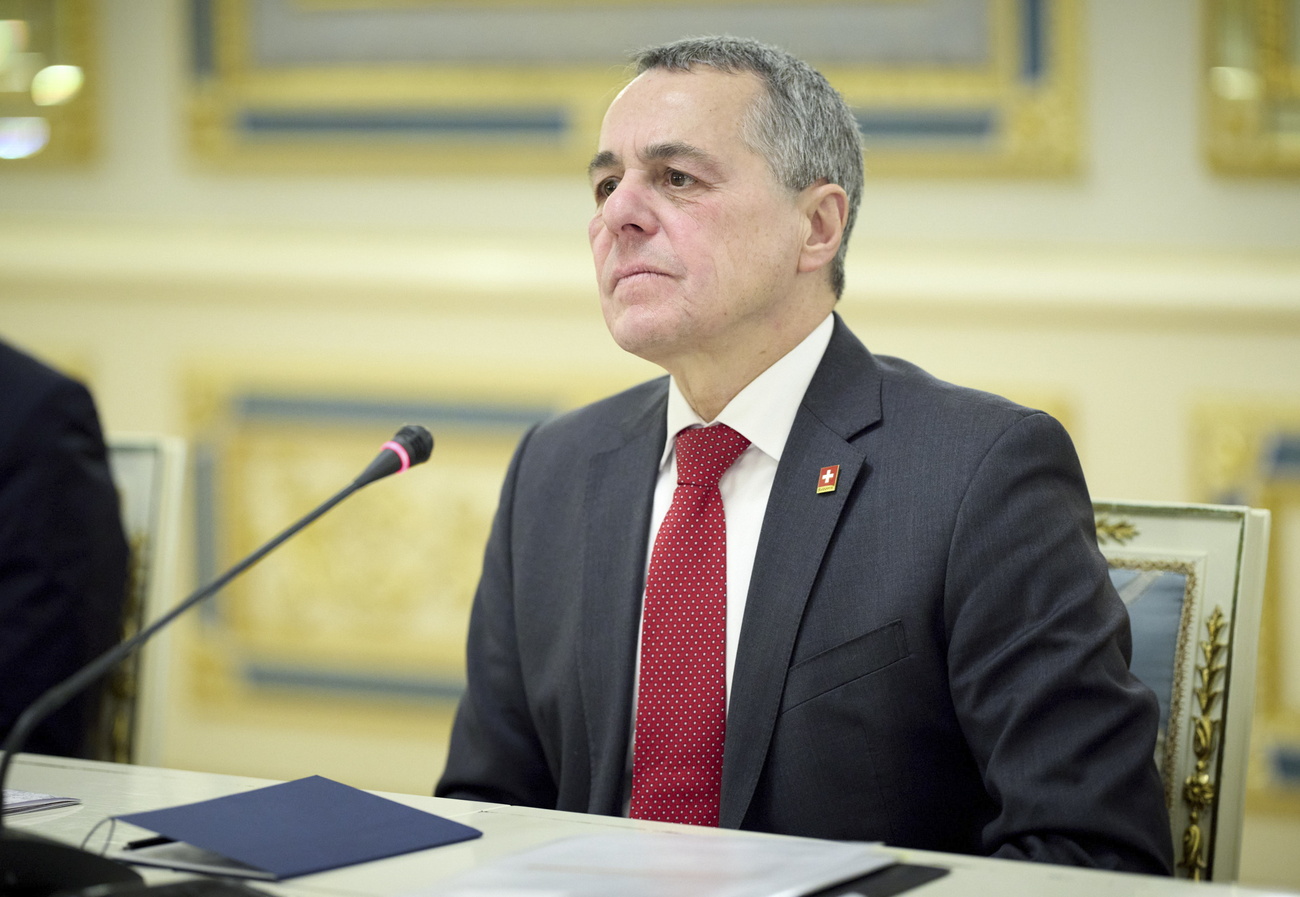
Swiss foreign minister Ignazio Cassis travels to Moscow as chair of the Organization for Security and Co-operation in Europe (OSCE). Fredy Gsteiger, diplomatic correspondent of Swiss public broadcaster SRF, examines if the OSCE can still mediate on the war in Ukraine.
Select your language
Generated with artificial intelligence.
Listening:
Swiss-chaired OSCE has ‘little hope’ of brokering Ukraine peace
+Get the most important news from Switzerland in your inbox
Following a visit to Kyiv earlier this week, Cassis will meet with Russian foreign minister Sergei Lavrov on Friday.
+ Read more: can OSCE retain its relevancy?
Is the OSCE the right organisation to mediate in this war?
Fredy Gsteiger: Partly, yes. A minimum level of trust is a prerequisite for even discussing peace. And building trust is a core task of the OSCE. However, in the current Ukraine conflict, it is extremely difficult for the OSCE to find its role and, indeed, to play any role at all.
Currently, no-one places much hope in the OSCE. Therefore, there is very little to suggest that the organisation can play a role as a peace mediator, whether chaired by Switzerland or not.
What are the current problems with the OSCE?
F.G.: Although all 57 member states meet weekly in Vienna, including the United States and Russia, genuine dialogue is virtually nonexistent. Each side voices their own position without listening to the other. Russia also obstructs all decision-making.
Western countries, in turn, avoid dialogue with Russia. The situation within the OSCE is largely deadlocked. It lacks the leverage to compel anyone to make peace. Such leverage is more readily available to actors like the US or China.
More
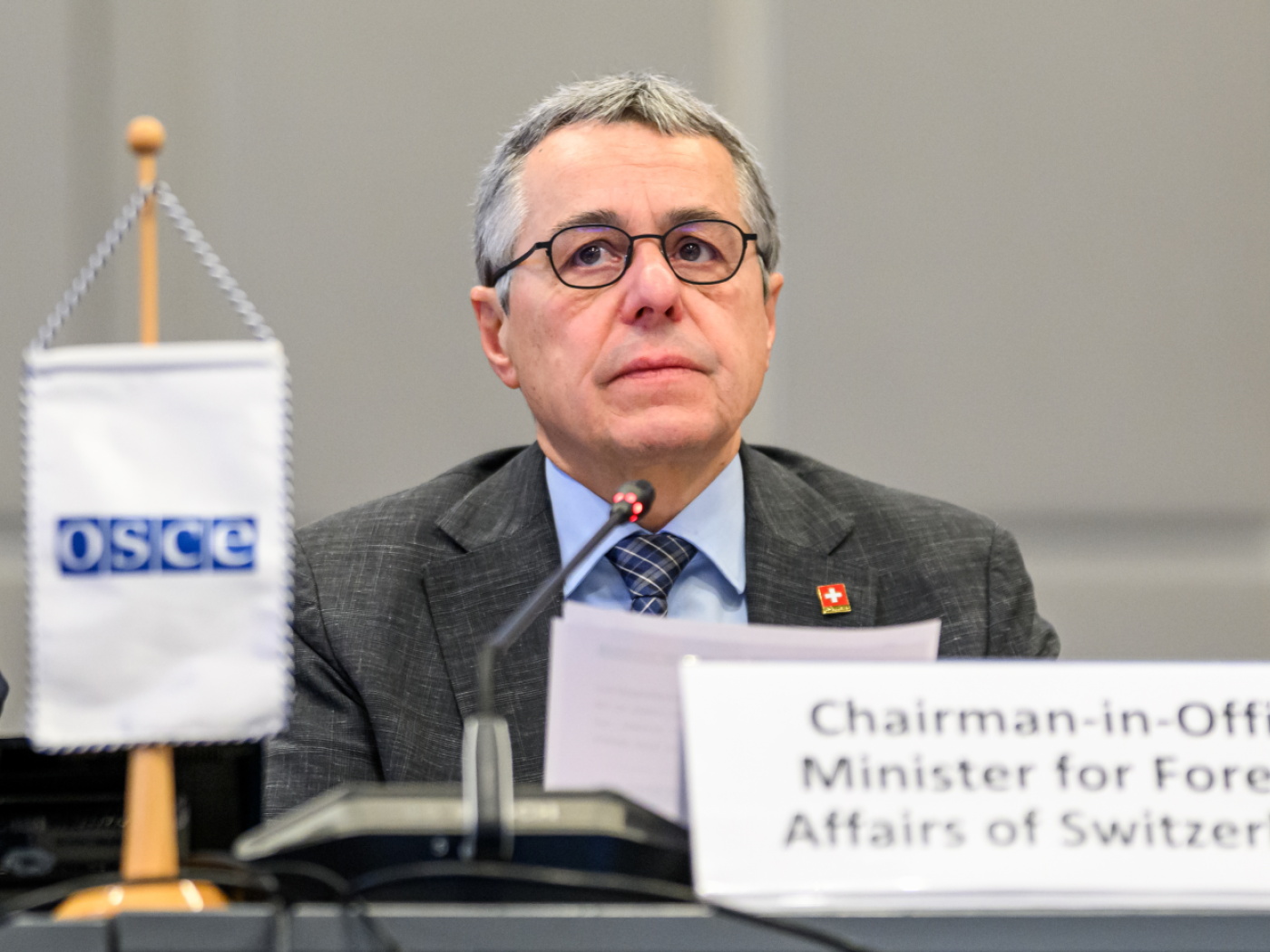
Swiss foreign minister says Ukraine crisis should strengthen OSCE
What is the overall state of the OSCE?
F.G.: The organisation is in a deplorable state. Its reputation is tarnished. It is financially weakened and paralysed on many important issues. It has also largely disappeared from public debate.
The OSCE’s mission is to maintain and enforce a peaceful European order. According to Western visions, it also aims to pave the way for liberal democracies within the OSCE’s area of membership. This idea is no longer widely accepted.
How unusual is a visit by a Western government official to Moscow?
F.G.: This has hardly happened since the Russian invasion of Ukraine. There are still occasional telephone conversations between Western heads of state and Russian president Vladimir Putin. A few dissenters visit Russia, such as Hungarian prime minister Viktor Orbán or Slovak prime minister Robert Fico.
But it is precisely the self-imposed goal of Switzerland and Cassis to talk to everyone, or at least to try to restart the dialogue. And that requires, at a minimum, the effort to seek talks with both Kyiv and Moscow.
Adapted from German by AI/mga
We select the most relevant news for an international audience and use automatic translation tools to translate them into English. A journalist then reviews the translation for clarity and accuracy before publication.
Providing you with automatically translated news gives us the time to write more in-depth articles. The news stories we select have been written and carefully fact-checked by an external editorial team from news agencies such as Bloomberg or Keystone.
If you have any questions about how we work, write to us at english@swissinfo.ch
External Content

In compliance with the JTI standards
More: SWI swissinfo.ch certified by the Journalism Trust Initiative

You can find an overview of ongoing debates with our journalists here . Please join us!
If you want to start a conversation about a topic raised in this article or want to report factual errors, email us at english@swissinfo.ch.