








Switzerland today
Greetings from hilly Bern,
The Swiss capital might be slightly flatter than Lausanne, which gives San Francisco a run for its money, but it’s still hard work for cyclists (my commute is literally breathtaking). Bern is also popular with mountain bikers, who hurtle down designated paths on the Gurten hill and, splattered with mud, take the cable car back up. But why are the top stories on all Swiss news websites suddenly about mountain biking?


In the news Pop quiz: When was the last time three Swiss women stood on an Olympic podium?
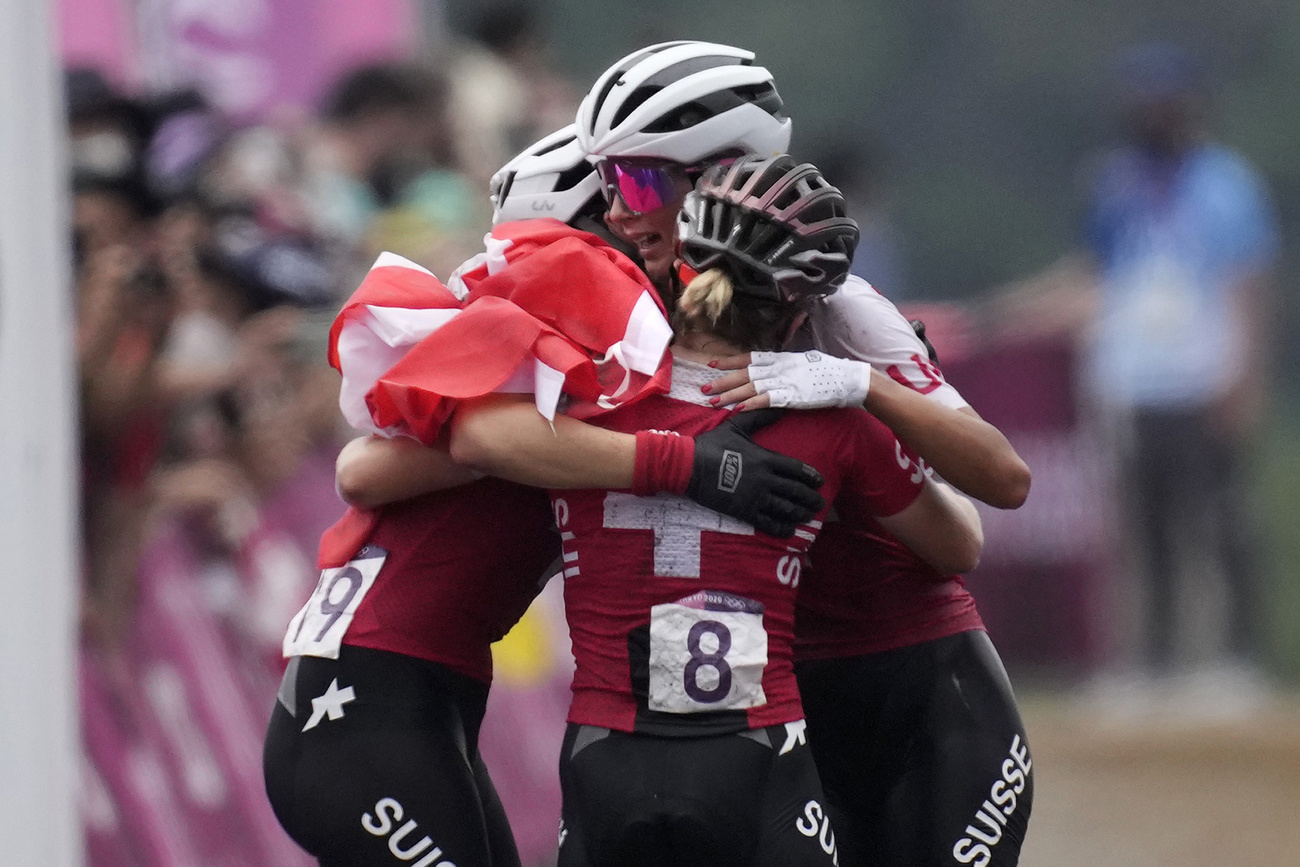
- The answer, you might have been able to guess, is never – and it’s been 85 years since three male gymnasts did it. This is why the Swiss media have suddenly gone mountain bike crazy. On Tuesday Jolanda Neff, Sina Frei and Linda Indergand won gold, silver and bronze in the Olympic women’s mountain bike event.
- Should Switzerland export Covid vaccine doses to poorer countries that need them, rather than jabbing Swiss teens? Yes, says WHO director-general Tedros Ghebreyesus. Virginie Masserey, head of infections control at the Federal Office of Public Health (FOPH), has defended Switzerland’s record on the issue.

Deep dive Some surprising facts about the rural-urban divide in Switzerland.
As countless novels and films attest, they do things differently in the sticks. Or in cities, of course, depending on your point of view. In Switzerland the difference is usually most notable in the results of votes and elections, with townies generally being more outward-looking and progressive.
But as you’ll discover in this in-depth analysis, the divide is less pronounced than in many other countries. Although much of Switzerland is rural, the countryside is highly urbanised, and many of those who live in rural or intermediate areas commute to work in the cities. I discovered this a few years ago when I visited the “boomburb” of Bassersdorf outside Zurich. This booming suburb was the Swiss town that had seen the greatest growth over the previous decade – why, and what’s it like to live there?
Swiss cities really do have a gravitational pull. Some 85% of Swiss residents live in urban areas and many more would like to join them: one in four people currently living in the countryside wants to move to the city.

Word from the street What does the future look like for Afghanistan?
After 20 years of war in Afghanistan, the US and NATO are leaving. But as the conflict escalates, what might the future look like? In this episode of Inside Geneva, podcast host Imogen Foulkes talks to Firouzeh Mitchell, acting head of mission in Afghanistan for the Geneva-based organisation Geneva Call, Forozan Rasooli of Equality for Peace and Democracy, and Vicki Aken of the International Rescue Committee. Be prepared to have your preconceptions about Afghanistan, and particularly about Afghan women, challenged. They are not the powerless victims so much of the Western media tend to portray them as.

In compliance with the JTI standards
More: SWI swissinfo.ch certified by the Journalism Trust Initiative
