








What Switzerland can do on trade policy amid global geopolitical tensions
Select your language
Generated with artificial intelligence.

Listening:
What Switzerland can do on trade policy amid global geopolitical tensions
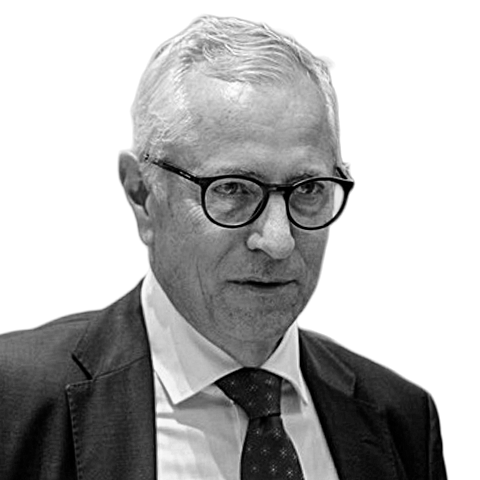
The rules-based global economy is currently being called into question. Diplomat Henri Gétaz argues that Switzerland should uphold WTO rules while simultaneously concluding new trade agreements.

Switzerland owes a significant part of its prosperity to exports. With one of the highest ratios of foreign trade to gross domestic product in the world, our country has benefited greatly from rules-based trade relations over the past decades.
Switzerland owes a significant part of its prosperity to exports. With one of the highest ratios of foreign trade to gross domestic product in the world, this country has benefited greatly from rules-based trade relations over the past decades.
However, the global trading order established in the wake of the Second World War is currently being called into question. Even the key principle of the post-war global trading order is under discussion: most-favoured-nation treatment. This principle, which requires the equal treatment of all WTO members in customs matters, was most recently discussed at the WTO Ministerial Conference in Yaoundé.
How have we reached a point where the global trading community is prepared to put this fundamental principle of international trade relations up for debate? What might come of this? And what does it mean for Switzerland?
Global value chains create vulnerability to blackmail
The global trading system established in the wake of the Second World War was based on the idea that rules, and not arbitrariness, and market liberalisation, rather than protectionism, would promote shared prosperity. World trade has thus been liberalised step by step: first through multilateral liberalisation rounds under the GATT agreement, later through the WTO, and since the 1990s primarily through an increasing number of regional free trade agreements.
The liberal and rules-based world trade order enabled companies to optimise and expand their production and distribution activities internationally. As a result, cross-border – and in some cases, global – value chains emerged. These enabled maximum efficiency in the global division of labour as well as affordable access to products and services. Driven by technological progress, the global economy has grown by a factor of between 15 and 17 since the 1950s, while international trade has increased at roughly twice that rate in real terms.
As long as the system functioned and states adhered to the rules, it proved particularly efficient. Yet in times of geopolitical tension, global value chains prove disastrous: efficient cooperation gives rise to vulnerability to blackmail. Europe, in particular, is discovering its dependencies: for security and technology, it is reliant on the United States; for its economy and rare earth minerals, it depends on Chinese markets; and for energy, it relies on Russia and – in a time of armed conflict in the Persian Gulf – on the Middle East.

More
Global trade under strain: why rules still matter for nations like Switzerland
The rules-based order is faltering
At the very latest since Russia’s full-scale invasion of Ukraine and the resumption of the “America First” policy under US President Donald Trump, the world has entered a phase of gross and deliberate disregard for the rules-based international order. Russia’s invasion of Ukraine constitutes a flagrant violation of international law. The abduction of Venezuelan President Nicolas Maduro and the war in Iran are further examples of such gross violations of the law.
Trump’s tariffs policy is, likewise, in stark contradiction to the rules of the global trading order, for which the US has been guarantor since the Second World War. Even the otherwise rule-abiding European Union is flouting its own WTO obligations when – out of necessity or opportunistic considerations – it enters into the tariffs deal agreed with the US in summer 2025.
For decades, China has practised a state-directed economic model characterised by industrial subsidies, forced technology transfer and the favouring of state-owned enterprises. Such a system fundamentally contravenes international rules on market-oriented policies, transparency and non-discrimination.
While breaches of the rules are not an entirely new phenomenon, in the past states did at least make an effort to justify such breaches with some form of argument. Today, however, international rules are being flagrantly and openly flouted by certain actors. Trump states it openly: nothing limits his power – except his own moral compass.
How Switzerland is reacting to the US tariffs:

More
US tariffs force Switzerland to rethink trade ties
Trade policy as a way to wield geopolitical clout
Until recently, trade policy served as a means of increasing efficiency and maximising prosperity through liberalisation and non-discrimination, but today it is increasingly being used as an instrument of power politics and self-assertion.
The US is using tariffs as a means of exerting pressure and attempting to protect its industrial base through new trade barriers. China is expanding its influence through the Belt and Road Initiative, using rare earths as a means of exerting pressure, and supporting entire sectors of industry through subsidies. The EU is increasingly using its single market for geopolitical self-assertion, such as through the Anti-Coercion Instrument, the introduction of the so-called “European preference”, initiatives to protect economic security, critical infrastructure and the resilience of value chains, as well as measures to secure critical raw materials.
Many of these efforts take place outside the established international regulatory framework. Power, influence and short-term transactional interests are increasingly shaping the course of events. The US is focused on revitalising its position as a business hub – a goal that is highly controversial among economists. China is expanding its influence, particularly in Asia and Africa, whilst at the same time needing to realign its growth model and focus more strongly on domestic demand. In doing so, China is displacing traditional exporters from its market. The EU is concerned, on the one hand, with maintaining its economic strength, and on the other hand, with reducing technological, security, energy and economic dependencies.

More
US oil buoys Swiss fossil fuel needs amid Middle East conflict
What can and should small and medium-sized powers do?
In this trade policy environment shaped by geopolitical power dynamics, small and medium-sized players must find their own path to self-assertion. Small, open economies such as Switzerland have benefited greatly from the rules-based liberal world order. Consequently, they are particularly vulnerable to the whims of the major players in a world driven by power.
Today’s trade policy environment has become complex and will remain so for the foreseeable future. Against this backdrop, it is essential to minimise risks through diversification. Switzerland has been doing this successfully for several years by expanding its trade relations with other partners. Concluding new EFTA (European Free Trade Association) agreements with India, Mercosur or Southeast Asian nations is the right approach. Other middle powers such as Canada, Australia and Japan are taking a similar approach.
At the same time, it is important to stabilise economic relations with the major powers as much as possible. It is therefore right for Switzerland to conduct tariff negotiations with the US and to modernise the existing free trade agreement with China. The Bilateral III agreements with the EU must be approved and brought into force: Switzerland cannot afford further uncertainty with its most important economic partner, particularly in these current, unpredictable times.
WTO reforms are important and right
The current efforts to modernise the WTO rules so that they meet the needs of member states today are also courageous and right. International relations need generally accepted rules. Without rules, relationships are determined by power, interests and competition. Competition without common rules, however, leads to confrontation – or even war.
Against the backdrop of recent global political developments, it may seem illusory to hope that major powers can be reconciled on the basis of new global trade rules. Yet wars and power struggles are costly and become unpopular over time. It therefore makes sense to prepare the global trading system for a time when the current power politics has run its course. At the same time, the further development of a global economic order adapted to the new geopolitical realities is in the best interests of small and medium-sized powers – including Switzerland.
Edited by Benjamin von Wyl. Translated from German by Catherine Hickley/gw
The views expressed by the author do not necessarily reflect those of Swissinfo.

More
Our newsletter on geopolitics

In compliance with the JTI standards
More: SWI swissinfo.ch certified by the Journalism Trust Initiative

You can find an overview of ongoing debates with our journalists here . Please join us!
If you want to start a conversation about a topic raised in this article or want to report factual errors, email us at english@swissinfo.ch.