








Annual test of Swiss emergency sirens a success
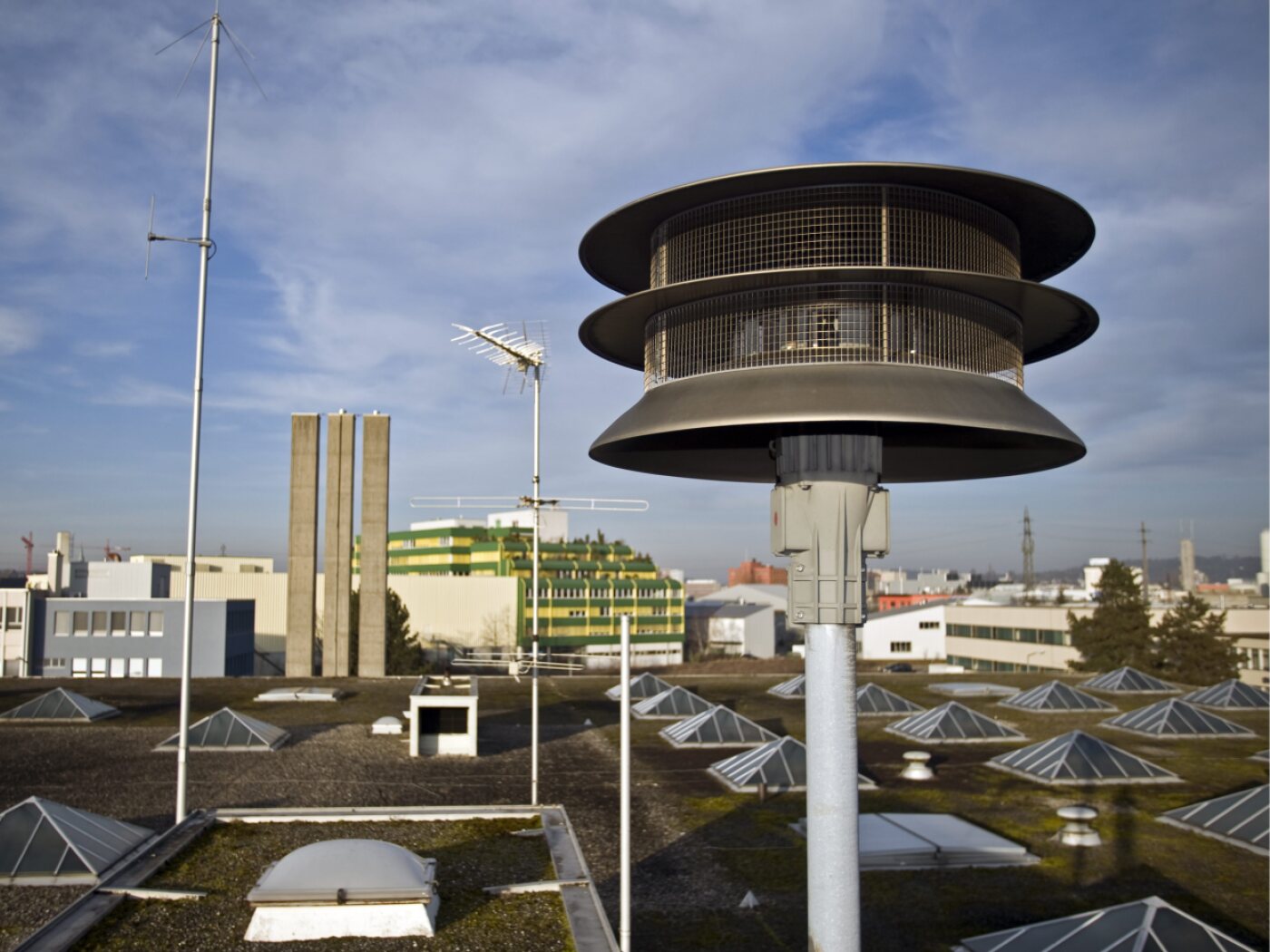
Over 5,000 stationary sirens sounded throughout Switzerland on Wednesday. As with last year's siren test, around 99% of the sirens worked perfectly, according to the Swiss government.
Select your language
Generated with artificial intelligence.
Listening:
Annual test of Swiss emergency sirens a success
The sirens sounded between 1.30 pm and 4.30 pm, depending on the location. The sirens sounded the general alert at 1.30 pm, a regular ascending and descending wailing tone lasting one minute. The water alert was also tested from 2.00 pm until 4.30 pm in areas close to dams. The signal consists of twelve low continuous tones of 20 seconds each at intervals of 10 seconds.
+Get the most important news from Switzerland in your inbox
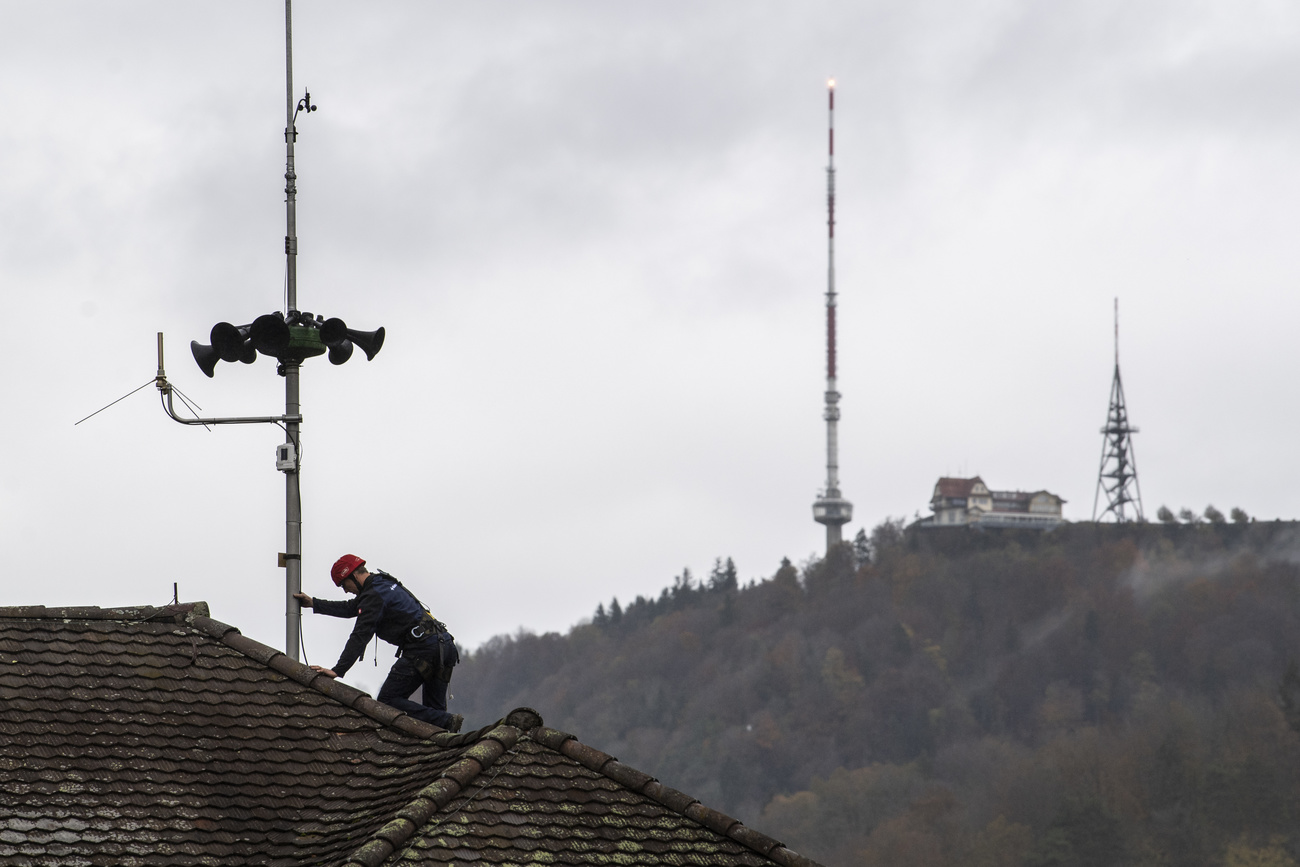
The cantons and municipalities are required to repair or replace the defective systems immediately so that they can be maintained at a high level of operational readiness, the Federal Office for Civil Protection announced in the evening following the successful tests. Mobile sirens were also tested in various cantons. These are used to supplement the siren network in sparsely populated areas or when stationary sirens fail.
More
An eye-opening guide to Switzerland’s ear-splitting sirens
There were also false alarms during the siren test. In Oberwil bei Büren in the canton of Bern, for example, a siren alarm was falsely triggered in the morning. A false alarm had already been triggered the day before in Suhr in the canton of Aargau. According to the federal government’s Alertswiss app, there was no danger in either case.
Over the course of the day, more than 15 million push notifications were sent, it added. As these were tests, an “Information” level message was sent, which does not generate a siren sound on mobile devices. The Alertswiss app is installed on around 2.3 million mobile devices.
The functionality of the sirens and the Alertswiss app are tested on the first Wednesday in February.
Adapted from German by AI/ac
We select the most relevant news for an international audience and use automatic translation tools to translate them into English. A journalist then reviews the translation for clarity and accuracy before publication.
Providing you with automatically translated news gives us the time to write more in-depth articles. The news stories we select have been written and carefully fact-checked by an external editorial team from news agencies such as Bloomberg or Keystone.
If you have any questions about how we work, write to us at english@swissinfo.ch
External Content

In compliance with the JTI standards
More: SWI swissinfo.ch certified by the Journalism Trust Initiative

You can find an overview of ongoing debates with our journalists here . Please join us!
If you want to start a conversation about a topic raised in this article or want to report factual errors, email us at english@swissinfo.ch.