








Dry December raises fire risk at high altitudes in Switzerland
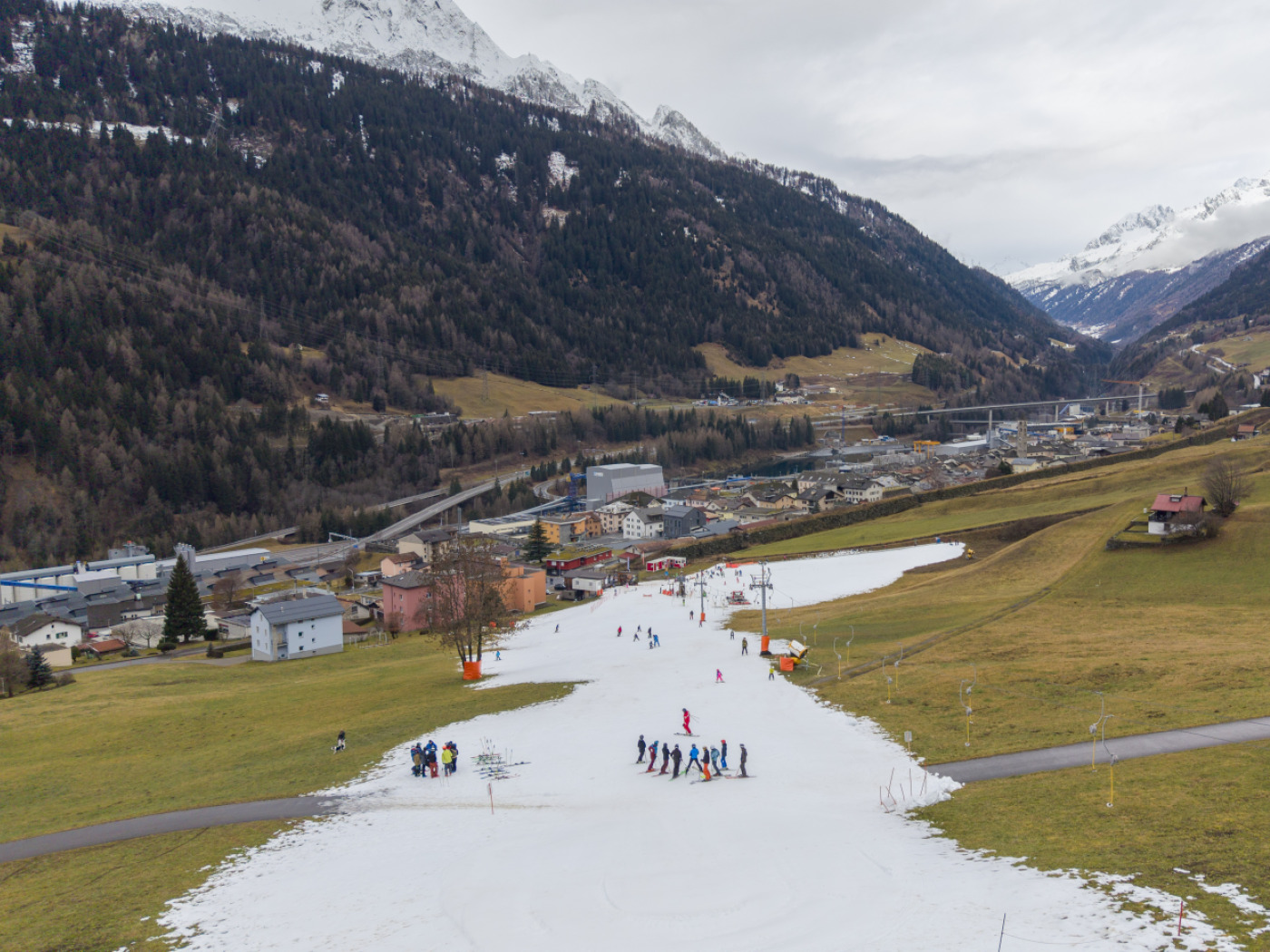
The drought has led to the risk of forest fires in some high-altitude regions of Switzerland. The canton of Bern, for example, called for increased caution when handling fires and fireworks in sunny and snow-free locations.
Select your language
Generated with artificial intelligence.
Listening:
Dry December raises fire risk at high altitudes in Switzerland
Areas above around 1,000 metres in the Bernese Oberland and Bernese Jura are affected, as announced by the Cantonal Office for Forests and Natural Hazards on Tuesday. Accordingly, the danger level for forest fires is currently 2 out of 5, which corresponds to a “moderate danger”.
+Get the most important news from Switzerland in your inbox
The canton therefore recommends only leaving fires once they have been completely extinguished and cooled down. In windy conditions, fires should be avoided altogether. At lower altitudes, however, where there has often been fog or frost in recent days, the risk of an uncontrolled fire in the forest or outdoors is low.
Danger level 2 also applies in numerous regions of Graubünden and Ticino as well as the Principality of Liechtenstein, as can be seen from the danger map published by the Federal Office for the Environment on Tuesday.
Fire in Upper Valais leads to bans
Due to the drought, some municipalities in Upper Valais have also issued a fire ban. This was prompted by a fire below a chairlift in a ski area in the municipality of Bellwald. The cause is suspected to be a discarded cigarette, as municipal president Jeannine Burgener told Swiss public radio SRF Regionaljournal Bern Freiburg Wallis.
The ban on fires and fireworks also applies in the municipalities of Fiesch and Riederalp, for example. Brig-Glis and Naters have now also turned a recommendation to refrain from fireworks and bonfires into a ban.
Adapted from German by AI/jdp
We select the most relevant news for an international audience and use automatic translation tools to translate them into English. A journalist then reviews the translation for clarity and accuracy before publication.
Providing you with automatically translated news gives us the time to write more in-depth articles. The news stories we select have been written and carefully fact-checked by an external editorial team from news agencies such as Bloomberg or Keystone.
If you have any questions about how we work, write to us at english@swissinfo.ch
External Content

In compliance with the JTI standards
More: SWI swissinfo.ch certified by the Journalism Trust Initiative

You can find an overview of ongoing debates with our journalists here . Please join us!
If you want to start a conversation about a topic raised in this article or want to report factual errors, email us at english@swissinfo.ch.