








Greenland tensions spark economic pessimism among Swiss analysts

A key indicator of the Swiss economy slipped into negative territory in January, likely dragged down by the Greenland crisis.
Select your language
Generated with artificial intelligence.
Listening:
Greenland tensions spark economic pessimism among Swiss analysts
+ Get the most important news from Switzerland in your inbox
The UBS CFA indicator dropped to -4.7 points in January, down from +6.0 in December, the bank said on Wednesday. UBS produces the monthly index with the CFA Society Switzerland, based on a survey of financial analysts.
+ Swiss stock market jolted by Greenland tensionsExternal link
Last year, the index plunged deep into negative territory amid US President Donald Trump’s policies, but returned to positive levels after the tariff deal in November.
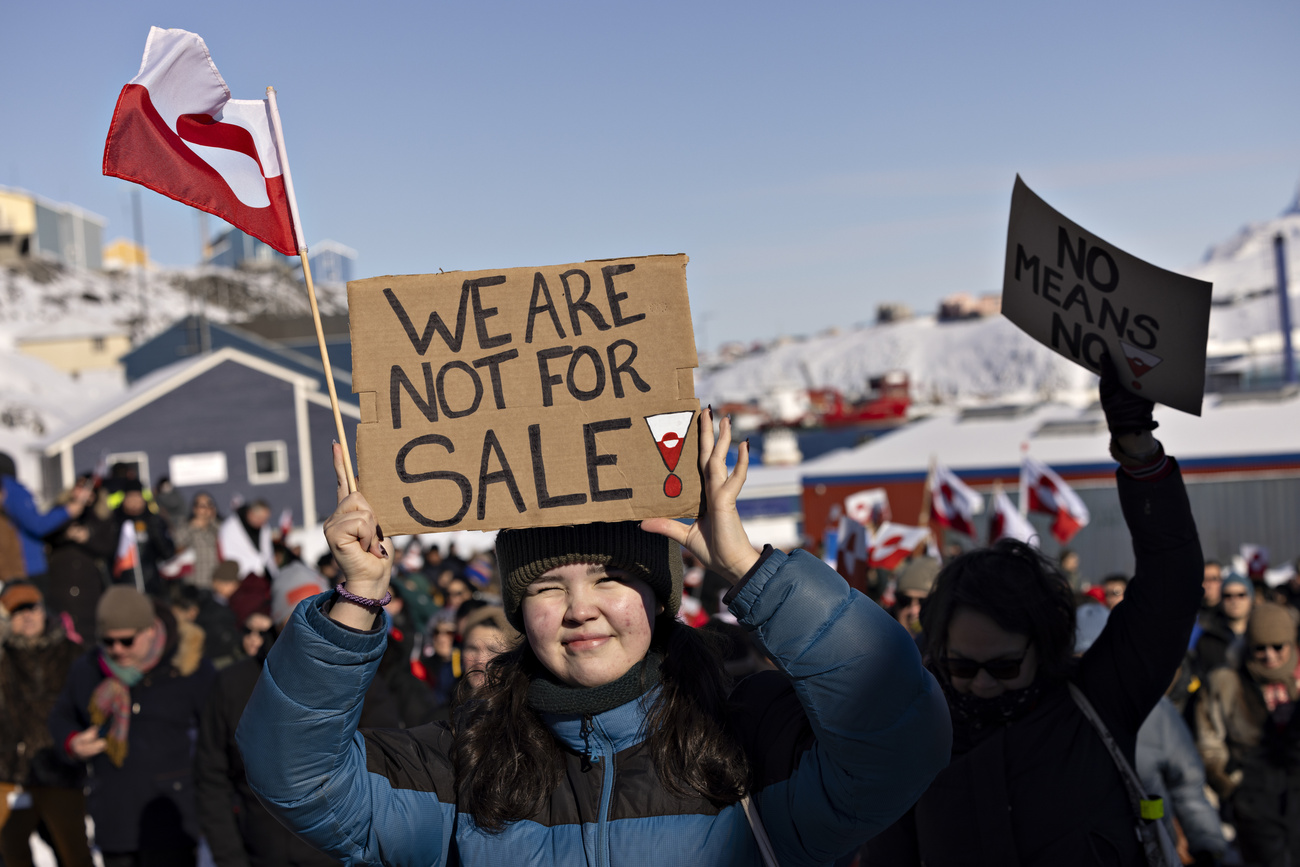
UBS said the latest drop into negative territory was also likely linked to Trump. The survey was carried out at a time when tensions over Greenland were escalating, raising the risk of higher US tariffs on some European countries. Those discussions appear to have dampened analysts’ sentiment.
More
Swiss lawmakers form Swiss-Greenland friendship group
The index is calculated from the difference between analysts expecting the economic outlook to improve (18.6%) and those predicting it will worsen (23.3%). Most of the 42 respondents, however, expected no change in the overall situation.
Key interest rate expected to remain at 0%
The analysts were also asked for their specific Gross Domestic Product (GDP) forecasts. On average, they expect growth of 1.1% this year, rising to 1.3% in 2027. “At those levels, economic growth would remain below its long‑term average,” UBS said.
+ WEF: Switzerland treads carefully with Trump as tariff deal looms
Almost 90% of those surveyed also expect inflation to stay between 0% and 1% in 2026, with a slight rise to an average of 0.4%, up from 0.2% last year. As a result, three‑quarters of the analysts believe the Swiss National Bank will leave its key interest rate unchanged at 0% in 2026, according to the statement.
The survey was conducted between January 15 and 21.
Translated from German by AI/sp
We select the most relevant news for an international audience and use automatic translation tools to translate them into English. A journalist then reviews the translation for clarity and accuracy before publication.
Providing you with automatically translated news gives us the time to write more in-depth articles. The news stories we select have been written and carefully fact-checked by an external editorial team from news agencies such as Bloomberg or Keystone.
If you have any questions about how we work, write to us at english@swissinfo.ch
External Content

In compliance with the JTI standards
More: SWI swissinfo.ch certified by the Journalism Trust Initiative

You can find an overview of ongoing debates with our journalists here . Please join us!
If you want to start a conversation about a topic raised in this article or want to report factual errors, email us at english@swissinfo.ch.