








More can be done to prevent addiction in Switzerland, says anti-addiction NGO

Addiction to alcohol, tobacco, substances or gambling not only creates suffering among the population, but also generates enormous costs for the insured who pay health insurance premiums.
This is according to Addiction Switzerland, which calls on the government to ‘reverse course’ and invest more in prevention.
A study published in 2021 estimated that the economic costs attributed to addiction amount to almost CHF8 billion each year, the foundation writes in its ‘Swiss Addiction Panorama 2026’, published on Thursday. These costs are mostly related to health care costs, as well as loss of productivity and criminal proceedings.
+Get the most important news from Switzerland in your inbox
In addition to these financial repercussions, there is also immense human suffering, emphasises Addiction Switzerland, as more than 10,000 people die each year in Switzerland due to tobacco, alcohol or drug consumption, and tens of thousands are addicted to addictive substances.
Despite this, prevention measures are subject to considerable cuts by politicians, both cantonal and federal. Restricting funds in the field of addiction prevention means a loss of control and negative repercussions both for the people involved and for society as a whole, warns the organisation, which calls on the government to implement a ‘forward-looking strategy’ in the field of prevention and to allocate all the necessary resources.
Better protecting young people
According to the ‘Swiss Addiction Panorama 2026’, the sale of alcohol and tobacco in Switzerland continues to decline year on year. However, the figures show that nicotine consumption – encouraged by an increasingly diversified range of products aimed especially at young people – still affects 27% of the population over the age of 15.
And it is precisely against the tobacco industry that Addiction Switzerland is calling on the government to take action. For the organisation, it is essential to provide greater protection for young people and to protect them from premature consumption, for example through a stricter age limit, or by enforcing a ban on addictive substances, and appropriate taxation on products.
According to the foundation’s figures, moreover, 16% of Swiss regularly consume alcohol to such an extent that it poses a risk to their health. Also of concern to the organisation is the number of alcohol purchase tests carried out in shops and restaurants, which show that a quarter of establishments do not comply with the ban on selling alcohol to minors. In addition, the foundation points out, more than 1,700 infants are affected by foetal alcohol spectrum disorders (FASD) every year.
Crack crisis
According to figures, about 200,000 people in Switzerland consume cannabis. According to Addiction Switzerland, at least 50 tonnes of this drug escapes regulation and taxation every year. The organisation hopes that the ‘promising path’ taken with the various pilot projects for the regulated sale of cannabis will improve this situation in the future.
More
Crack cocaine crisis escalates in Switzerland
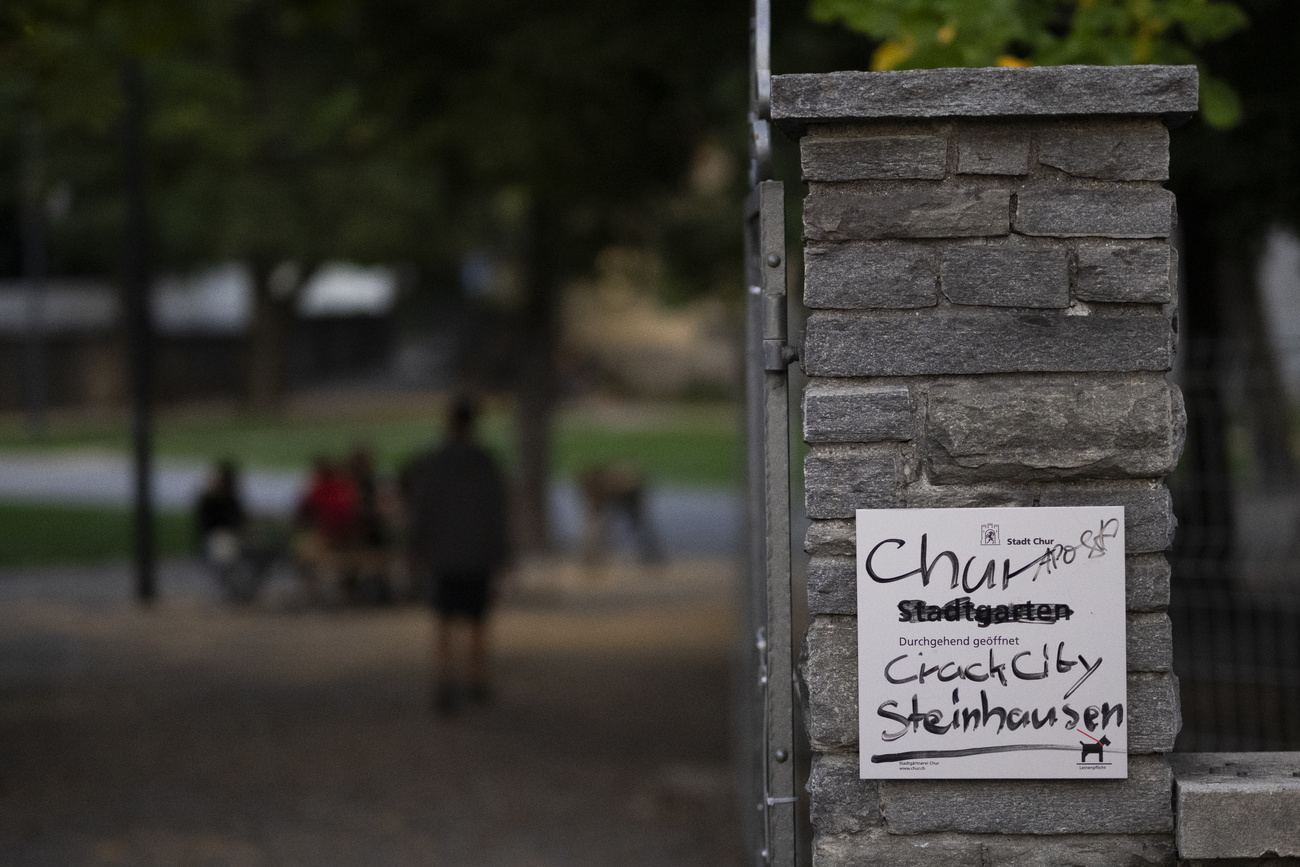
Faced with the ‘crack crisis’ that has plagued many Swiss cities for the past four years, the organisation calls on the federal government to strengthen and better support the cantonal and municipal authorities in order to better manage the complex picture of cocaine derivative consumption.
The foundation also warns against the possible spread on the market of synthetic opioids, the consumption of which has caused numerous deaths in the United States.
Social networks
In addition to substances, Addiction Switzerland also lists problems associated with gambling and excessive internet use. According to the latest report, gambling-related problems are on the rise in Switzerland. About 7% of young adults exhibit behaviour that is deemed problematic. Within a year, gambling establishments imposed more than 18,000 gambler bans in the country. The measure is taken if a gambler is considered overburdened with debts or bets sums disproportionate to their income, or is deemed addicted. In all, gambling losses of more than CHF2 billion have been recorded.
Finally, according to Addiction Switzerland, around 7% of 15-year-olds show problematic behaviour due to social networking addiction. Despite the debates on social networks and the use of smartphones at school, no effective measures have so far been planned to regulate the manipulative mechanisms of these platforms, the foundation concludes.
Adapted from Italian by AI/ac
We select the most relevant news for an international audience and use automatic translation tools to translate them into English. A journalist then reviews the translation for clarity and accuracy before publication.
Providing you with automatically translated news gives us the time to write more in-depth articles. The news stories we select have been written and carefully fact-checked by an external editorial team from news agencies such as Bloomberg or Keystone.
If you have any questions about how we work, write to us at english@swissinfo.ch
External Content

In compliance with the JTI standards
More: SWI swissinfo.ch certified by the Journalism Trust Initiative

You can find an overview of ongoing debates with our journalists here . Please join us!
If you want to start a conversation about a topic raised in this article or want to report factual errors, email us at english@swissinfo.ch.