








WWF picks Swiss wildlife winners and losers of the year
Despite some successes in species conservation, the overall balance for wildlife remains negative, according to WWF's annual list of winners and losers.
Select your language
Generated with artificial intelligence.
Listening:
WWF picks Swiss wildlife winners and losers of the year
Switzerland is no role model either, wrote the WWF on the publication of its new list of winners and losers in the animal kingdom in 2025.
Losers of 2025:
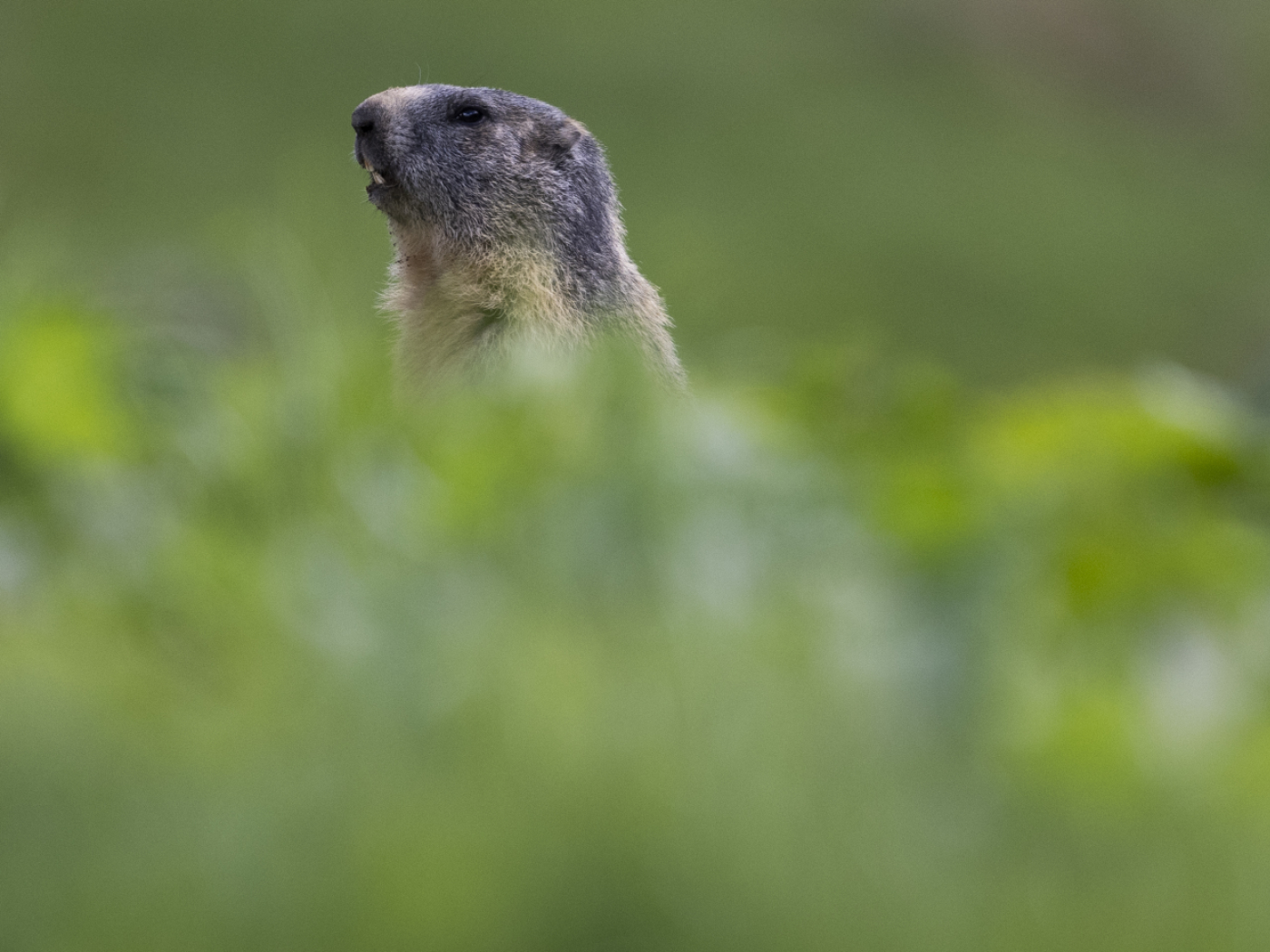
Marmot: The Alpine marmot relies on a thick blanket of snow to insulate its burrows. In winters with little snow, as recently, the burrows cool down and many animals do not survive hibernation. According to the WWF, conditions for marmots are becoming more precarious as global warming progresses.
+Get the most important news from Switzerland in your inbox
Hare: The brown hare used to be widespread, but is now rare. In parts of the Central Plateau, the brown hare has already disappeared completely due to a lack of suitable habitats, according to WWF.
Freshwater shrimp: According to the WWF, freshwater shrimps are very sensitive to pesticides in the water. As a result, the it is disappearing from more and more streams. By refraining from introducing a limit value for deltamethrin in watercourses, the government has failed to improve the chances of survival of freshwater shrimps, according to the environmental organisation.
Lynx: Once extinct in Switzerland, the lynx was reintroduced to the country in 1971 and now numbers have increased to over 300 animals, the largest population in Western Europe. Nevertheless, the WWF categorises the species as a loser because the populations are poorly connected, genetically impoverished and jeopardised by inbreeding. Without better movement between the populations, previous successes are in danger of being lost, according to WWF.
Winners of 2025
Jackal: A golden jackal was first spotted in Switzerland in 2011, and there have been regular observations in various cantons since 2016. According to the WWF, it is probably only a matter of time before young golden jackals are born in Switzerland.
Little owl: The little owl had almost disappeared in Switzerland. However, there has now been a turnaround: 161 little owl territories were counted in 2025 – the highest number in decades.
Bison: In the Romanian Carpathians, bison were once again born in the wild in 2025. For the WWF, this is a strong signal that reintroduction programmes are working. There is also a bison project in Switzerland that aims to bring back the animals that have been extinct for 1,000 years. So far, however, the Swiss bison have been living in a fenced-in area in the Solothurn Jura.
Adapted from German by DeepL/ac
We select the most relevant news for an international audience and use automatic translation tools to translate them into English. A journalist then reviews the translation for clarity and accuracy before publication.
Providing you with automatically translated news gives us the time to write more in-depth articles. The news stories we select have been written and carefully fact-checked by an external editorial team from news agencies such as Bloomberg or Keystone.
If you have any questions about how we work, write to us at english@swissinfo.ch
External Content

In compliance with the JTI standards
More: SWI swissinfo.ch certified by the Journalism Trust Initiative

You can find an overview of ongoing debates with our journalists here . Please join us!
If you want to start a conversation about a topic raised in this article or want to report factual errors, email us at english@swissinfo.ch.