








Drones used to detect drought stress in Swiss forests

Increasing heat and drought are putting forests under pressure. Researchers at the Swiss Federal Institute for Forest, Snow and Landscape Research (WSL) have used drones to investigate how native tree species are responding to climate change.
Select your language
Generated with artificial intelligence.
Listening:
Drones used to detect drought stress in Swiss forests
+ Get the most important news from Switzerland in your inbox
To strengthen the resilience of forests in the face of climate change, experts need to know how different tree species react to rising temperatures and water shortages, WSL said in a statement on Monday.
Until now, such studies have been expensive and could generally only be carried out on individual trees.
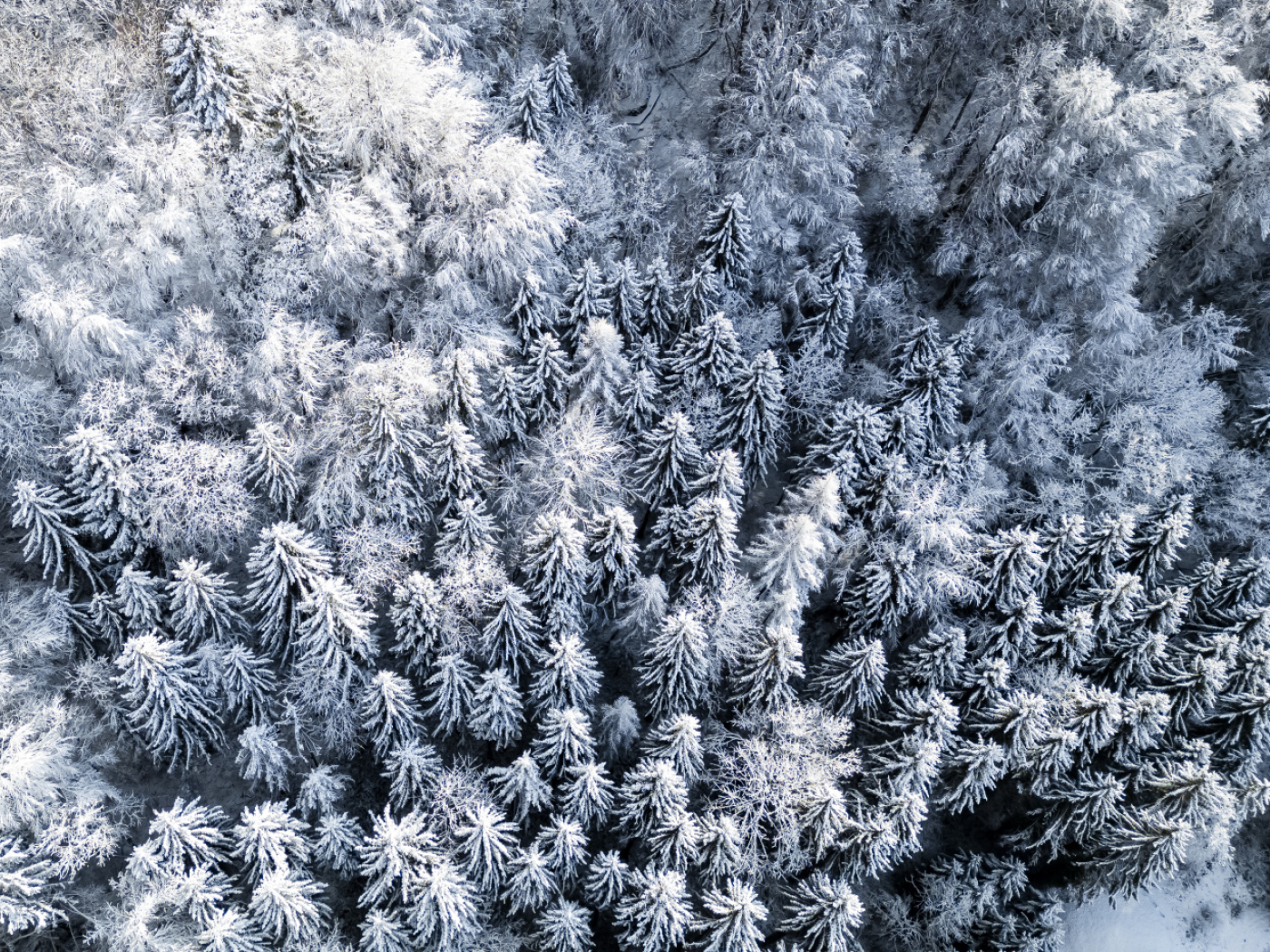
A WSL team has therefore been studying images taken by drones equipped with multispectral cameras capable of recording invisible areas of the light spectrum.
More
Swiss trees stunted by climate change
The cameras detect from the air a particular pigment that trees produce to protect their leaves from excessive sunlight during periods of drought.
“This allows us to identify whether a tree is under acute stress even before the damage is visible to the naked eye,” explained WSL geographer Petra D’Odorico in the press release.
+ Swiss forests in race against time
Reactions specific to each species
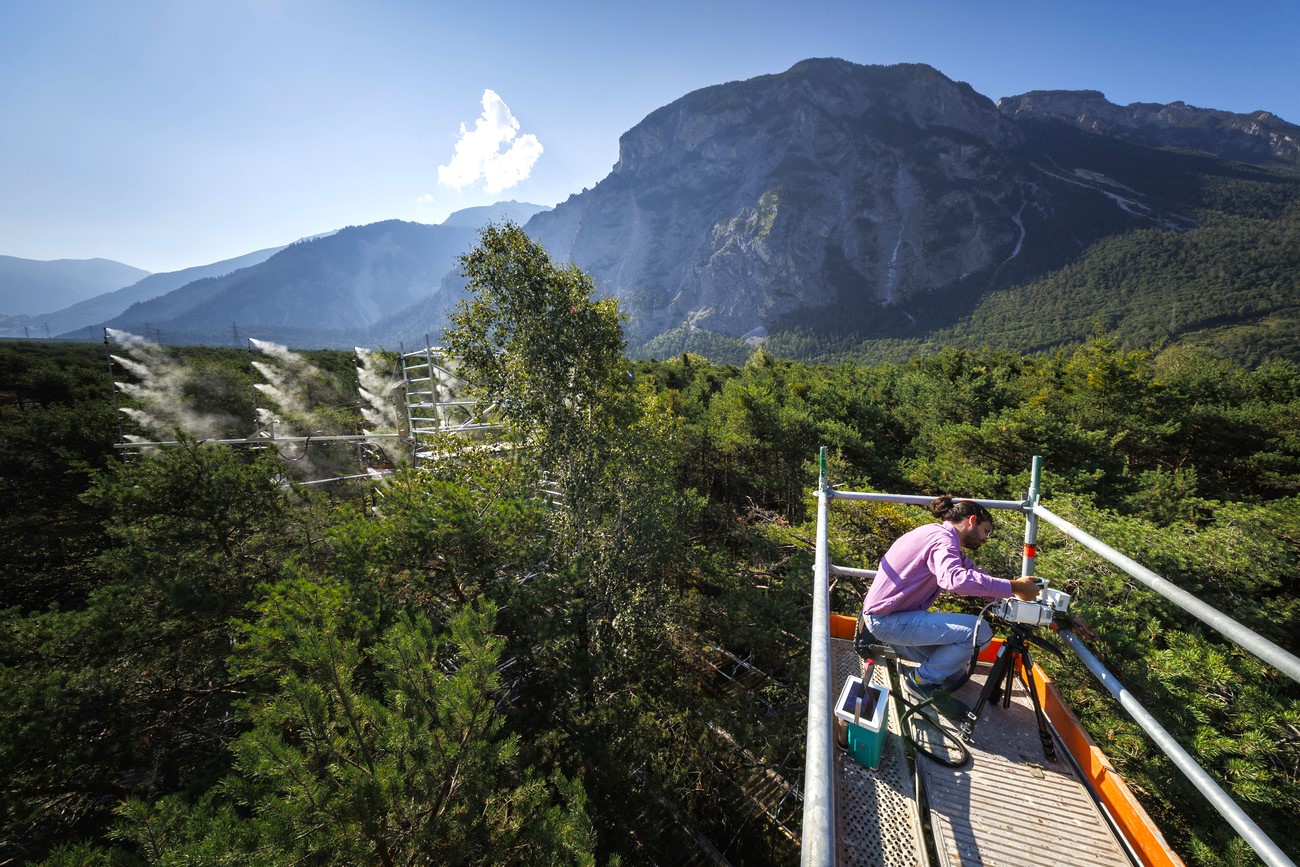
Using these special cameras, the team repeatedly flew over a forest at the University of Basel’s canopy research site in Hölstein, canton Basel Country, during the heatwave of 2023.
It analysed changes in the crowns of seven native tree species, then compared the aerial data with measurements taken on the trees.
+ Switzerland’s forests of the future
The images made it possible to identify the specific reactions of each species to drought. The researchers observed, for example, that oak trees recover more quickly from a hot day than other species. Conifers, on the other hand, only show signs of water stress after a certain delay, before suddenly dying out.
This method of measurement could in future help to monitor forests on a large scale.
D’Odorico is also studying non-native trees, such as the Lebanese cedar or the Oriental beech, in order to identify species likely to replace native species in regions affected by climate change.
What is your opinion? Join the debate:
External Content
More
Swiss experiment targets forest drought, a driver of climate change
Translated from French by AI/sb
We select the most relevant news for an international audience and use automatic translation tools to translate them into English. A journalist then reviews the translation for clarity and accuracy before publication.
Providing you with automatically translated news gives us the time to write more in-depth articles. The news stories we select have been written and carefully fact-checked by an external editorial team from news agencies such as Bloomberg or Keystone.
If you have any questions about how we work, write to us at english@swissinfo.ch
External Content

In compliance with the JTI standards
More: SWI swissinfo.ch certified by the Journalism Trust Initiative

You can find an overview of ongoing debates with our journalists here . Please join us!
If you want to start a conversation about a topic raised in this article or want to report factual errors, email us at english@swissinfo.ch.