








Science podcast: the 2000-watt society – a Swiss experiment in sustainable living

Can we live a good life using significantly less energy? Switzerland's "2000-watt society" concept aims to answer this question, with pioneering projects demonstrating its feasibility.


Subscribe to
-
 Apple PodcastsExternal link
-
 SpotifyExternal link
-
 YouTubeExternal link
-
 Amazon MusicExternal link
-
 iHeartRadioExternal link
-
 Podcast IndexExternal link
-
 CastboxExternal link
-
 OvercastExternal link
-
 Pocket CastsExternal link
-
 Podcast AddictExternal link
-
 DeezerExternal link
-
 Listen NotesExternal link
-
 PodchaserExternal link
-
 Player FMExternal link
-
 CastroExternal link
-
 GoodpodsExternal link
-
 True FansExternal link
-
 PandoraExternal link
- Buzzsprout RSS Feed External link
External Content
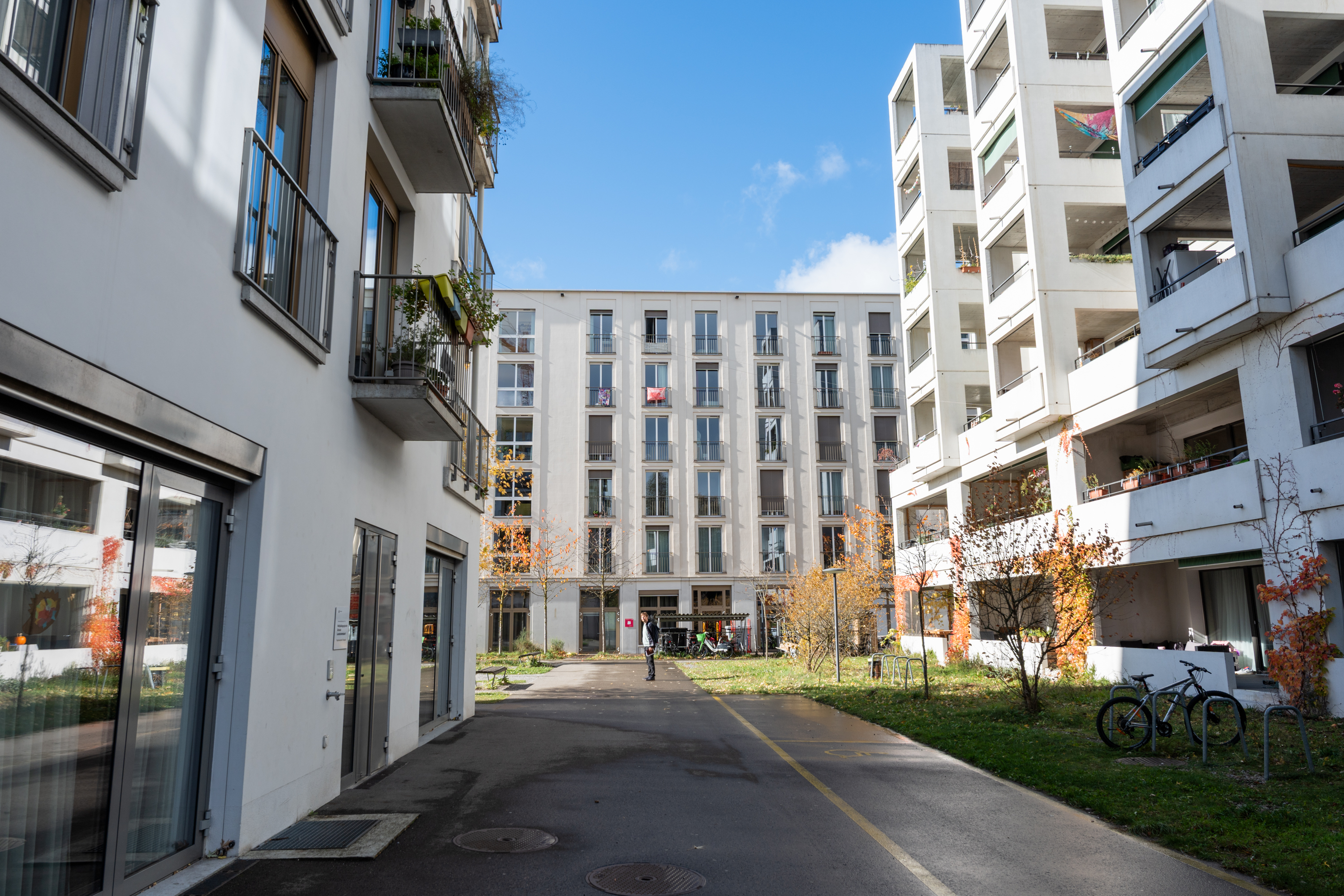
In this episode of ‘The Swiss Connection’ science podcast, Kristian Foss Brandt takes us to the the Hunziker Areal in Zurich, a housing complex built 10 years ago, that serves as a living laboratory for the 2000-watt society concept.
First proposed by researchers at the Swiss federal technology institute ETH Zurich in the late 1990s, the 2000-watt society envisions each person consuming no more than 2,000 watts of energy a year – roughly one-third of today’s average Swiss consumption. This ambitious goal is crucial for Switzerland’s climate strategy. While reducing energy consumption involves obvious changes when it comes to heating and transportation, a significant portion of energy is “hidden” in our consumption of food, clothing, and electronics.
Residents of the Hunziker Areal aim to meet the 2000-watt target through energy-efficient buildings, shared resources and conscious lifestyle choices. While challenges remain, particularly with air travel emissions, the project demonstrates that a comfortable, low-energy urban lifestyle is achievable, inspiring similar initiatives across Switzerland.
Find out more about the ‘The Swiss Connection’ science podcast and our other Swiss podcasts in English here, on Apple PodcastsExternal link, or SpotifyExternal link.

You can find an overview of ongoing debates with our journalists here . Please join us!
If you want to start a conversation about a topic raised in this article or want to report factual errors, email us at english@swissinfo.ch.