








Do Afghan lives matter?

Select your language
Generated with artificial intelligence.

Listening:
Do Afghan lives matter?
In Afghanistan, women and girls in particular are paying the price for failed policies. The Afghan Fund in Geneva should finally act to recapitalise the Central Bank, writes Norah Niland.

Afghanistan has been shaped by its rich and diverse cultural history from ancient to contemporary times. Although blessed with a wealth of untapped resources, nowadays, millions of Afghans are preoccupied with survival. Life, for many, is a daily battle against hunger, degraded or non-existent essential services such as clean water, sanitation and health care. Mounting debt and profound levels of poverty make Afghanistan one of the poorest countries in the world. This raises questions as to whether Afghan lives matter to those governments which have orchestrated unprecedented levels of destitution.
This opinion piece focuses on the policies of different stakeholders who have prioritised penalising Afghan citizens by means of economic warfare – an agenda of manufactured poverty – rather than engaging with the Taliban authorities, who take pride in their infamous rulings however repulsive to others. These edicts reinforce the Taliban’s interpretation of Afghan culture and deep-seated norms that have long discriminated against women and girls.
Poverty in Afghanistan is not a new phenomenon. It can be traced, in part, to almost five decades of armed conflict, including a post 9/11 war economy that sharpened structural inequalities. The United States-led occupation aggravated weak and corrupt governance and fuelled impunity. It also contributed to the return of the Taliban to Kabul in August 2021.
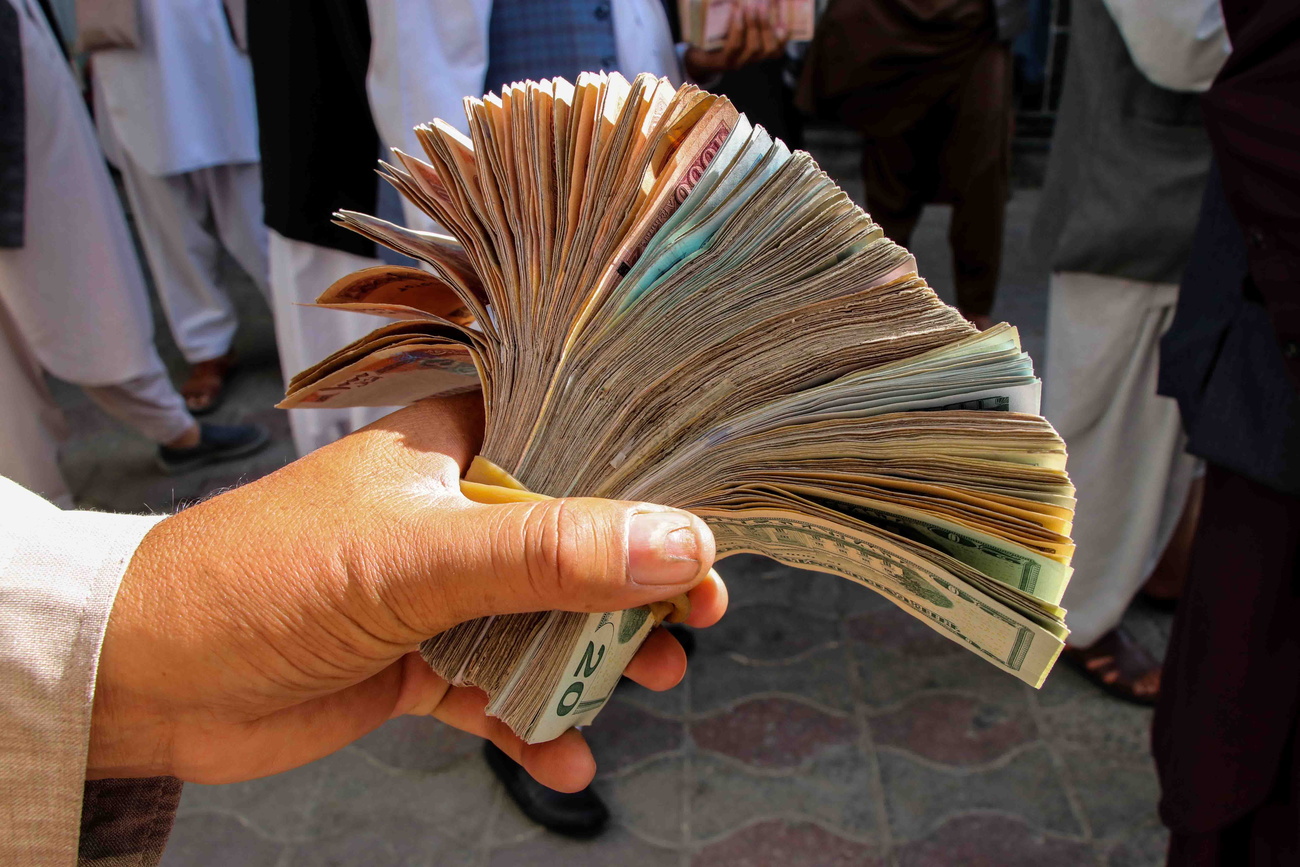
The re-emergence of the Islamic Emirate of Afghanistan – the official name of the Taliban administration – triggered a host of punitive measures by the US and its allies. This included the immediate cessation of economic support to Kabul that, previously, reliedExternal link on Western funding for 75% of government expenditure. The US blocked $9.1 billion (CHF7.1 billion) of the country’s external, sovereign reserves in 2021. This handcuffed the central bank, or Da Afghanistan Bank (DAB), thereby suffocating the economy and banking system. As Dr. Shah Mehrabi, a respected economist notedExternal link at the time, the DAB’s lack of access to its dollar-denominated reserves would undermine its historic ability to maintain a stable exchange rate and curb inflation. Indeed, in any setting, an economy cannot function effectively in the absence of an experienced and credible central bank.
More
How a portion of Afghanistan’s foreign reserves ended up in Geneva
Given the dire straits faced by impoverished and destitute Afghans, the United Nations organised a system to, literally, fly in cash dollars to support humanitarian programming. This also proved a lifeline for the DAB, which could use these US dollars, once lodged locally, to undertake regular currency auctions to stabilise the value of the afghani, the local currency. This, in turn, enabled financial transactions and commercial trade.
This “fly-in cash dollars” system is now in jeopardy given the dramatic reduction in Western funding for humanitarian action that began last year and the absence of support for sustainable development since 2021. The US, which had providedExternal link “more than 40% of all aid in 2024” to Afghanistan, ended its assistance in a sudden and brutal fashion in April 2025. Coupled with drastic cuts by other donors such as Germany and the United Kingdom, Tom Fletcher, the UN’s most senior humanitarian official, notedExternal link after a visit to the country last year that the humanitarian sector, overall, would shrink and many vulnerable people would die.
DataExternal link shows that 21.9 million Afghans, or 45% of the population, are in desperate need of humanitarian action this year. More than a third of the Afghan population of 45 million are currently experiencing devastating levels of hunger. Soaring rates of acute food insecurity means that a “staggering 3.7 million children will need malnutrition treatment”, reportsExternal link the World Food Programme. The closure of more than 420 health facilities this past year has contributed to a “3 to 4 percent increase in infant mortality” and a noticeable increaseExternal link in maternal deaths.

More
What justice for women in Afghanistan?
The Politics of Collective Punishment
A loud cacophony of condemnation of repressive Taliban policies by politicians, human rights actors and others have effectively made Afghanistan a pariah state while ignoring how measures that have shackled the DAB continue to strangle the economy. This policy of collective punishment ignores how poverty further marginalises the women and girls who bear the brunt of the Taliban’s disabling restrictions – restrictions that inhibit their presence outside the home including access to education, health care and employment.
Unceasing poverty has stretched traditional coping mechanisms to breaking point. Extended family networks are key in times of stress, as is migration to neighboring countries, remittances, debt and sale of essential farming and household assets. The forced returnExternal link of some 5.4 million Afghans from Pakistan and Iran primarily, as well as Europe, in recent times has scuttled the flow of remittances and intensified economic hardshipsExternal link. A UN reportExternal link last year indicated that nine in ten families, including many female-headed households that tend to be hardest hit by poverty, use harmful coping practices to survive.
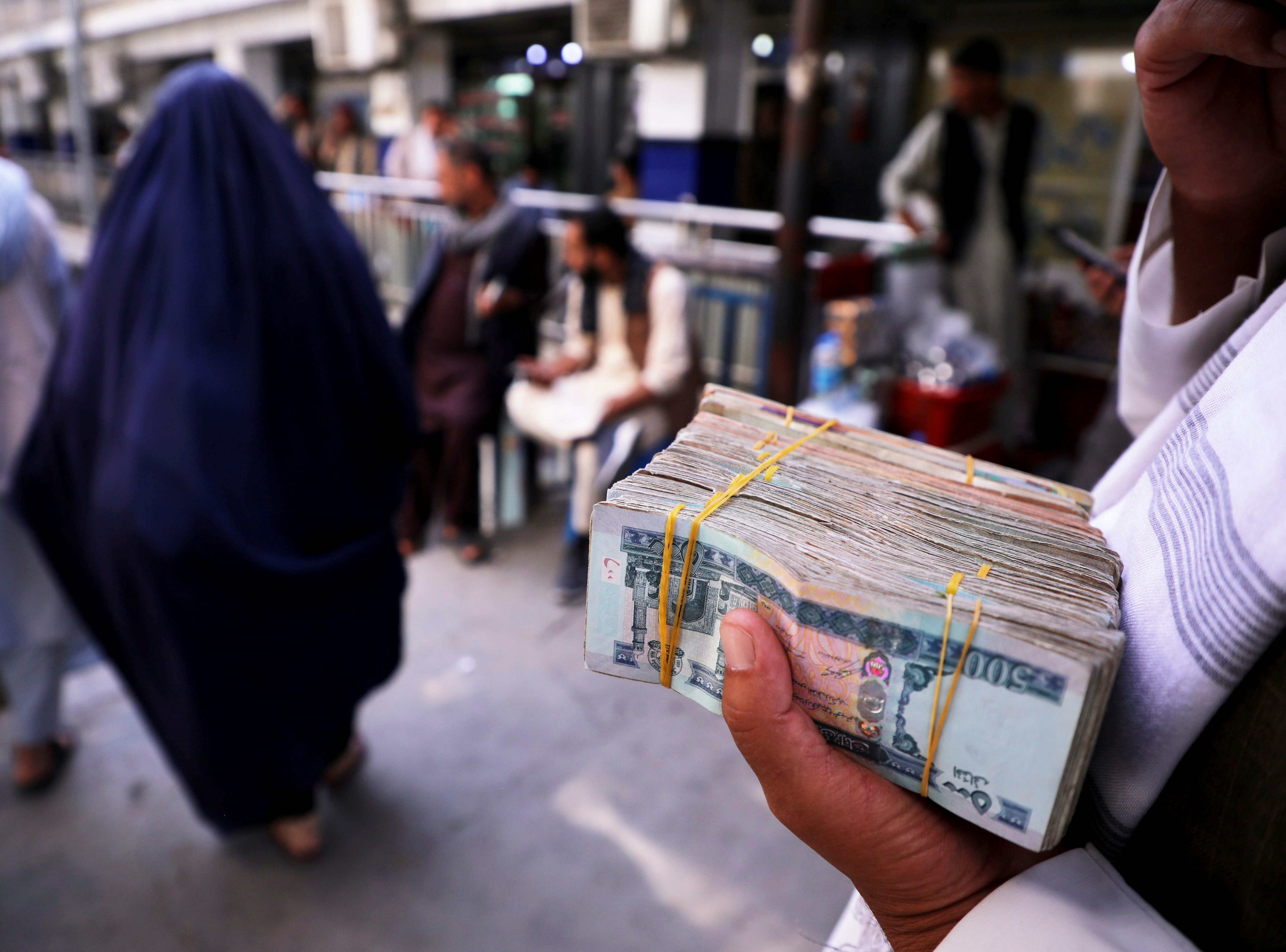
In September 2022, the US transferred US$3.5 billion – half of the blocked Afghan reserves – to a newly created Fund for the Afghan PeopleExternal link in Switzerland, ostensibly for the benefit of Afghans. It was assumed that this would help ease the economic and liquidity crisis in Afghanistan. Initially, the Afghan Fund focused on developing in-house procedures but this past year it has, apparently, gone into hibernation mode as indicated by the pace and content of its Board meetings. These days, my enquiries on this matter go unanswered, unlike in the early days of the Fund. To me, it appears to be stymied by politics rather than inertia in organising measures to recapitalise the DAB, even though this means ignoring the fact that the blocked assets are the property of the Afghan people, whose deliberate deprivation means ever greater mortality rates.
More
Why Afghanistan’s reserves remain stuck in Switzerland
Strong-arm tactics have shaped US decision-making since its hasty retreat from Afghanistan in 2021. In addition, an array of actors including Switzerland, which claim to be strong proponents of human rights and routinely broadcast their concern about the fate of Afghan women, are also complicit in policies that are inhumane and totally at odds with the notion of justice and a shared humanity.
Whatever the politics, Afghan lives do matter. This is reflected in a variety of initiatives that call for an end to manufactured poverty and the suffering it entails. From the outset, United Against Inhumanity (where I am engaged) and other groups calledExternal link for an end to the arbitrary sequestration of Afghan assets and for the re-capitalisation of the DAB. This can be done gradually, by disbursing a minimum of $150 million monthly under an internationally monitored framework. States with a history of donor funding during the post 9/11 era should also invest in sustainable capacity-building programmess for Afghans, with a focus on livelihoods, including entrepreneurship options for women.
The views expressed by the author do not necessarily reflect those of Swissinfo.
Edited by Benjamin von Wyl/ds

More
Our newsletter on geopolitics

In compliance with the JTI standards
More: SWI swissinfo.ch certified by the Journalism Trust Initiative

You can find an overview of ongoing debates with our journalists here . Please join us!
If you want to start a conversation about a topic raised in this article or want to report factual errors, email us at english@swissinfo.ch.