








How Switzerland supported Nepal in its long road to peace

The civil war between Nepal’s government and Maoist rebels ended in 2006. Switzerland played a key role in the ten-year peace process that followed.

The new Nepali prime minister was barely 16 years old when the Maoist rebels and the government agreed on a peace deal in 2006. Yet, by the time Nepal adopted a permanent constitution in 2015, Balendra Shah had already made a name for himself as a popular rapper.
Finding the right path to peace and democracy takes time. Swissinfo spoke to former key players and observers to piece together what it took for the country to unite.
“At the time, we were convinced that peace would pave the way for democracy and that democracy would ensure lasting peace,” says Günther Bächler, who, in 2005, became the first special adviser for peace building in Nepal. Before he took on that position, he was the head of the Swiss peace foundation Swisspeace.
In 2006, there was both an international and local push for state building and democratisation [in Nepal], according to Bächler. “Back then, the idea of mediation was not as overused as it is today.”
External Content
The conflict lasted ten years. In 1996, Maoist rebels started a guerrilla war by attacking several districts. The Nepalese government first relied on the police to combat them before deploying the army. Ceasefires failed repeatedly. The conflict intensified from 2002 onwards. Around 17,000 people died in the civil war, and well over 1,000 are still missing today.
“I still remember how the uprising continued to escalate. A state of emergency was declared in 2003. That was an exciting and sad time to start working in the field,” Bishnu Sapkota tells Swissinfo.
The cost of war
Sapkota started his career as a human rights advisor for the United Nations. “A state of strategic equilibrium emerged. The war could have gone on for years, but the government and the Maoists realised that perhaps no one would win,” Sapkota remembers.
In 2004, his study The Cost of War in Nepal was published. “People were, of course, aware of how many people had died. But what about the costs to human rights for all, to education and health care?” he continues. He was appointed secretary-general of the National Peace Campaign and later became programme manager for the Transition to Peace Initiative (NTTP).
“At that time, the international community created an environment that insisted on dialogue as a solution. All representatives of civil society and human rights defenders were also pushing for this: dialogue, dialogue, dialogue,” says Sapkota.


On top of that, Nepal’s last king “imposed a full autocracy in February 2005”, Sapkota explains. This move suddenly gave parliamentary parties and the Maoists a common goal – to stop the king from seizing power.
To India in an official Swiss vehicle
The king’s crackdown against civil society, Bächler recalls, also forced Switzerland to take a position, at least behind the scenes. “Some critics of the regime escaped arrest by jumping over garden walls at night. We were then able to hide some of them in official Swiss vehicles and take them past military checkpoints to India.” Even though the soldiers did not dare open the doors, the passengers inside the car were sweating blood and tears, he recounts.
Bächler goes on: “The king overplayed his hand. That’s why we offered the political parties our support to help get the key foundational document off the ground.”
For Sapkota, the signing of this 12-point document in November 2005 was a “historic” moment. It marked the beginning of the cooperation between the Maoists and an alliance of seven parliamentary parties.
The 12-point understanding between the Maoists and the democratic partiesExternal link from November 2005 reads like an appeal to bring the monarchy to an end. It states that an “understanding was reached to establish a full democracy with a nationwide democratic movement of all forces against the autocratic monarchy”. According to Bächler, the democratic parties were concerned that the Maoists were only interested in creating a nominally democratic system. Yet, the 12-point understanding already stipulated that a democratic Nepal should adopt a “competitive multiparty system”.

More
Our democracy newsletter
The end of the monarchy
After large protests during Nepal’s People’s Movement, the king reconvened parliament in April 2006 which stripped him of most of his constitutional powers. In 2008, the Constituent Assembly declared Nepal a federal democratic republic.
Both democratic parties and representatives of the Maoist insurgents feared to be outmanoeuvred in the negotiations. And yet, the dialogue continued, Bächler says. Switzerland was seen as an actor supporting a democracy that aimed to “bring society along and reshape it”. The fact that Switzerland was already providing development aid to Nepal was a solid foundation for being taken seriously, Bächler argues. “All Swiss Agency for Development and Cooperation (SDC) programmes in rural areas were very participatory,” he explains. At the local level, resource management was promoted, while at the higher level, the focus was on peacebuilding.
According to Bächler, both sides were optimistic about federalism, which, he emphasises, went hand in hand with the end of the monarchy – not least to break the “rule of the old families”. “It was a highly centralised system in which the feudal elite around the king held much of the power,” Bächler explains. “We did not push federalism, but the fact that Nepal wanted to pursue this path put Switzerland in a good position, both as a mediator and an expert.”
Other international actors on the ground were in a less favourable position. “The Brits neither wanted to abolish the monarchy nor introduce federalism. I remember discussing this with the British ambassador while sitting in front of a portrait of Queen Elizabeth II,” he explains. All international actors, he says, had their own agendas.
Agreement in Steckborn
The consensus on a federal system prompted Bächler and his successors to explain Switzerland’s federal democracy. “We managed to bring participation, subsidiarity and our vertical government structure into the discussion. I invited the Maoists to Switzerland several times to make them understand that their federal concept should not be influenced by Stalinist ideas. In the end, they got it,” says Bächler.
>>Read our article about Sri Lankan lawmakers who travelled to Switzerland last year to learn about direct democracy and federalism.

More
Can Swiss-style federalism help power-sharing efforts in Sri Lanka?
Sapkota recalls how things unfolded after the peace deal. “After the Comprehensive Peace Agreement was signed in 2006, the two sides suddenly argued over the interpretation of every single point,” he remembers.
In 2011, his organisation succeeded in bringing the negotiators from both sides to the town of Steckborn in northeastern Switzerland for a week. The focus of the meeting was the complex and longstanding question of how the Maoist rebels could be rehabilitated and integrated into the Nepali army. But the negotiating parties also discussed different models of government systems which eventually led to a breakthrough. “The actual agreement for the subsequent constitution was reached informally in Steckborn,” says Sapkota.
The civil war’s unresolved legal legacy
In 2023, Bimala Rai Paudyal served as Nepal’s foreign minister. From 2008 to 2014, she worked in the country for SDC which, Paudyal writes in response to Swissinfo, was a formative time for her identity and career. Not least, she says, because the SDC placed project beneficiaries at the centre of its work. The organisation also openly acknowledged that no project could benefit everyone equally. The politician and development scholar considers Nepal’s peace as a “homegrown, learning-by-doing process”.
Yet, she stresses, the peace process is not yet complete and much remains to be done, particularly when it comes to legally addressing the war years. While laws and commissions have been established to uncover the truth and find missing persons, implementation is still lacking. According to Paudyal, the will among the political parties remains limited. “This has left those directly affected by conflict excluded in the peace process outcomes,” she says. But still, she describes the process as “a moderate success compared with other countries”.
Jürg Merz is the current Asia coordinator for the Swiss development organisation Helvetas. Established in 1955, Helvetas was the first to launch projects in Nepal focusing on cheese production where it remains active to this day.
Nepal has also played a special role in Merz’s life since he arrived there in 1998. “I intended to stay for 20 months, but in the end, I stayed for almost 20 years.”
Lack of federalism on a provincial level
The war years had a major impact on “how people thought and what they were like,” Merz recalls. Over time and through his projects, he realised how important it was for people from diverse backgrounds, perspectives and ethnic groups to work together. “This creates better cohesion, stronger roots and a more solid social fabric,” Merz says.
Nepal is now a country of over 30 million people who belong to 140 different ethnic groups and castes. During his two decades in Nepal, Merz could observe how the country was turned into a federal state.
However, federalism in the Himalayan nation still has room for improvement. “I think that at municipal level, federalism works pretty well, as it does at the central government level. However, it does not work so well at the intermediate level,” says Merz adding that the provinces lacked lobbying, power and resources. “They depend on financial transfers from the central government.”
For this reason, “not only the SDC but also Helvetas” is increasingly working with the provinces rather than the central government. “We want to further strengthen federalism and believe that it can work,“ Merz explains.
2025 ‘Gen Z’ protests
Many people see Nepal’s peace process as an important example, but the country is still struggling with many challenges such as economic problems and emigration.
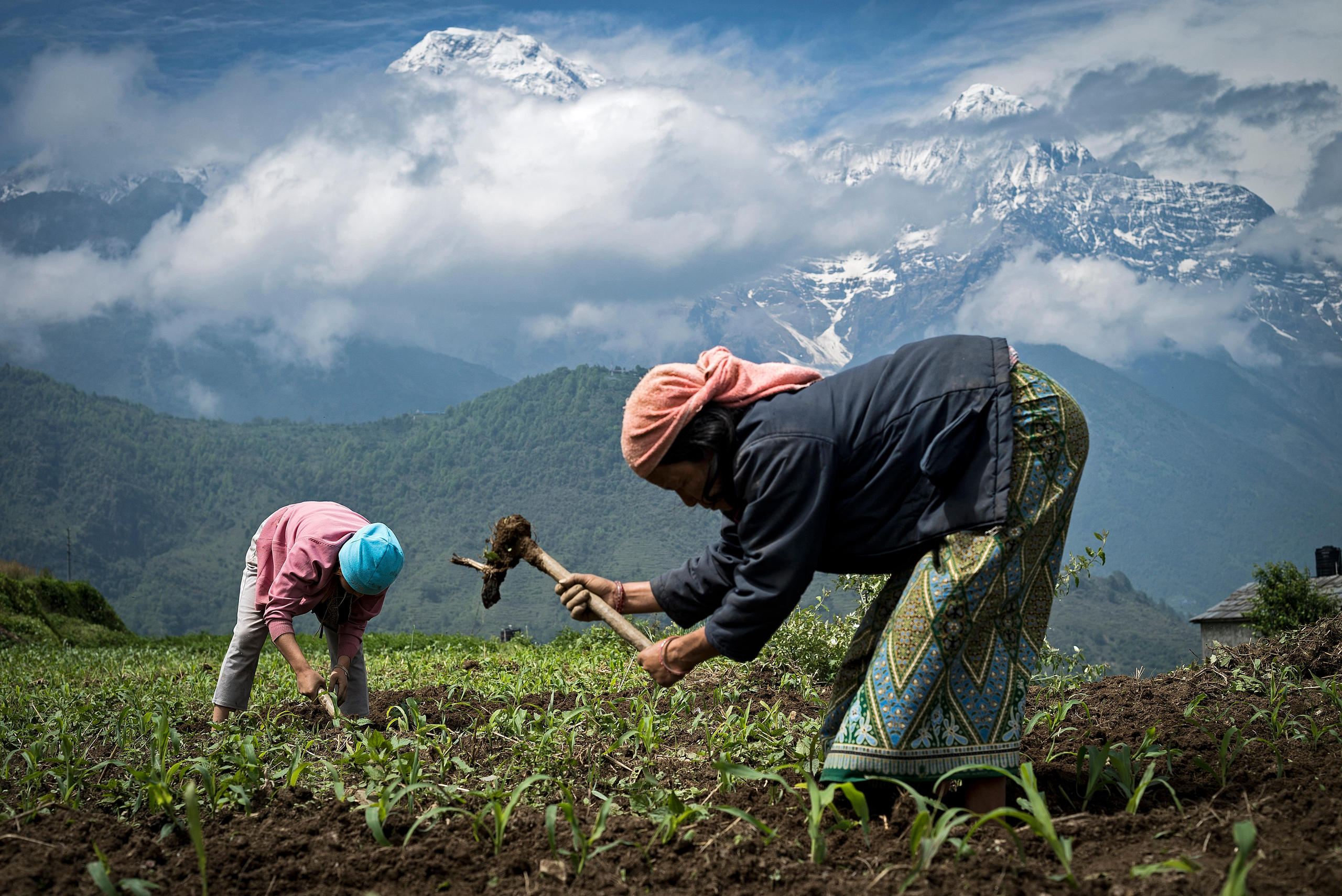
>>Read our article about the impact of migration on Nepali women:
More
The good wife: Nepali migrants’ wives struggle to fill in for husbands and the state
In 2025, thousands of young people took to the streets to protest corruption and a government-imposed ban on social media. During the unrest, the parliament building also went up in flames.
More than 70 people lost their lives during the protests, and, as the BBC recently revealedExternal link, a police order “to deploy necessary force” might have led to the killings.

“Ten years of insurgency, ten years from the ceasefire to the new constitution in 2015 – and now in the ten years since then, there has been so much anger and frustration in society,” Sapkota says.
In 2026, a millennial was elected president after politics had long been dominated by figures who had been involved in the peace process 20 years earlier.
According to a 2026 reportExternal link by the US-based nonprofit Freedom House, Nepal has experienced the second-largest increase in freedom worldwide over the past 20 years. This is certainly one of the report’s rare examples of a positive development.
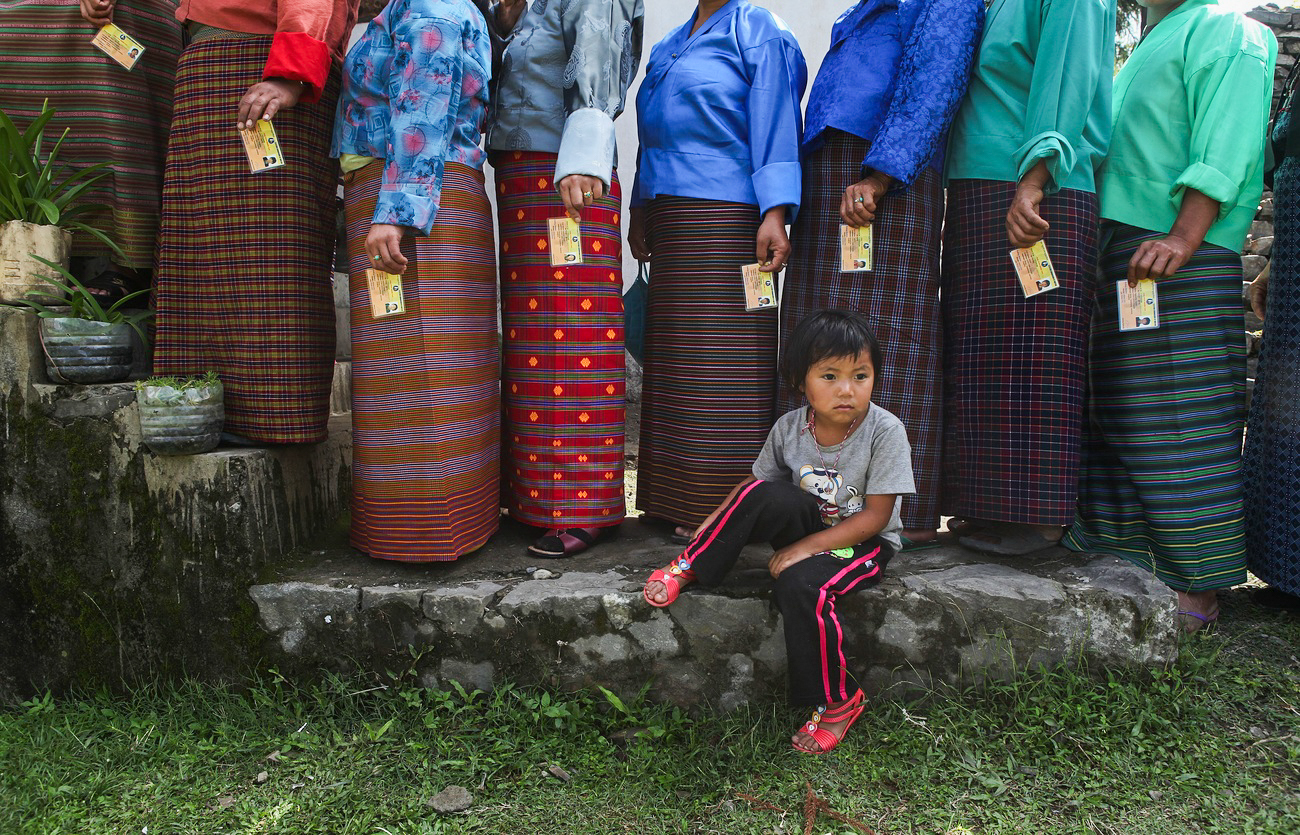
>>Read our article about international coopertion work in Bhutan:
More
From absolutism to democracy in Bhutan: 50 years of Swiss support
Edited by David Eugster/Adapted from Germany by Billi Bierling/sb

In compliance with the JTI standards
More: SWI swissinfo.ch certified by the Journalism Trust Initiative

You can find an overview of ongoing debates with our journalists here . Please join us!
If you want to start a conversation about a topic raised in this article or want to report factual errors, email us at english@swissinfo.ch.