








When is a democracy no longer a democracy?

Beyond Switzerland’s borders, democracy is coming under increasing pressure. But with gradual decline now as much of a feature as violent coups, it’s not always clear when, or if, it really “ends”.
Select your language
Generated with artificial intelligence.
Listening:
When is a democracy no longer a democracy?


Is there a moment when a democracy stops being one? “When meaningful political change is no longer possible through the ballot box” is Kevin Casas-Zamora’s rule of thumb. For the Secretary-General of International IDEA, this marks the dividing line between a place like India, where elections still matter, and Venezuela, where in recent years they have not.
But that yardstick is becoming less reliable. Democratic breakdown used to be easy to spot: a military takeover here, cancelled elections there. In the 21st century, coups still happen – the most recent was Guinea-Bissau in November 2025 – but overall the line has blurred.
Increasingly, a gradual erosion of democratic rules and norms has become the key feature of what is known as “backsliding”. And unlike tanks in the streets, this is not always so visible.
For example, does the concentration of executive power under Donald Trump mean the US is no longer a free democracy? Did Viktor Orbán’s institutional revamp in Hungary from 2010-2026, or the politicisation of courts and media under the Law and Justice Party in Poland, strip those states of their democratic status? If so, do they regain it when new governments move to restore the independence of judges, media or elections? Or when – like in Hungary – an “illiberal” leader accepts defeat at the ballot box?
As Casas-Zamora put it at a 2025 event in BernExternal link co-hosted by the Swiss foreign ministry, “it’s very difficult to know when the Rubicon is crossed”.

Sliding scales between regime types
Such difficulties don’t stop bodies like International IDEA – a democracy-support organisation whose 35 member states include Switzerland – from investigating.
March 2026 saw the publication of two big annual reports on the state of global democracy: by the US-based Freedom HouseExternal link and by the Varieties of DemocracyExternal link (V-Dem) institute in Gothenburg. Neither was overly optimistic. For Freedom House, “global freedom declined for the 20th consecutive year in 2025”. For V-Dem, “democracy is back to 1978 levels for the average global citizen”.
Explore how democracy at its most basic – a system which guarantees fair elections – has fared globally since 1946:
External Content

Yet the assessments can vary when it comes to individual countries. Both reports noted a sharp decline in the US in 2025, but described it differently. For V-Dem, the speed of the Trump administration’s concentration of executive power was unprecedented: the US even dropped from “liberal democracy” to “electoral democracy” in the separate “Regimes of the World” section of the report. Freedom House, an NGO based in Washington D.C., also saw significant freedom of expression and corruption issues in the US – but ultimately the country remains “free”.
Meanwhile yet another assessment, published in April by the Economist Intelligence UnitExternal link (EIU) in London, offered a different view again. Having already downgraded the US to a “flawed democracy” back in 2016, it saw a further decline – but only a slight one – in 2025.
Beyond the US, differences also appear. Hungary is an “electoral autocracy” for V-Dem, “partly free” for Freedom House, and a “flawed democracy” for the EIU. Fiji improved in Freedom House’s rating – moving from “partly free” to “free” after gains in judicial independence and the rule of the law. For V-Dem, it remains in a “democratic grey zone”; for the EIU, it is a “hybrid regime”.
More

Elections aren’t everything
Carl Henrik Knutsen, one of the lead researchers at V-Dem, agrees with Casas-Zamora: pinning down the precise end of a democracy is not clear.
Competitive elections are probably the “key aspect”, he says. But even this is hard to define. Many non-democracies hold elections – Russia, for example. And even where ballots are not rigged and opposition parties not banned, subtler things can tilt the electoral playing field, Knutsen adds. If an incumbent uses state resources to dominate media coverage and boost their campaign, is such a vote still democratic?
Modern conceptions of democracy have thus expanded beyond elections to include a broader set of rights and freedoms – hence the term “liberal” democracy. V-Dem, Knutsen explains, combines various criteria “like Lego blocks” across indices like participation and equality, placing countries on a spectrum from more to less democratic. They are then labelled either as “liberal democracies” (31 in 2025), “electoral democracies” (56), “electoral autocracies” (57), or “closed autocracies” (35).
Given that there are so many democratic indicators, shifts from one category to another tend to reflect a complex mix of factors. Yet in the current global “democratic recession”, Knutsen says, the liberal component has come under particular strain. This is also clear in the US. Its score on election-related indicators remained stable in 2025. But declines in legislative checks on the executive, judicial independence, civil rights protections, and press freedom contributed to the country’s steepest ever decline in a single year on the Liberal Democracy index.
The interactive map below shows the progress of this broader “liberal” form of democracy around the world:
External Content
Moving the goalposts on what counts as democracy?
This raises the question: does a specific decline in liberal aspects justify wider fears that democracy itself is “ending”?
Philip Manow, a political scientist at the University of Siegen in Germany, has written that the expansion of Western definitions of democracy to include more liberal aspects may have unduly moved the goalposts – reshaping not only what counts as democracy, but also where it seems to be failing. Is conflict between courts and government in Hungary evidence of democratic slippage – or part of a normal power struggle in a competitive democratic system? For Manow, as he wrote in Unter BeobachtungExternal link (‘Under Observation’), the “crisis of liberal democracy” may be just that: a crisis of liberal democracy rather than of democracy itself.
This is not only academic wrangling, Manow goes on to describe. In 2022, the European Parliament declared that Hungary was no longer a full democracy but rather – echoing V-Dem – an “electoral autocracy”. “Elections occur, but respect for democratic norms and standards is absent,” parliamentarians said. They also urged the European Commission to use budgetary pressure to push for reforms in Budapest – a clear example of how classifications can impact real-world policy and funding.
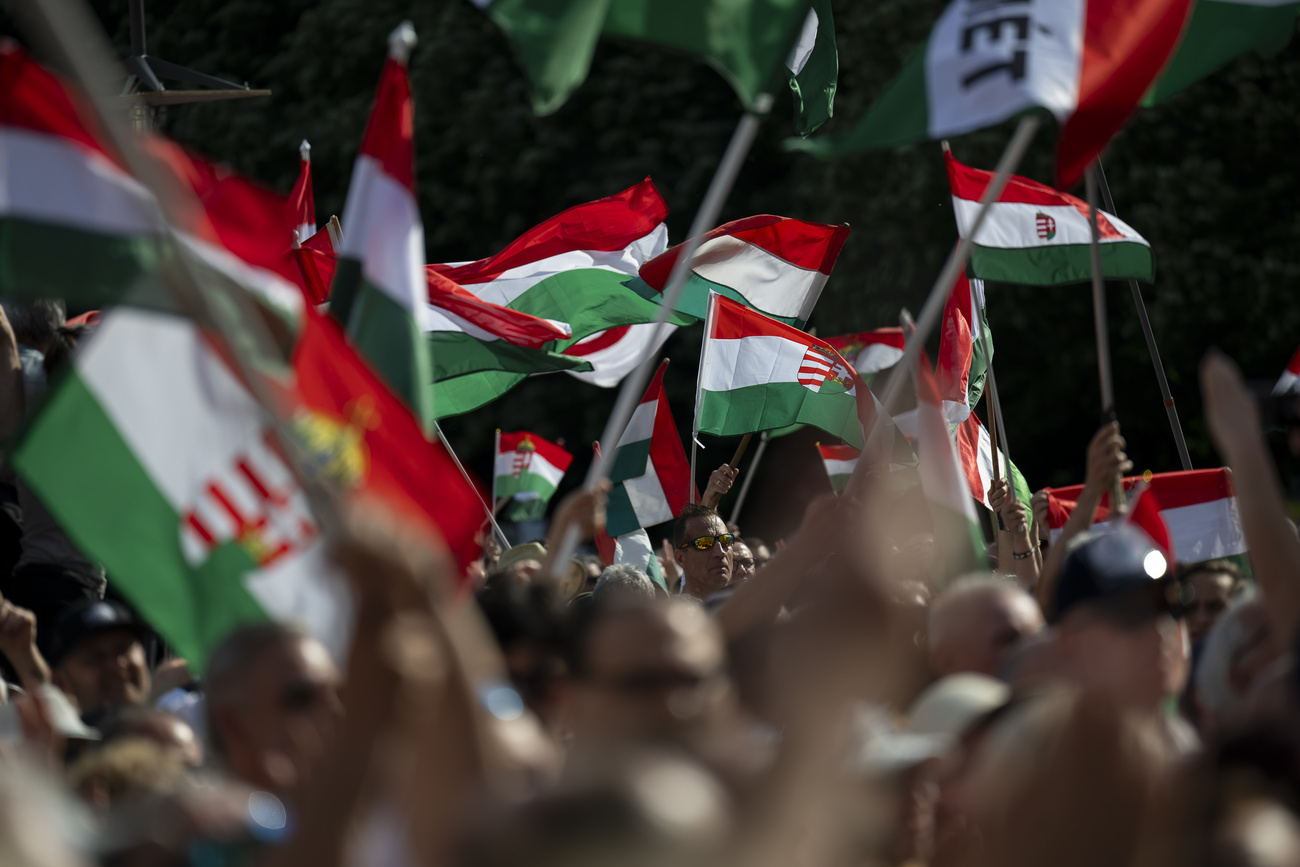
Viktor Orbán’s “illiberal” party is no longer in power, but it had a big impact, including on direct democracy in Hungary:
More
How direct democracy became part of Orbán’s ‘illiberal’ toolkit in Hungary
From institutions to outcomes?
Another question is thus whether the very concept of democracy risks being stretched so far that it becomes too easy – or politically divisive – to talk of its “end”.
Eva Maria Belser, a professor of constitutional law at the University of Fribourg, favours a “thick” understanding of democracy – one including human rights and the rule of law as well as elections. But she is wary of rigid divisions between “proper” democracies and others. Criticism of rights violations is necessary, argues Belser, who represents Switzerland on International IDEA’s advisory board. But after a fractured 20th century, “we don’t need a global split between democratic and non-democratic systems”.
For Belser, the more important question is not when democracy ends, but why – and why fewer people seem willing to defend it. Answering this, she suggests, requires looking beyond institutions to outcomes.
Most people’s concerns are tangible: wages, housing, education, prospects for their children. By this measure, Belser says, “we have to accept the fact that in many places democratic systems have been a disappointment”.
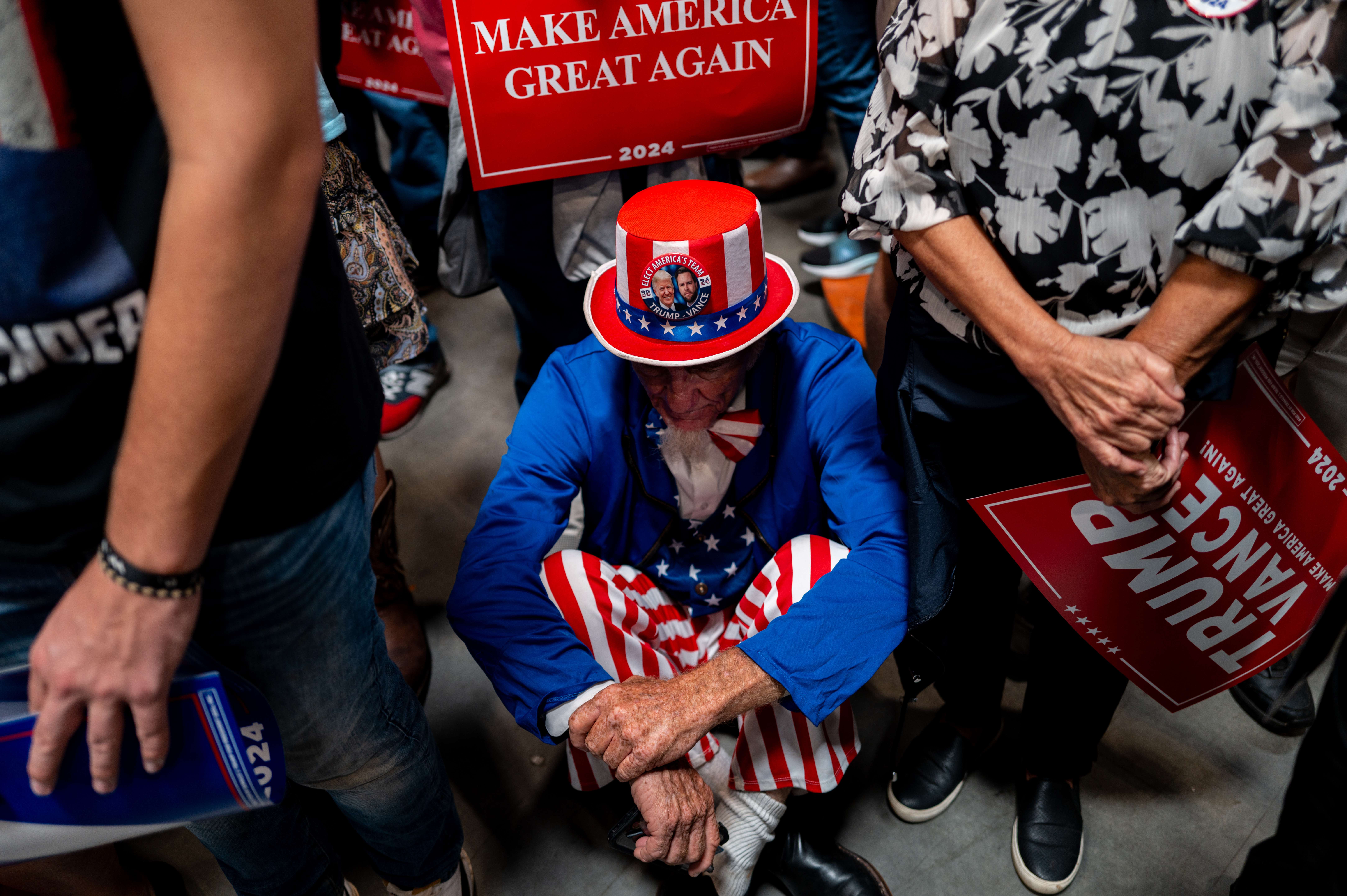
Last year, we asked our readers for their views on democracy and its challenges:
More
How our readers view democracy and its opponents
A chance to reconsider diversity
Yet it’s also far from clear that a more output-oriented view would make things less confusing.
Indeed, some states which are far from free already claim the term “democracy”. North Korea, after all, has it in its official name. Others, including China – an authoritarian state, according to all the leading reports – object to what they see as exclusionary Western benchmarks. In 2021, China’s foreign minister, Wang Yi, argued that a true democracy is one that “meets the people’s needs and gives them enough of a sense of participation, satisfaction and gain” – not one which satisfies a liberal checklist.

Taken to its logical conclusion, however, such an approach could become far too fluid: for example, a democracy based on economic performance could in theory be disqualified by every recession.
For Belser, some anchors remain essential, including fundamental rights. “It’s part of human dignity to be able to speak up freely and to be heard – I believe that is universal,” she says. For democracy generally, given the huge scope to interpret a system of government “of the people, by the people, for the people”, there will likely always be diversity. The current challenges to liberal democracy could thus be a chance, Belser thinks, “to sit together, talk and improve our understanding of what democracy is, could be, and should be” – and where its limits lie.
Edited by Benjamin von Wyl/ts
External Content

In compliance with the JTI standards
More: SWI swissinfo.ch certified by the Journalism Trust Initiative

You can find an overview of ongoing debates with our journalists here . Please join us!
If you want to start a conversation about a topic raised in this article or want to report factual errors, email us at english@swissinfo.ch.