








The Swiss canton where cars had to be pulled by horses

Imagine having to switch off your engine at a cantonal border and horses pulling your car for the rest of your journey. This is what happened in Graubünden, eastern Switzerland, for a quarter of a century: between 1900 and 1925 the canton held out against the automobile, writing a unique chapter in European transport history.
Select your language
Generated with artificial intelligence.
Listening:
The Swiss canton where cars had to be pulled by horses

It all ended at the cantonal border. Instead of stepping on the accelerator, drivers had to watch as two strong oxen or horses were harnessed in front of their vehicle. Only as a team were they allowed to head for their destination in canton Graubünden.
What sounds like a scene from a bizarre comedy was a reality between 1900 and 1925 in Switzerland’s largest holiday region. While the rest of Europe was already revelling in the thrill of speed, the voters of Graubünden stubbornly stuck to a total ban on cars – and made Graubünden a “European one-off”.
‘Smelly and noisy monsters’
The phenomenon of the Graubünden car ban is therefore also an example of the peculiarities of Swiss direct democracy and federalism. In Switzerland, the cantons are autonomous in many matters. This is the only reason why Graubünden was the only canton to enforce such a radical and long-lasting ban.

It all began on August 17, 1900, when, following numerous complaints about the “smelly and noisy monsters”, the cantonal government decided without further ado to ban cars on all roads.
What was originally intended as a safety measure soon developed into a veritable culture war. The men of Graubünden – women couldn’t vote in cantonal issues until 1972 – were called to the polls a total of ten times to vote on the authorisation of cars. The voters rejected any relaxation of the ban nine times, in some cases with overwhelming majorities.
Dust, noise and social divides
The reasons for this resistance were as varied as the canton’s 150 valleys. On the one hand, there were tangible safety concerns: the narrow, unpaved gravel roads were built for stagecoaches and carts.
The much faster cars, on the other hand, kicked up enormous clouds of dust and frightened the horses, which could be life-threatening on the narrow mountain paths.
Even famous spa guestsExternal link such as the Nobel Prize-winning physicist Wilhelm Conrad Röntgen worried whether the horses were still safe and preferred the tranquil private carriage to the automobile.

However, the concern about safety also concealed a social conflict. At the time, the car was seen purely as a “show-off vehicle” and a toy for the wealthy urban upper class.
The local farming community couldn’t see why they should pay for the expensive upkeep of the roads only to be covered in clouds of dust by wealthy tourists.
In addition, the local hauliers feared for their livelihoods. And the Rhaetian Railway, in which the canton had invested a lot of money and which had been in operation since 1889, didn’t want any unwelcome competition on the roads.
This led to absurd scenes on the roads of Graubünden. The German entrepreneur Karl August Lingner, inventor of Odol mouthwash, owned Tarasp Castle in the Lower Engadine at the time. He had to have his limousine pulled by horses from the cantonal border to his property – he was allowed to start the engine only on his own private property.
Even the first car owner in Graubünden, politician Gaudenz Issler from Davos, returned his vehicle after a short time in 1897 in frustration because he considered the roads in his canton to be completely unsuitable.

The First World War and the PostBus
The turning point finally came with the First World War. As horses were drafted into the army and food became scarce, the population had to be supplied by lorry.
The medical profession also loudly demanded motorised vehicles in order to reach their patients in the often remote valleys more quickly in emergencies.
More
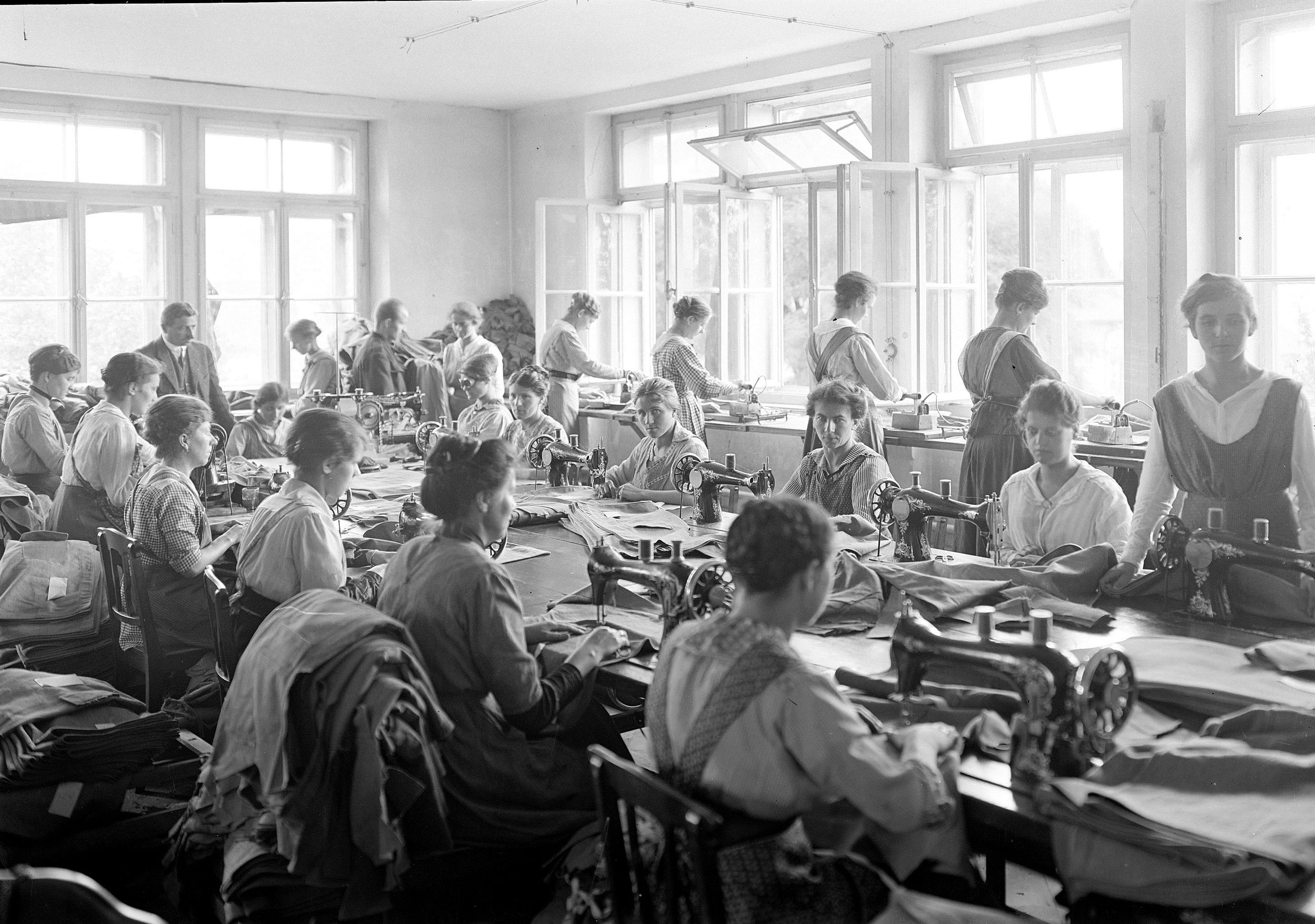
1914: how war changed Swiss life
The introduction of the PostBus was also a decisive factor. In 1919 the first PostBus line began operating between Reichenau and Flims. The people of Graubünden gradually realised that the motorised vehicle was not just a luxury item for the rich but could also make everyday life easier and drastically reduce travel times.
In addition, over time the tourist resorts also feared that they would lose out to other regions if they stuck to the “medieval border closure”, as the car ban was called, among other things.

On June 21, 1925, the time had finally come: in a tenth ballot, 52% of voters in Graubünden lifted the ban on cars.
Malicious tongues later claimed that the narrow result was only achieved because many car-critical farmers were already up in the mountains with their cattle and unable to vote.
From bottom of the league to front runner
Once the ban was lifted, it was full speed ahead. Within just six years, the number of vehicles in the canton increased tenfold.
Ironically, Graubünden has now developed into a canton with one of the highest car densities in Switzerland, with around 126,000 registered cars per 200,000 inhabitants.
In remote areas, the car is simply indispensable for many Graubünden residents in order to participate in social and economic life.
But the old ghosts of resistance have not disappeared completely. Today, 100 years later, car bans are being discussed again, but this time in the context of climate protection, noise pollution and the congestion of the Alpine passes caused by transit traffic.
Cities such as Chur have already created car-free zones, and there are selected days on which traffic is restricted on one of five Alpine passes in favour of bicycles and hikers.
Over a hundred years ago, canton Graubünden fought against cars for safety, cost and cultural reasons. Today, roads are being deliberately closed to cars at times in order to promote soft mobility and enhance tourist experiences.
Edited by Balz Rigendinger. Translated from German by AI/ts
More

How we translate with AI
We use automatic translation tools, such as DeepL and Google Translate, for some content.
Each translated article is carefully reviewed by a journalist for accuracy. Using translation tools gives us the time for more in-depth articles.
Learn more here about how we work with AI.

In compliance with the JTI standards
More: SWI swissinfo.ch certified by the Journalism Trust Initiative

You can find an overview of ongoing debates with our journalists here . Please join us!
If you want to start a conversation about a topic raised in this article or want to report factual errors, email us at english@swissinfo.ch.