








Crans-Montana: when a medical bill is not just a bill

After the New Year’s Eve fire at a bar in Crans-Montana, some Italian families received copies of Swiss hospital invoices. The document triggered a diplomatic crisis. Health journalist Vittoria Vardanega reflects on how two healthcare systems failed to understand each other when they met in a moment of grief.
Select your language
Generated with artificial intelligence.
Listening:
Crans-Montana: when a medical bill is not just a bill

For those who live in Switzerland, medical bills are just routine.
After a medical consultation, examination or hospital stay, patients receive a detailed invoice listing every service provided and its cost. Depending on their insurance arrangement, they may pay it themselves and then claim reimbursement. It can also be settled directly between the healthcare provider and the insurer – in which case they only receive a copy for their records.
The document allows the patient to check the services billed, report any errors and become aware of the costs generated by the care they received. Since January 1, 2022, all medical service providers in Switzerland have been required to send it.
In Italy, my country of origin, the billing system works differently. Patients go to hospital, receive care, and then go home. There is no bill at the end, no invoice in the mail, no amount to dispute or verify. Some may pay a bill for some outpatient services, but in most cases, there is no paper trail showing the cost of a treatment.
Healthcare in Italy, of course, is not free – it is funded through general taxation – but the financial transaction remains largely invisible to the patient. The system is based on the principles of universal access to healthcare and free medical care for those who cannot afford it, rooted in article 32 of the Italian constitution. Providing access to care without direct payment is a fundamental part of the country’s moral and social identity.
This is why the copies of invoices sent to some Italian families after the New Year’s Eve fire at the Le Constellation bar in Crans-Montana came as a shock, and became much more than an administrative document.

More
Swiss bar fire likely started by sparklers on champagne bottles, says prosecutor
According to media reports, three Italian citizens who were injured and admitted to a hospital in Sion, in canton Valais where the fire broke out, received copies of invoices for the immediate care they had received on the very first day, January 1, before being transferred to other hospitals, with amounts ranging from around CHF17,000 ($21,500) to CHF66,800.
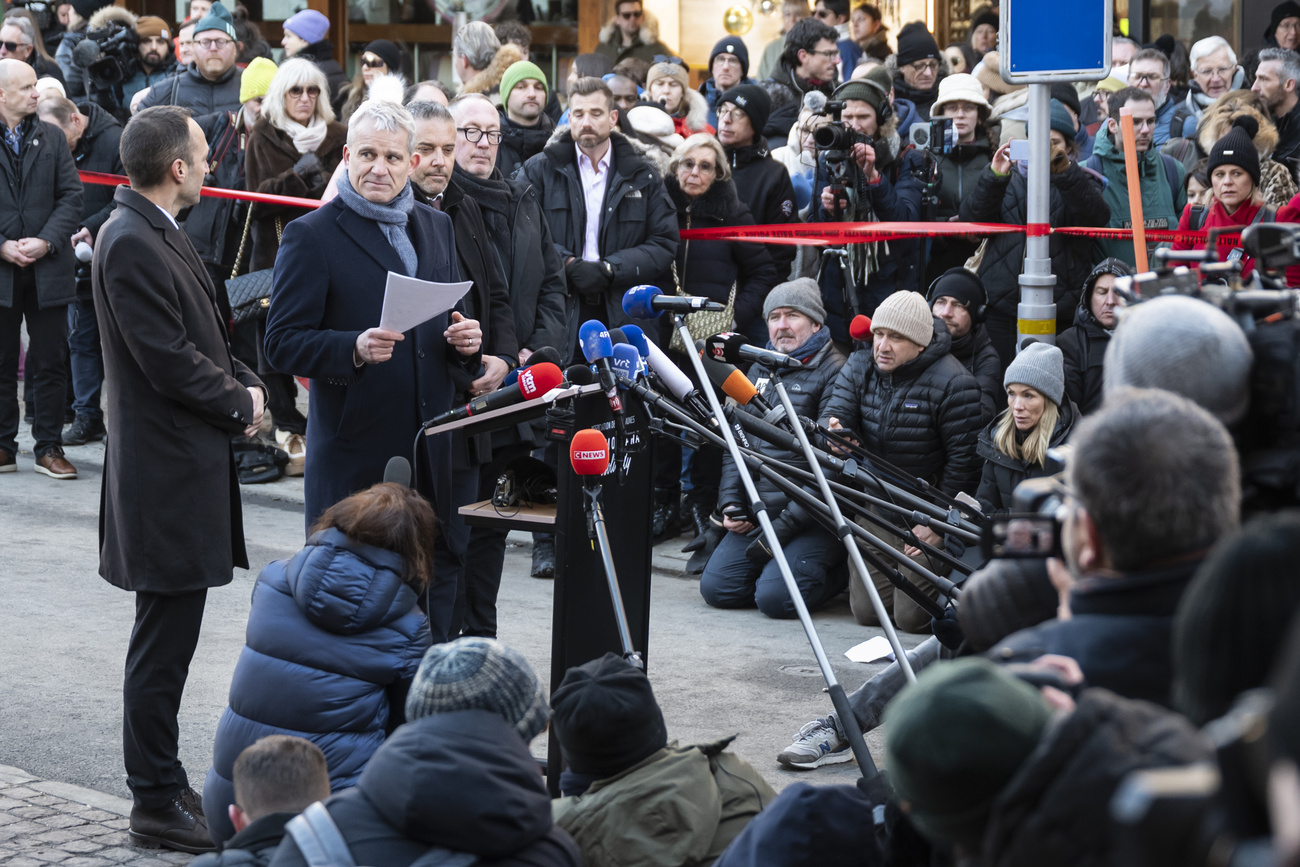
The Italian reaction was immediate. It came on the back of tensions between the two countries about the way Switzerland had handled the investigation. Italian families had been calling on Swiss authorities for an official apology, frustrated by what they perceived as inadequate communication and a lack of transparency.
The invoices clearly stated at the bottom that they did not have to be paid.
But that was not enough to prevent a diplomatic controversy. The invoices were seen by many in Italy as yet another rupture between the two countries.

More
Italian ambassador slams Swiss health bills for fire victims
Taken out of context, an invoice that is not really an invoice can be interpreted as a demand for money, or as a careless and disrespectful act. The distinction between an “informational copy” and a “bill to be paid” is unequivocal to me. But the Italian families, unfamiliar with the intricate Swiss healthcare system, saw it otherwise.
In Switzerland, residents are directly and visibly involved in the cost of their healthcare. Each person pays a monthly insurance premium and a yearly deductible out of pocket before insurance kicks in. Beyond that, they contribute a percentage of each bill. When you receive care in Switzerland, a document follows. Always. The system is built on the idea that when people see and feel the cost of care, they become more conscious, and that this transparency helps contain a healthcare expenditure that is among the highest in the world. Making the invoice visible is almost a civic act.
More
Crans-Montana blaze exposes cracks in Switzerland’s image
In Italy, healthcare costs are also debated. There are constant discussions about underfunding, long waiting lists, regional deficits, staff shortages and the growing pressure of an ageing population. Italians are very aware that the health system is under strain. But the debate usually happens at the level of public budgets, taxes, political choices and access to services – not through an invoice addressed to an individual patient after a hospital stay.
Had those copies not been sent to the families, the reimbursement issue would have remained a bureaucratic process: a technical matter between authorities, insurers and the competent institutions.
Under the coordination rules between Switzerland and countries of the European Union, when an EU citizen receives care in Switzerland, the Swiss hospital initially bills according to Swiss tariffs. The cost is then passed on to the patient’s insurer in their country of residence, through institutional channels managed by each country’s health authorities. In other words: someone has to pay for that care. The hospital must be reimbursed, the services must be billed, and the systems must communicate with one another.
But because of the divide between the two systems, a document can be formally correct and at the same time communicatively disastrous: administrative transparency does not always coincide with human clarity.

More
Crans-Montana: Swiss president confirms no bills for Italian fire victims
Switzerland has since moved to resolve the misunderstanding. In early May, on the sidelines of the European Political Community summit in Yerevan, Armenia, Swiss President Guy Parmelin met Italian Prime Minister Giorgia Meloni. After their discussion, Parmelin stated that the injured people and their families would not have to bear the costs of the treatment provided in Swiss hospitals; any costs not covered by insurance would be assumed by victim support services. He also announced that Switzerland would no longer send copies of invoices to the affected families.
It is a practical solution. But the broader lesson remains: when two healthcare systems meet in a moment of grief, applying the rules correctly is not enough. Someone also has to translate them – before they become incomprehensible.
Edited by Virginie Mangin/ts
More


In compliance with the JTI standards
More: SWI swissinfo.ch certified by the Journalism Trust Initiative

You can find an overview of ongoing debates with our journalists here . Please join us!
If you want to start a conversation about a topic raised in this article or want to report factual errors, email us at english@swissinfo.ch.