








Swiss defence minister condemns Russian disinformation
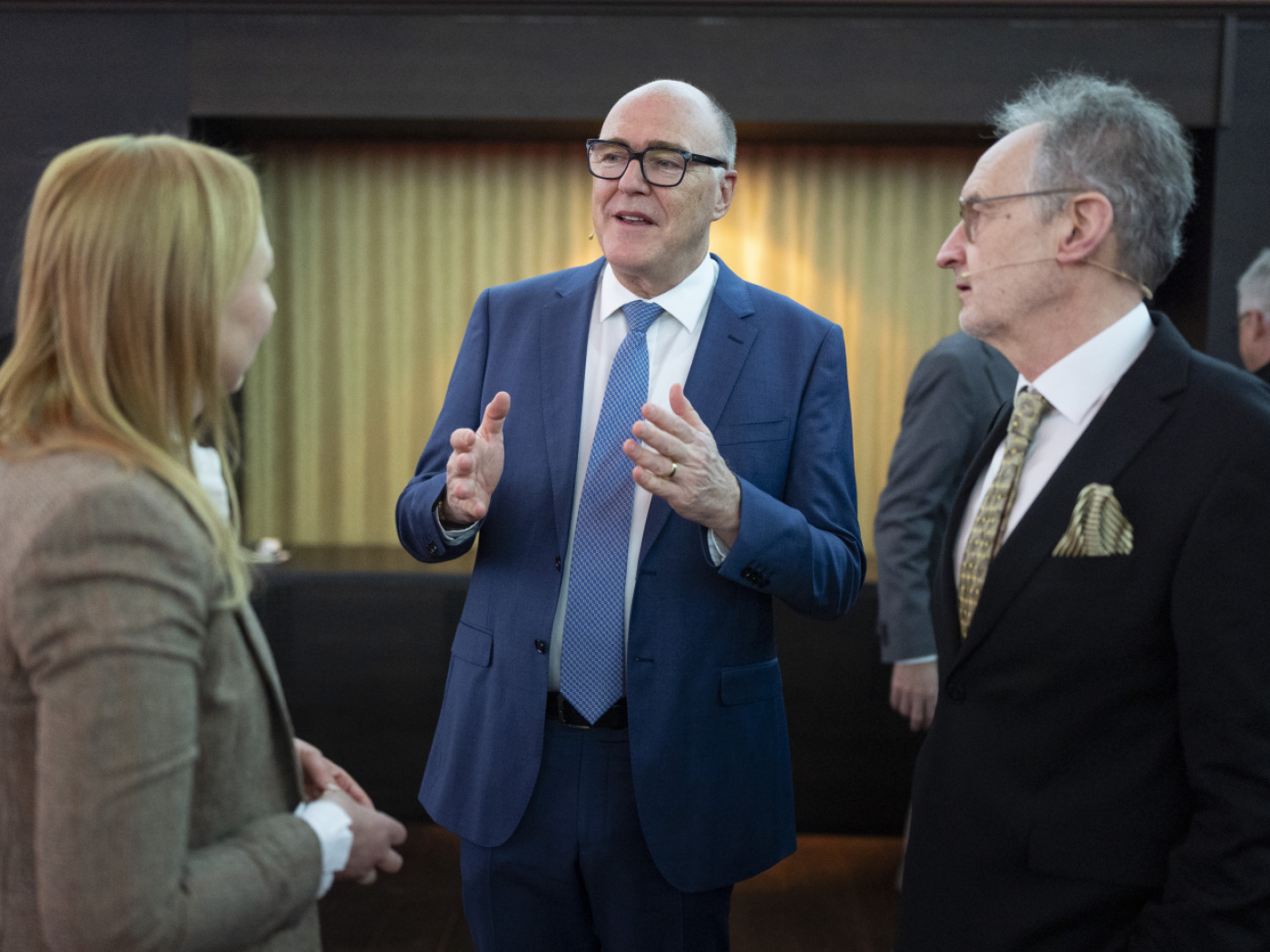
Swiss defence minister Martin Pfister has denounced an increasing stream of disinformation from Russia.
Select your language
Generated with artificial intelligence.
Listening:
Swiss defence minister condemns Russian disinformation
+Get the most important news from Switzerland in your inbox
Pfister interprets this as an attempt to influence Swiss politics and to unsettle the population.
The fact that Russia wants to influence the West with hybrid conflict management is nothing new – nor is the fact that Switzerland is increasingly affected by this. But rarely has a government minister condemned Russian “conspiracy narratives”, as Pfister called them, so clearly.
+ The Russia affair and the Swiss secret service
“Russia in particular has been increasingly attacking Switzerland with influence operations since 2022,” he said during a speech at a Swiss media industry event.
Russia primarily spreads disinformation and propaganda in Switzerland, claiming, among other things, that Switzerland is no longer neutral, no longer democratic and no longer safe.
Pfister gave a concrete example at the publishers’ meeting. In an influencing activity last May, pro-Russian accounts distributed a video from Geneva taken out of context in a coordinated manner on seven social media platforms and in all official Swiss languages.
“This supposedly showed that Switzerland was sinking into chaos,” said Pfister. The posts were viewed over two million times within a short space of time.
The two well-known Russian disinformation platforms Russia Today and Pravda alone disseminate between 800 and 900 articles per month in Switzerland, Pfister added. If such narratives continue unchecked, a society becomes vulnerable.
Swiss media publishers could play a decisive role in such an environment, Pfister said. “A healthy media system is also part of the Swiss security architecture.”
Especially in times of technological change and geopolitical uncertainty, the media need to fulfil their responsibilities more than ever.

More
Russia poses the biggest espionage threat in Switzerland
Adapted from German by DeepL/mga
We select the most relevant news for an international audience and use automatic translation tools to translate them into English. A journalist then reviews the translation for clarity and accuracy before publication.
Providing you with automatically translated news gives us the time to write more in-depth articles. The news stories we select have been written and carefully fact-checked by an external editorial team from news agencies such as Bloomberg or Keystone.
If you have any questions about how we work, write to us at english@swissinfo.ch
External Content

In compliance with the JTI standards
More: SWI swissinfo.ch certified by the Journalism Trust Initiative

You can find an overview of ongoing debates with our journalists here . Please join us!
If you want to start a conversation about a topic raised in this article or want to report factual errors, email us at english@swissinfo.ch.