








Switzerland’s security and the role of the media
Select your language
Generated with artificial intelligence.

Listening:
Switzerland’s security and the role of the media
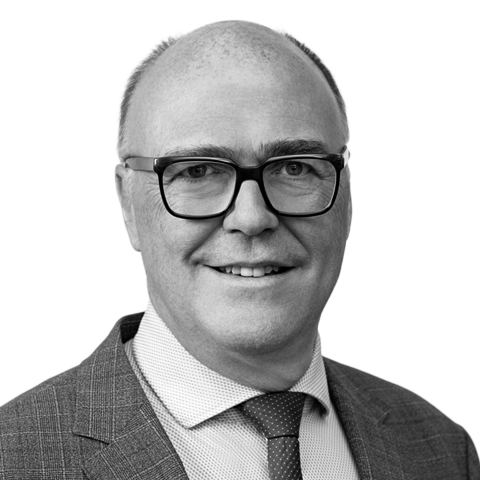
Switzerland’s information space is increasingly being targeted by influence operations. Strong, independent media and a high level of media literacy are key to strengthening a population’s resilience to disinformation, says Swiss Defence Minister Martin Pfister.

When we speak of security, we are not primarily talking about life and death, territorial control or shifting borders, power or domination. This is the language of warmongers and how representatives of authoritarian regimes justify their actions.
It goes without saying that our own efforts are aimed at protecting our country’s sovereignty and the integrity of our citizens. But in a democratic state, security and defence are primarily about protecting democratic rights and freedoms, self-determination, personal integrity and the prosperity on which many of these freedoms depend.
From this perspective, the media are probably the best indicators of a country’s democratic security. To put it bluntly, when a country’s media outlets are in good shape, so are its democracy and security.
We are currently witnessing a time of fundamental geopolitical upheaval. The security situation in Europe and around Switzerland has become more fragile, complex and increasingly unpredictable.
Crumbling legal order
The recent United States military intervention in Venezuela shows that even the international legal order, which Switzerland feels especially responsible for, is crumbling. This poses a problem for both Switzerland and Europe because we all benefitted from that order during the post-war period. Geopolitical change now appears to be fundamentally reshaping the world, and we still don’t know quite where it is headed.
With Russia’s war of aggression against Ukraine, war has returned to Europe. Now nearing its fourth year, the conflict has profoundly shaken our continent’s security order. NATO will remain indispensable in Europe, but the US has long made it clear that European security and defence policies must be shouldered by European countries themselves. Europe not only faces a significant military shortfall amid tight budgets, but many of its societies are also deeply politically divided, which weakens resolve. A weak, politically fragmented Europe can, in itself, become an attractive war objective.
Modern warfare
The nature of warfare is changing. As the war in Ukraine shows, assault rifles, the trenches of the First World War and the tanks and artillery of the Second World War remain in use, but they are now joined by 21st-century technologies such as drones and robots.
Modern wars are no longer fought with traditional military means alone. Hybrid tactics such as cyberattacks, influence operations, disinformation, espionage and economic pressure often accompany conventional warfare or lay the groundwork for further military action.
The information space is central to such hybrid warfare: once it is destabilised, a country’s security is weakened.
More

More disinformation
This war is already underway. With geopolitical tensions mounting, influence operations and disinformation are also on the rise. Switzerland, a country at the heart of Europe and part of the Western community of values, is an indirect target.
Those behind influence operations seek to manipulate how people and societies perceive, think and act using misinformation, propaganda and cross-border repression. They aim to portray Swiss institutions as dysfunctional, to weaken trust in democracy and public institutions, and to intimidate citizens.
These methods are wide-ranging, from manipulating audiovisual content and taking information out of context to crafting new narratives.
Russian influence
Russia in particular has stepped up its attacks on Switzerland’s information space since 2022. The best-known Russian outlets, Russia Today and Pravda, publish between 800 and 900 articles per month in Switzerland, most of which qualify as disinformation.
In May 2025, pro-Russian actors jointly spread an out-of-context video from Geneva across seven social media platforms. The clip suggested that Switzerland was descending into chaos and had abandoned its neutrality. The posts were viewed more than two million times in a short period of time.
But there are also more subtle forms, such as networks of social media accounts on platforms like Telegram and X that do not have obvious ties to Russia.
When disinformation, propaganda and conspiracy theories go unchecked, they make society more vulnerable as they deliberately divide the population. As fear and doubt spread, social cohesion crumbles and international cooperation becomes more difficult.
Rapid technological advances are also accelerating existing trends. Artificial intelligence now allows an even broader range of actors to craft and spread sophisticated disinformation with little effort. In the future, such content is likely to be more finely tailored to target audiences – and be more credible, making the impact even bigger.
Cybersecurity
Shedding light on influence operations and disinformation is essential. Hence, cybersecurity has become a public responsibility.
At the federal level, we have established the National Cyber Security Centre (NCSC), an important institution that tackles risks together with partners across business, academia and the government.
The security policy strategy which the government put forward for consultation in December includes measures to combat influence operations and disinformation. It explicitly defines Swiss security in broad terms and goes well beyond the military.
The government has set up a working group to coordinate the federal administration’s work on this issue.
Yet, the government cannot do it all and, from a democratic perspective, it is crucial that it does not shoulder the burden alone. Security is not just the product of the army, the police or government agencies. In a democratic society, it also depends on a population that is well-informed, critical and vigilant. Media literacy and diversity are central to Switzerland’s resilience.
Media and resilience
Good-quality media with high journalistic standards help to curb the impact of influence operations. They deliver facts. They provide guidance. They hold power to account. That’s why journalism is not just the fourth estate of a democracy. A free press is also part of our security architecture. It informs the public while protecting the information space through research, context and transparency.
These activities thrive when media outlets are able to compete. A diverse media landscape makes our country more resilient.
Private media outlets drive such diversity, but a strong Swiss Broadcasting Cooperation [the parent company of Swissinfo] is also key. With its public service mandate, it delivers reliable information to all regions and language communities, including areas where private media outlets struggle to survive.
By highlighting the significance of the media for our security, I am, of course, aware that both the media and their business models are under immense pressure: from an economic standpoint due to shrinking advertising revenues, and from a technology standpoint because of social media platforms and artificial intelligence.
Today, in this era of technological change and geopolitical uncertainty, we need media outlets that take their responsibility seriously as never before. Because when the media in our country are in good shape, so too are Switzerland’s democracy and security.
This article is an abridged version of a speech delivered in German by Defence Minister Martin Pfister in January 2026 at the Epiphany Conference of the Swiss media association, Schweizer Medien.
The views expressed by the author do not necessarily reflect those of Swissinfo.
Adapted from German by Billi Bierling/gw
>>Read our analysis on disinformation about Switzerland:

More
Fake news spread abroad about Switzerland is a liability

In compliance with the JTI standards
More: SWI swissinfo.ch certified by the Journalism Trust Initiative

You can find an overview of ongoing debates with our journalists here . Please join us!
If you want to start a conversation about a topic raised in this article or want to report factual errors, email us at english@swissinfo.ch.