








Where UN Special Rapporteur sees freedom of speech under threat in Bangladesh

After its first credible elections in years, Bangladesh is aiming to institutionalise the demands for reform that emerged from 2024 protests. Irene Khan, the UN Special Rapporteur on freedom of opinion and expression, explains the stakes.
Select your language
Generated with artificial intelligence.
Listening:
Where UN Special Rapporteur sees freedom of speech under threat in Bangladesh

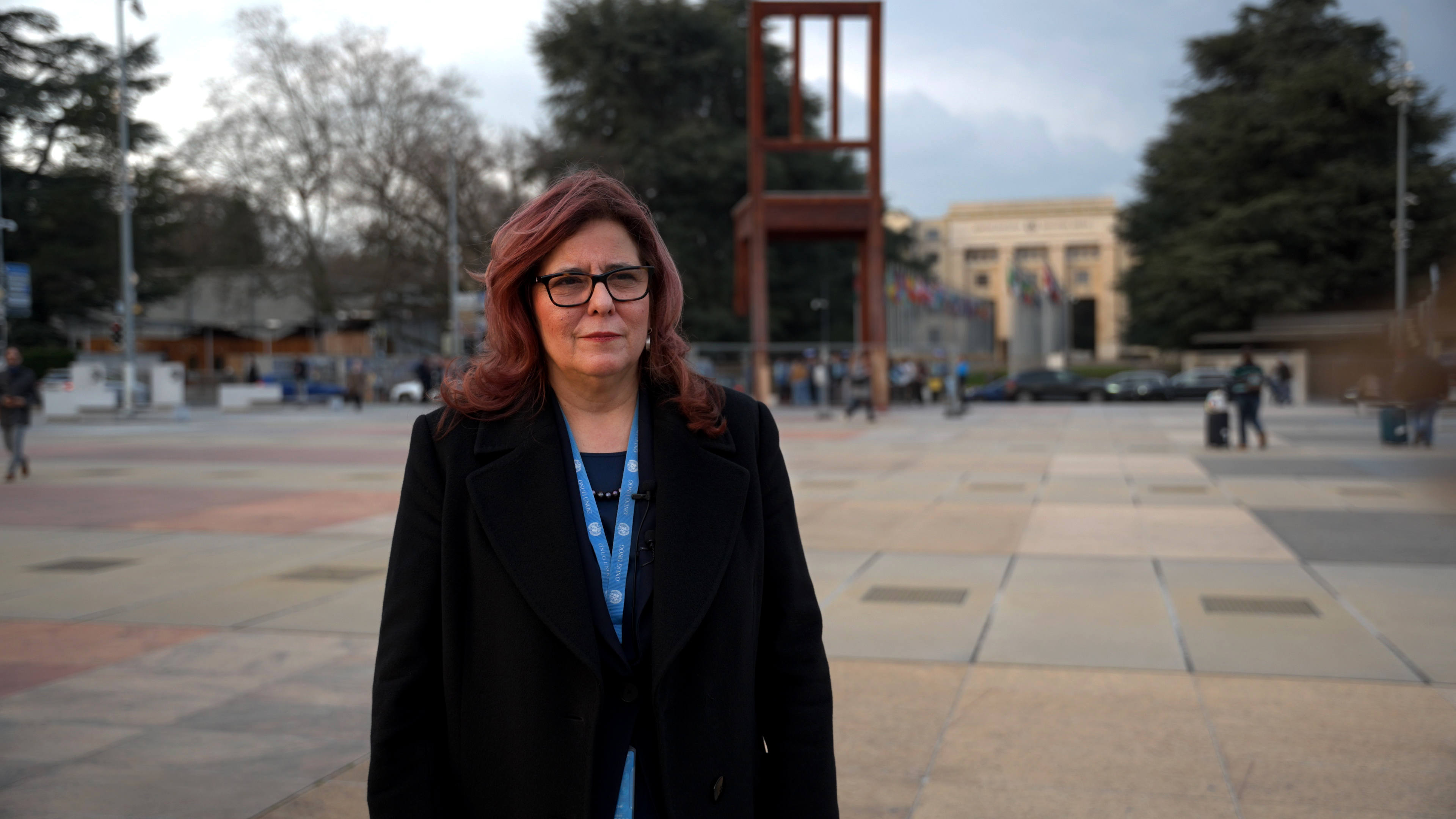
Bangladesh has been on the radar of Irene Khan, the UN Special Rapporteur on freedom of opinion and expression – and not just because it is her home country. “Elections are a particular high point when freedom of expression is under threat,” she told Swissinfo by video from Dhaka, a week after the first elections since 2024 protests ousted former prime minister Sheikh Hasina.
And while Khan is positive about the “relatively free and fair” voting procedure on February 12, her views are less upbeat when it comes to freedom of expression.
In the past two years, under an interim government led by Nobel laureate Muhammad Yunus, hundreds of journalists were detained on what Khan has previously describedExternal link as “politically motivated, dubious charges of murder, terrorism and other serious crimes”. Many of those targeted were accused of links with the Awami League, the former ruling party which has since been banned.
But expressing political views – even in support of a repressive regime – should not amount to a criminal offence, argues Khan. She is calling for fair trials for those detained.
Will they get them? And after what Khan calls a “festive” polling day, can the new government – under the Bangladesh Nationalist Party (BNP), which won a two-thirds majority in parliamentary – live up to its own call for “national unity”, and guarantee the freedoms the country has lacked?

From Germany to Gaza to Switzerland
Khan seems well placed to judge. The 69-year-old has spent a career tracking human rights violations across the globe. She is nowadays closely tied to International Geneva, as a research associate at the Graduate Institute, and – since 2020 – as the United Nations Special Rapporteur on freedom of opinion and expression. The latter role has seen her criss-cross the world monitoring free speech trends, from the Philippines to Germany to Gaza; she has also raised concernsExternal link in Bern about criminal sanctions under Switzerland’s banking secrecy law.
In Bangladesh meanwhile, the question of media freedom is closely wrapped up with a broader issue for the country’s democracy: how to deal with the legacy of Hasina – sentenced to death in absentia last year, and now residing in India – and her Awami League supporters. Banning a discredited – if popular – party could help turn the page for a fresh start for Bangladesh. Others warn of “collective punishmentExternal link” and deepened polarisation.
A Swiss man holds the job of another UN Special Rapporteur, for minority issues:
More
UN rapporteur: ‘Minorities are the vectors of diversity’
The new prime minister, Tarique Rahman, has offered what Khan describes as a “cryptic” answer to this question. The fate of the Awami League, Rahman said after the election, would be decided by the “rule of law”. In theory, this is the language of liberal democracy; yet in practice, judicial credibility is fragile in Bangladesh. After years of courts toeing the government line, public trust in the rule of law is damaged, Khan explains.
How judges now deal with the cases of detained journalists and cultural figures, especially, will be a test of whether promised judicial reform is a real priority, she says and “if they don’t handle it properly, there will be a lot of public discontent”.
‘Tsunami of disinformation’
Political pressure on journalists is not the only issue for freedom of expression. In the run-up to the election, Khan and other UN experts warned that Bangladesh was not ready for what they called a “tsunami of disinformationExternal link” on social media. Much of it was aimed at a young, highly-online generation – who played a key role in the 2024 protests, and many of whom were voting for the first time.
This issue is familiar: democracies across the world face the question of how to balance free speech and censorship in dealing with online content. They also face what Khan calls an “unholy alliance” between Big Tech firms and certain powerful governments – an issue that is for her at the core of freedom of expression issues globally.
There is also a UN Special Rapporteur for rights in Russia, first named in 2023:
More
Mariana Katzarova: a mandate for the Russian people
In Bangladesh, she explains, disinformation came from bots but also from online influencers based abroad, who tried to steer the perceptions of young, susceptible voters. Some online rhetoric spilled into physical violence: in December 2025, two newspaper offices in Dhaka were set on fire by mobs after the killing of a student leader sparked online speculation. Human Rights Watch called the eventExternal link a “dangerous convergence of online and offline violence”; it also criticised tech companies for not doing more against hate speech.
On this, Khan plans to push for action from authorities in Dhaka. However, she says, small countries can’t expect to have a huge influence – “what happens between the EU, the US, and Big Tech will determine the extent of freedom of expression in Bangladesh”.

A complicated reform charter
But for many in Bangladesh poverty and personal perspectives feel more crucial than just freedom of expression. Young people need jobs; women have only “limited political space”, as a European Union election monitoring mission wroteExternal link.
Many also note that new prime minister Rahman doesn’t mark a fresh start. He is a legacy figure: his father was president and his mother prime minister. According to BangladeshiExternal link media, even Khan is loosely related to the prime minister, as a cousin of his wife. For the BBC’s correspondentExternal link, “in the cycle of Bangladeshi politics, this is one more flip-flop between Hasina’s Awami League and the BNP, which have alternated holding power for decades”. During the BNP’s last stint in government, from 2001 to 2006, Bangladesh was ranked several times as the most corrupt country in the world by the NGO Transparency International.
Khan adds that Bangladesh’s democracy will depend on whether the new cabinet will carry out institutional changesExternal link agreed in a referendum held alongside the elections. Voters accepted the so-called “July Charter”, a list of reforms negotiated under the Yunus administration. But the charter was already criticised before the vote for having reduced so many changes into a single yes or no question. It was a “complex” thing to understand, Khan says. She now worries that the BNP has not been fully clear about when and how it plans to implement it.
Voters, especially the young citizens who protested in 2024, will want to see it try. For many, the real desire is for “accountability” after years of one-sided rule, Khan says – which means credible parliamentary opposition and oversight by a free press.
Edited by Benjamin von Wyl/ac

More
Switzerland withdraws from democracy support in Bangladesh

In compliance with the JTI standards
More: SWI swissinfo.ch certified by the Journalism Trust Initiative

You can find an overview of ongoing debates with our journalists here . Please join us!
If you want to start a conversation about a topic raised in this article or want to report factual errors, email us at english@swissinfo.ch.