








Panel: monitoring of Covid-19 and other viruses should be reviewed

As the burden of Covid-19 on the Swiss health system recedes, the monitoring of infectious viruses remains necessary as other respiratory diseases are circulating with greater intensity, says a top scientific advisory panel.
Currently, 98% of the Swiss population have antibodies against SARS-CoV-2 either because they have been vaccinated or because they have caught the disease. But since the lifting of protective measures last April, other viruses have taken over, such as “the human respiratory syncytial virus, influenza, pneumococcal diseases and group A streptococci”, the Covid-19 scientific advisory panel saidExternal link in a statement on Monday.
“The situation in hospitals is currently far removed from what it was during the acute phase of the pandemic,” the government panel said.
“The number of new Covid-19 hospitalisations has been decreasing since the beginning of December 2022. Intensive care units are not experiencing an extraordinary burden of patients with Covid-19-related pneumonia. Less than 5% of available intensive care beds are currently occupied by patients infected with SARS-CoV-2,” it said.
More
Coronavirus: the situation in Switzerland
But hospital emergency departments, general wards and paediatric clinics are reporting heavy caseloads due to the high circulation of other respiratory pathogens and ongoing staff shortages.
Monitoring network
Owing to the current situation, the scientific body urges the authorities to examine the monitoring of infectious diseases across the country. It says it is important to maintain real-time monitoring of new infections or changes in the population’s immunity.
“Due to the fact that the healthcare system remains severely strained and there is ongoing uncertainty with regard to the spread of infection, now is the right time to review which methods and tools Switzerland should use to monitor infectious diseases in the future,” the panel said.
The cases of monkeypox and hepatitis in 2022 have shown that having an ongoing overview of circulating pathogens is valuable, it said.
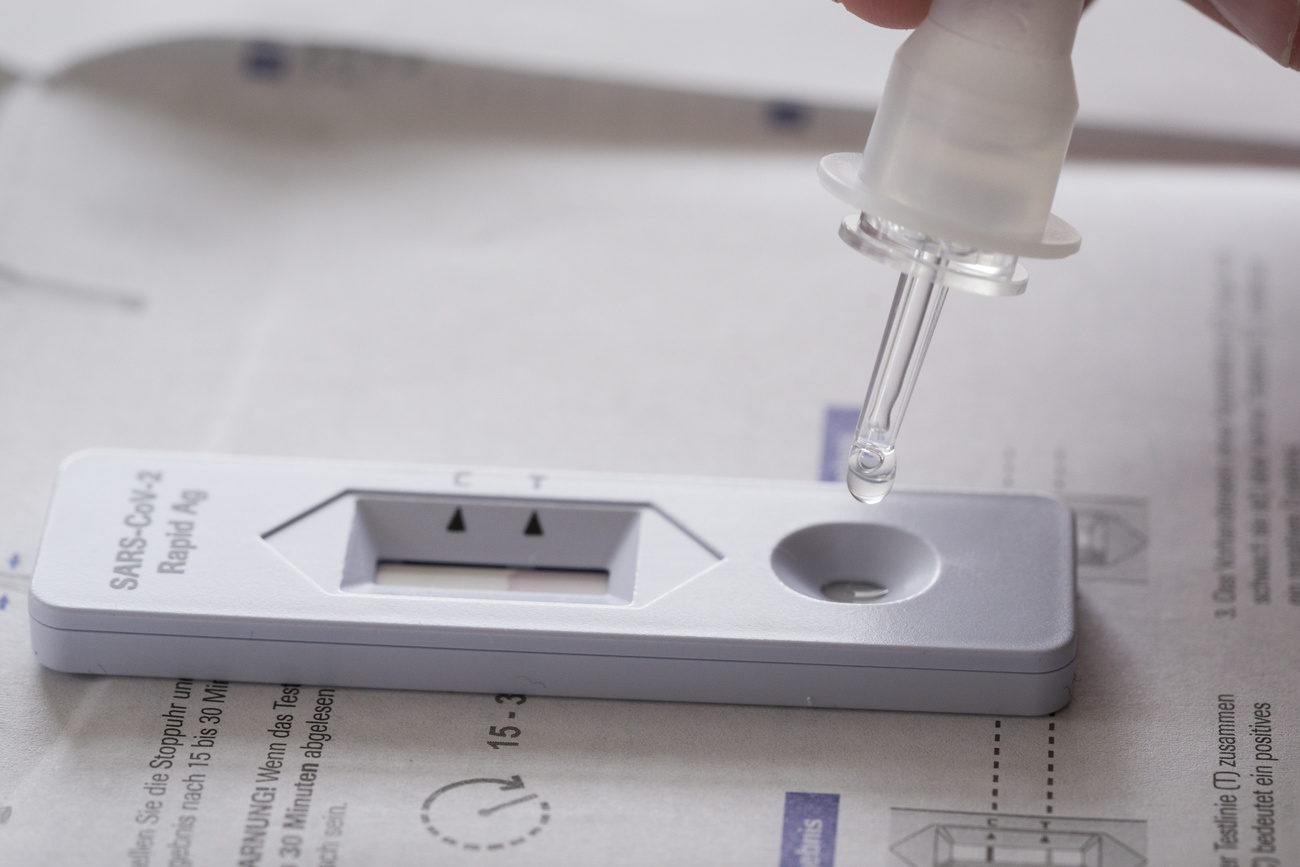
Since January 1, the federal government no longer covers the costs of Covid-19 testing, and Covid test numbers have plummeted. The use of tests as a health monitoring tool “has largely ceased to exist”, the panel said.
Health insurance covers test costs in individual cases, such as when a positive test leads to medical treatment. This is likely to be the case most of the time when a sick person is admitted to hospital.

More
‘Sewage doesn’t lie’ when tracking Covid-19
Wastewater monitoring
Meanwhile, the Federal Office of Public Health has said it will rely mainly on wastewater monitoring to keep an eye on the evolution of Covid.
A total of 1,260 new lab-confirmed Covid cases were reported on January 17 for the previous seven-day period (12,632 new cases were reported on December 29). There were 134 new hospital admissions and 12 reported deaths. In all, 465 people are being treated in hospital for Covid (down 25% compared to the previous week).
The authorities lifted the last Covid prevention measures on April 1, 2022. Masks are no longer required on public transport, and there is no more five-day isolation requirement for positive cases. Health-related restrictions for incoming travellers were lifted in February, 2022.

More
Ending free Covid-19 tests sends ‘wrong signal’, warns top doctor

In compliance with the JTI standards
More: SWI swissinfo.ch certified by the Journalism Trust Initiative

You can find an overview of ongoing debates with our journalists here . Please join us!
If you want to start a conversation about a topic raised in this article or want to report factual errors, email us at english@swissinfo.ch.