





Swiss AI tool helps Alaskan ecologists research bears
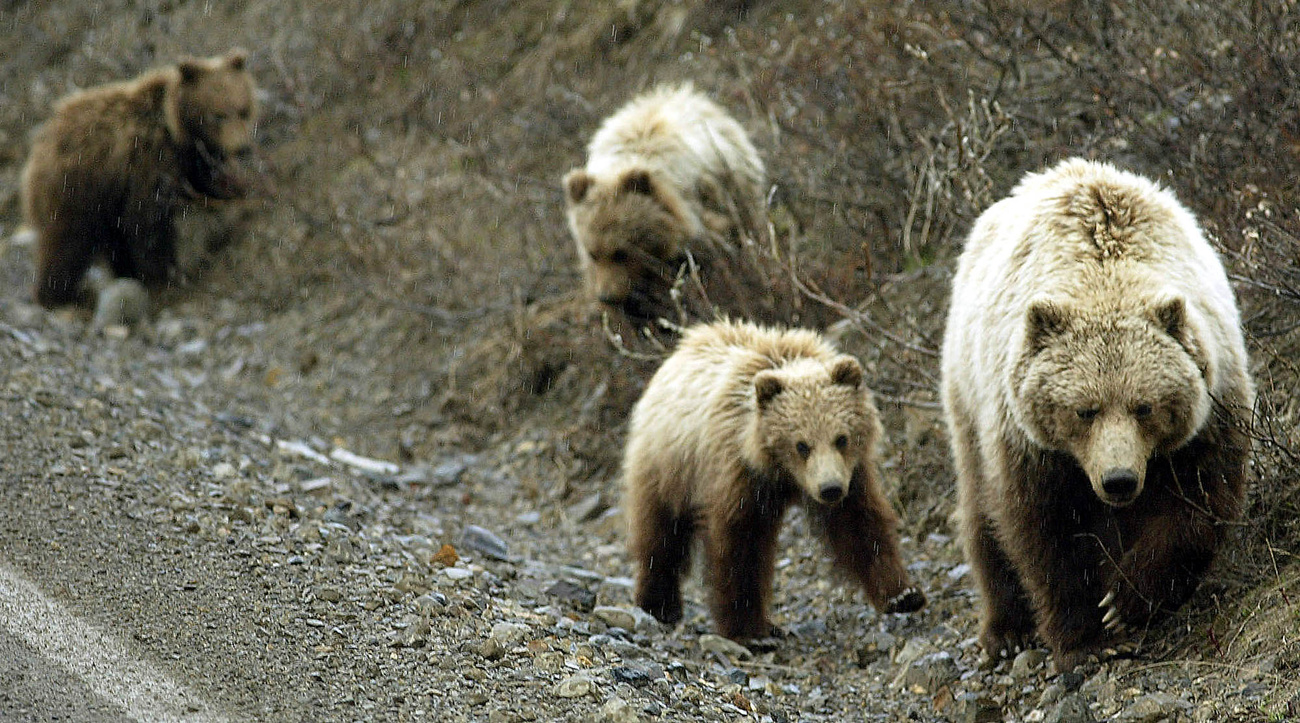
Swiss scientists have developed an artificial intelligence (AI) tool capable of recognising individual brown bears. It allows precise tracking of the behaviour bears, saving researchers valuable time.
Select your language
Generated with artificial intelligence.
Listening:
Swiss AI tool helps Alaskan ecologists research bears
+Get the most important news from Switzerland in your inbox
The system was developed by the Swiss Federal Institute of Technology Lausanne (EPFL) and is being tested in Alaska.
+ AI in Switzerland: what’s new in 2026?
Identifying a brown bear with certainty is not as simple as it seems. A bear’s size, weight, and coat change with the seasons, making visual identification tricky, even for seasoned experts. To overcome this difficulty, researchers have turned to AI.
The tool is based on a facial recognition system trained to distinguish the features specific to each brown bear.
+ Fact and fiction about Swiss Apertus AI model
Tested in a demanding natural environment, the algorithm has demonstrated high reliability, paving the way for a new way of tracking wild populations.
Social interactions
The tool was tested in McNeil River National Park in Alaska. Scientists had a database of more than 70,000 photographs, taken over years by camera traps installed in bear crossing areas.
+ Switzerland aspires to build ‘human’ AI
Thanks to automated image analysis, the algorithm classifies photos according to very precise criteria: muzzle shape, forehead, ears, and even visible scars. These are all elements that make it possible to differentiate between individuals that are otherwise very similar to the naked eye.
In total, 150 brown bears were reliably identified. This individual identification provides biologists with valuable information about the animals’ behavior, movements and social interactions over time.
Different animals
The tool also significantly reduces the time required for sorting and analyzing images, a task that was previously lengthy and tedious. This allows researchers to focus more on the scientific interpretation of the data.
The principle of automated recognition could be applied to other animal species, with a high degree of accuracy and significant resource savings.
In the long term, this type of tool could aid research in ecology and conservation, by facilitating the monitoring of animal populations in natural environments that are sometimes difficult to access.
Adapted from French by AI/mga
We select the most relevant news for an international audience and use automatic translation tools to translate them into English. A journalist then reviews the translation for clarity and accuracy before publication.
Providing you with automatically translated news gives us the time to write more in-depth articles. The news stories we select have been written and carefully fact-checked by an external editorial team from news agencies such as Bloomberg or Keystone.
If you have any questions about how we work, write to us at english@swissinfo.ch
External Content

In compliance with the JTI standards
More: SWI swissinfo.ch certified by the Journalism Trust Initiative

You can find an overview of ongoing debates with our journalists here . Please join us!
If you want to start a conversation about a topic raised in this article or want to report factual errors, email us at english@swissinfo.ch.