








Missing silent film from 1900 found in Swiss national film archives

A silent film, long thought to have disappeared, has been identified in the collections of the Cinémathèque suisse, the Swiss national film archives. The short film from 1900 has been restored and attributed to the British director Robert W. Paul.
Select your language
Generated with artificial intelligence.
Listening:
Missing silent film from 1900 found in Swiss national film archives
+Get the most important news from Switzerland in your inbox
The film, Diving for Treasure, features two heavily equipped divers trying to recover a treasure chest buried in a shipwreck. It was put online last April on the Cinémathèque’s restored film platform under the title Scaphandriers.
This copy is very probably the only one in existence, according to Patrick Friel, the specialist who identified the work. For this professor at Columbia College in Chicago, it is a “major discovery”. “Robert W. Paul is a founding figure in the history of cinema and one of the most important British producers and filmmakers,” he explained on Monday in a press release.
More
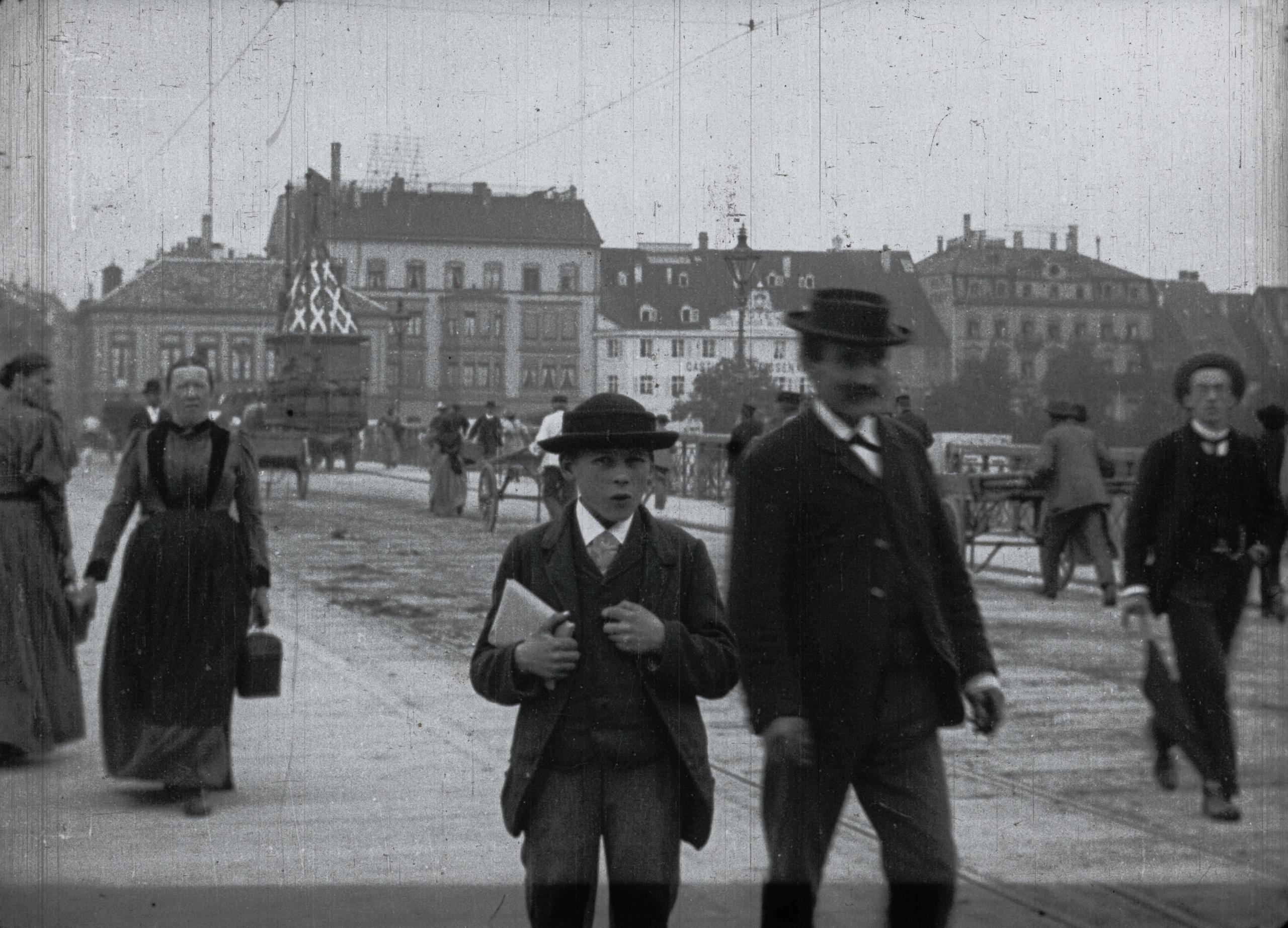
The soapy secrets behind Basel’s first film
The identification has also been confirmed by Ian Christie, Professor Emeritus at Birkbeck College, London, and author of a reference blog devoted to early British cinema. In an article devoted to this discovery, he stresses the historical importance of the film, particularly for its visual experiments.
The underwater scenes are recreated thanks to an ingenious device using an aquarium placed in front of the camera, a feat that won the admiration of the Prince of Wales on its release, he recounts. The film was restored in 2005 from a period nitrate print thanks to the collaboration of various laboratories and Swiss specialists, according to the Cinémathèque.
Diving for Treasure has had its tints restored using the Desmet process, a technique used to recreate the colours of silent films from the early 20th century. Digitised in 2021, this restored version is now accompanied on the piano by Enrico Camponovo and available free of charge External linkon the Swiss institution’s restored film platform.
Adapted from French by AI/ts
We select the most relevant news for an international audience and use automatic translation tools to translate them into English. A journalist then reviews the translation for clarity and accuracy before publication.
Providing you with automatically translated news gives us the time to write more in-depth articles. The news stories we select have been written and carefully fact-checked by an external editorial team from news agencies such as Bloomberg or Keystone.
If you have any questions about how we work, write to us at english@swissinfo.ch
External Content

In compliance with the JTI standards
More: SWI swissinfo.ch certified by the Journalism Trust Initiative

You can find an overview of ongoing debates with our journalists here . Please join us!
If you want to start a conversation about a topic raised in this article or want to report factual errors, email us at english@swissinfo.ch.