





Swiss Tschäggättä parade marked by landslide in Blatten
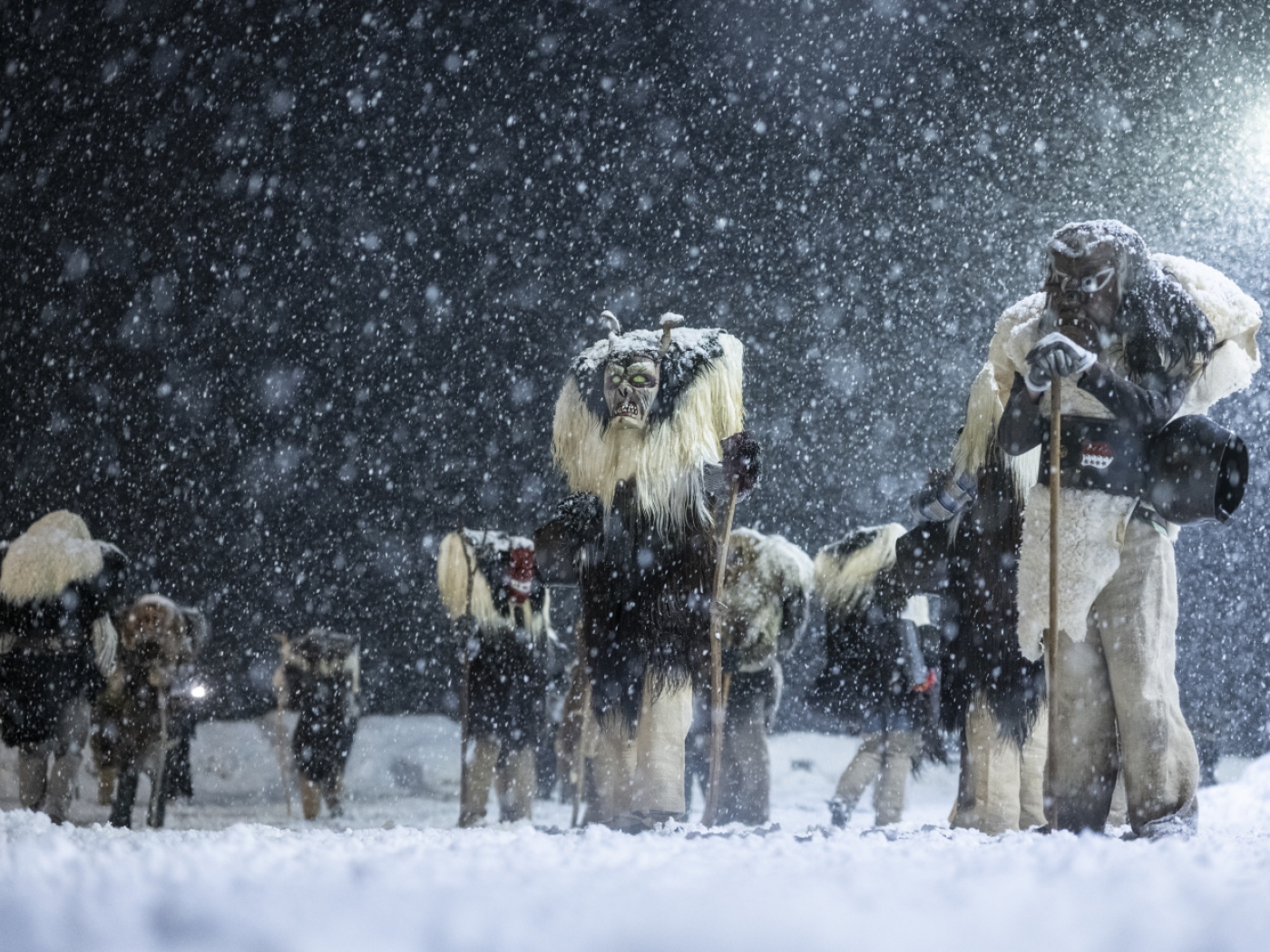
This year in the disaster-stricken Lötschental, the traditional Tschäggättä procession did not start in the Swiss village of Blatten, but in Wiler. Despite a lingering sense of grief, the people of the valley are doing their utmost to keep the custom alive.
Select your language
Generated with artificial intelligence.
Listening:
Swiss Tschäggättä parade marked by landslide in Blatten
+Get the most important news from Switzerland in your inbox
The parade of scary masks, bells, skins and furs began at around 9:15pm on Thursday evening in the snowy streets of Wiler. Decked out in their scary, grimacing faces, dozens of Tschäggättä marched to the village of Ferden under the watchful eye of the public, as is the carnival tradition in the valley.
More
Face time: the terrifying Swiss tradition of Tschäggättä
However, the usual starting point for the procession – or “Tschäggättu-Loif” in the Upper Valais dialect – is Blatten, which is now covered in debris following a landslide last May. It is “painful” for the local population that the event cannot be held there, Lilian Ritler, marketing manager at the Lötschental Tourist Office, told the Swiss news Agency Keystone-ATS.
“We’re still in mourning. At the same time, we are grateful and happy that the tradition can continue in the rest of the valley and that a little normality is being preserved”, she continues.
Another “strong sign” that “the tradition lives on” is the fact that masks have been recovered from the rubble. Two mask cellars were completely destroyed by the landslide on May 28.
+ Understanding the Blatten disaster
“Many masks, skins and bells were lost or buried,” explains Ritler. So young sculptors got involved and managed to make new costumes in a short space of time, which were used for this year’s event.
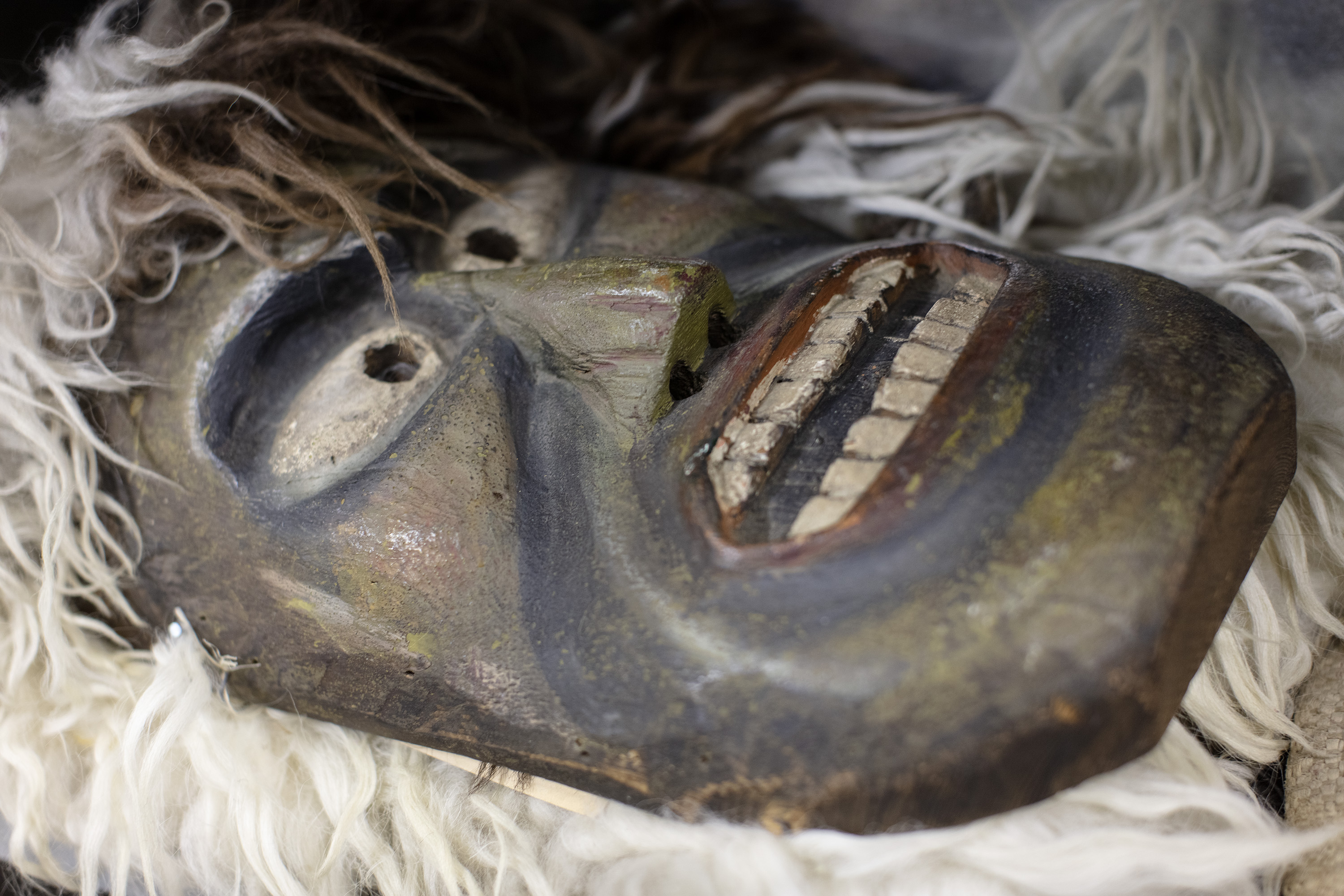
The hand-carved wooden masks are based on an ancestral tradition that has deep roots in the valley. The oldest mask in the Lötschental Museum in Kippel dates back to 1790.
As for the Tschäggättä, they only appear as such at this “carnival” time of year, between Candlemas (February 2, 2026) and Shrove Tuesday (February 17, 2026). The “monsters” can still be seen before next year, particularly during this Sunday’s carnival procession.
The snow, which was heavily present during the parade, also had the effect of blocking access to the Lötschental for several hours on Thursday afternoon. An avalanche buried a section of the cantonal road leading to the valley, interrupting road traffic and car transport via the Lötschberg tunnel. The situation was restored by 7pm, once the snow had been cleared.
Adapted from French by AI/ts
We select the most relevant news for an international audience and use automatic translation tools to translate them into English. A journalist then reviews the translation for clarity and accuracy before publication.
Providing you with automatically translated news gives us the time to write more in-depth articles. The news stories we select have been written and carefully fact-checked by an external editorial team from news agencies such as Bloomberg or Keystone.
If you have any questions about how we work, write to us at english@swissinfo.ch
External Content

In compliance with the JTI standards
More: SWI swissinfo.ch certified by the Journalism Trust Initiative

You can find an overview of ongoing debates with our journalists here . Please join us!
If you want to start a conversation about a topic raised in this article or want to report factual errors, email us at english@swissinfo.ch.