








Swiss pharma’s global success meets worries at home

When Switzerland’s two biggest pharmaceutical companies are doing well, that’s usually a reason to celebrate. Swissinfo journalist Jessica Davis Plüss examines why Swiss politicians and industry leaders are instead calling for urgent reforms to keep the country attractive to pharma.
Select your language
Generated with artificial intelligence.
Listening:
Swiss pharma’s global success meets worries at home

Last year was a good year for Swiss pharma. Roche’s sales rose 7% (at constant exchange rates) to CHF61.5 billion ($79.8 billion), driven by strong demand for drugs for multiple sclerosis, eye diseases and Haemophilia A. With ten new molecules entering late-stage clinical trials, 2025 was “very much a record year for Roche”, said CEO Thomas Schinecker at the company’s annual results media conference in January.
Its cross-town rival, Novartis, was also upbeat about 2025, with sales of key brands “well above expectations”, according to its annual reportExternal link, enough to boost CEO Vas Narasimhan’s compensation by 30%. Even with generic competition expected to dent sales in 2026, Novartis’ US shares were trading at all-time highs in early February.
They are now the two most valuable companies in Switzerland, according to a global ranking by consulting firmExternal link EY. Roche rose to 31st from 46th with a market capitalisation of $353.4 billion, up more than 50% on the previous year. Novartis rose from 66th to 53rd with $265.2 billion, replacing food giant Nestlé as the second-most valuable Swiss company.
One would assume all this good news for Switzerland’s largest companies would be good news for Switzerland. The two companies are among the country’s biggest taxpayers, employ some 25,000 people in the country and support thousands of jobs indirectly.
The biopharma industry as a whole, which includes thousands of smaller companies, was responsibleExternal link for 40% of the country’s economic growth over the last decade. It generates around 7% of GDP, and over 40% of Swiss exports, making it the most important export sector.
But instead of celebration, Swiss politicians and industry leaders are racing to enact what they see as urgent reforms to retain Switzerland’s reputation as a pharma powerhouse.
More
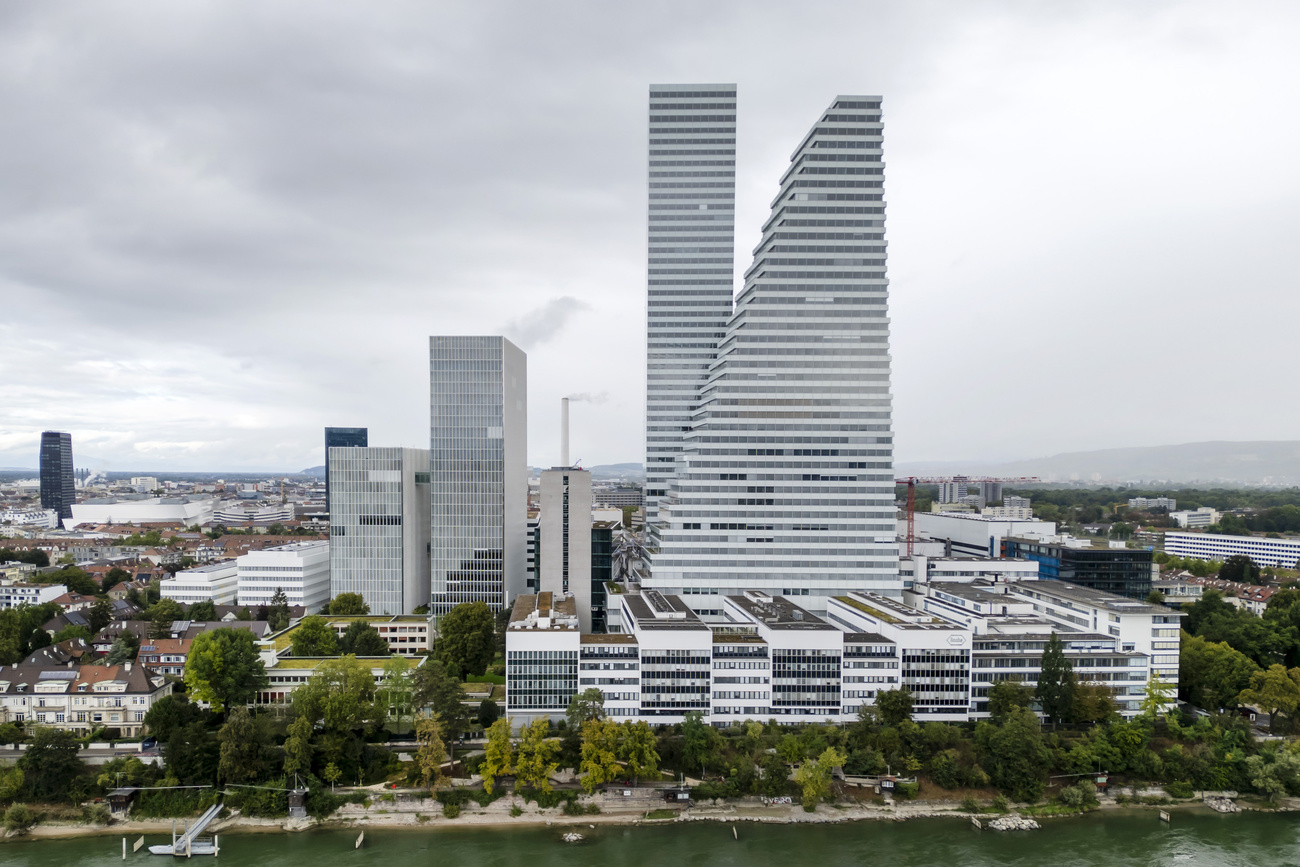
US trade deal forces reckoning for Swiss pharma powerhouse
In January the Swiss government convened a “life sciences location” working groupExternal link to examine ways to “create the best possible framework conditions” for the industry. A few days later, the Basel-City government hosted an eventExternal link on the sidelines of the World Economic Forum in Davos to remind stakeholders it’s a global anchor of the life sciences industry.
“Switzerland is at a crossroads,” wrote the industry association Interpharma in a press releaseExternal link on January 8. “Geopolitical developments and new international rules are severely testing the country’s competitiveness, innovative strength, and attractiveness.”
Mounting competition
Concerns about Switzerland’s attractiveness aren’t entirely new. The country has faced mounting competition from places like The Netherlands and Ireland, which have sweetened incentives for global multinationals setting up on their shores.
The Covid-19 pandemic heightened the pressure as countries became more aware of the value pharma companies bring in terms of long-term investment, high-paying jobs and access to technology.
Switzerland has relied on high salaries and good working conditions to attract talent, but that has also made it an expensive place to do business. Countries like Spain, Saudi Arabia and SloveniaExternal link are all positioning themselves as lower-cost alternatives. Several countries like Germany and DenmarkExternal link have created national pharmaceutical industry strategies with tax breaks for research-intensive industries, big investments in universities and start-ups, and speedy regulatory processes.
More
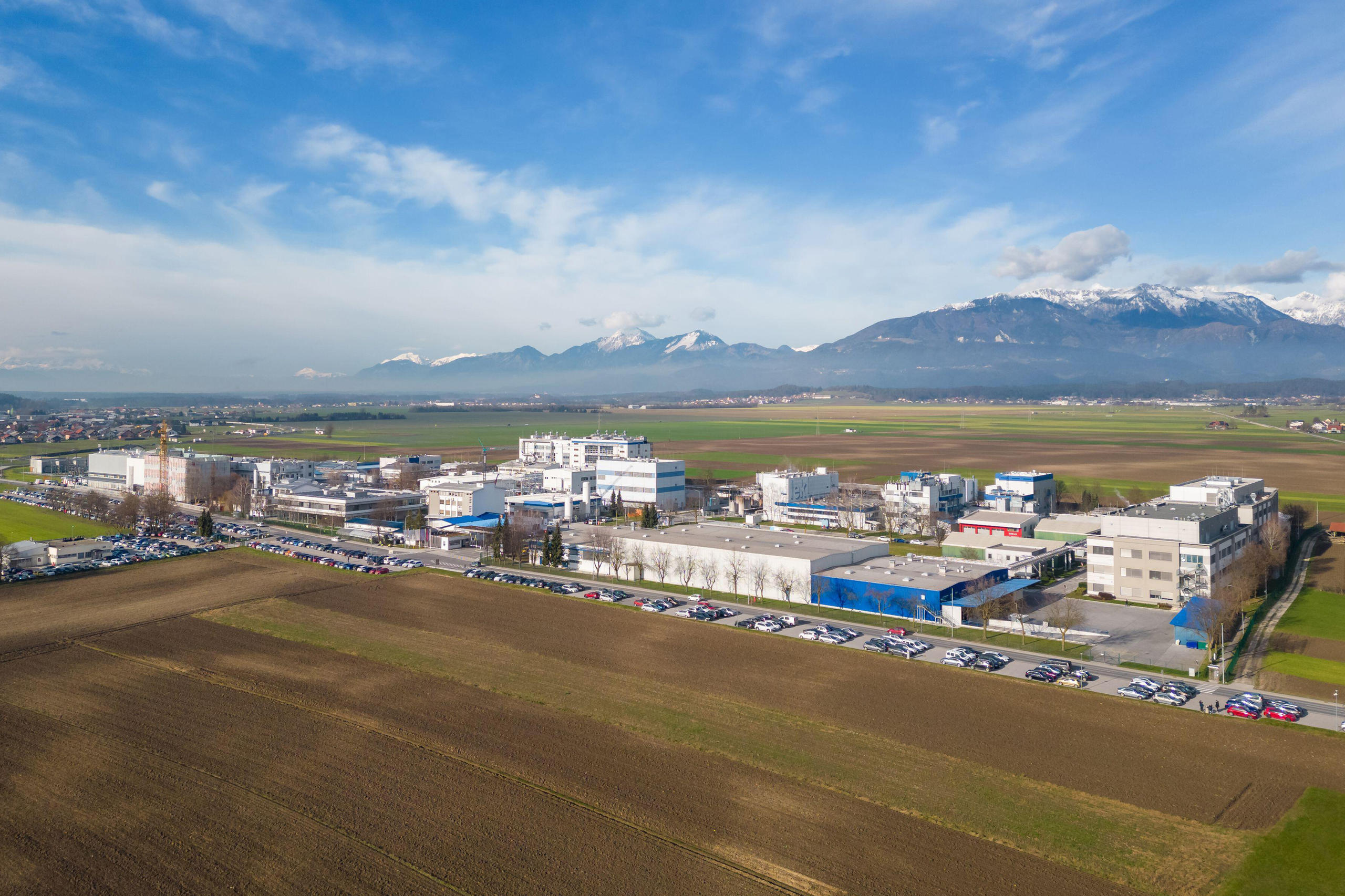
Swiss pharma’s big bet on Slovenia
In the latest Global Industry Competitiveness IndexExternal link 2025 by BAK Economics, commissioned by the Swiss scienceindustries trade group, Switzerland dropped one place to third behind the US and Ireland. It tied Denmark, home to Novo Nordisk, maker of blockbuster weight-loss drug Wegovy.
Switzerland also now has to contend with China – a large market that has become a major source of biotech innovation. In 2024, the country ran nearly one-third of the world’s clinical trialsExternal link, up from 5% a decade ago. Both Roche and Novartis now have major R&D facilities in the country. Last May Roche announcedExternal link it was investing 2.04 billion Chinese yuan ($282 million) to create a new biomanufacturing hub in Shanghai.
Then there’s US President Trump and his threats of tariffs and demands for lower drug prices. Roche and Novartis agreed to invest a combined $73 billion (CHF58 billion) over the next five years, with the aim to produce all key drugs for US patients on American soil. In December, they were among nine companies that signed contracts with the White House to lower prices for new drugs in the US.
These deals helped to avert tariffs on pharmaceuticals but their size and the speed with which they were announced are a reminder of how much weight the US market – in terms of both volume and high prices – carries.
“The US and China are very strong economically, and they use their economic power in order to make sure that there are more investments into their economy,” said Schinecker. “As a player that’s global, we have to invest in these markets.”
With a population of just 9 million, Switzerland doesn’t have the same kind of leverage. Over the last decade 40% of Roche capital and R&D investments flowed to the US, which accounted for 47% of sales in 2025. The company intends to raise the US share of investment to 50%. Switzerland received nearly a third of the total investment over the same period but accounts for just 1% of sales.
+ Timeline: how US President Trump is upending pharma
Home-grown pressure
As if the external pressure isn’t enough, Switzerland is dealing with its own set of domestic challenges. National funding for science and research is facing potential cutsExternal link as part of government austerity measures. Bilateral deals with the EUExternal link are awaiting sign-off from parliament – and Swiss voters – creating uncertainty about access to the EU market. An initiative to cap the Swiss population at 10 million will be up for a nationwide vote in June. If it passes, it could restrict access to talent from abroad.
The industry is also unhappy about Swiss implementation of the OECD minimum corporate tax rate of 15%, which was approved by voters in 2023. Roche said it will pay CHF155 million more taxes in 2025 because of the higher rate, although some of this will flow back to it in the form of industry incentivesExternal link. Meanwhile, the US and China are showing no signs of adopting the tax rate.
There’s also the topic of drug prices, which the industry argues are too low in Switzerland, and which have led to lengthy negotiations with the Federal Office of Public Health. Trump’s demands that prices of new drugs be tied to those in Switzerland and other industrialised countries are fueling anxiety at a time when Swiss health authorities are trying to curb healthcare costs.

More
How a clash with Roche exposed cracks in Swiss drug pricing system
Companies have warned that they may delay launches or not seek insurance reimbursement at all in Switzerland if they cannot secure certain prices.
The industry has a long wishlist of reforms it believes could improve framework conditions from faster regulatory approval and confidential prices to more digitalisation and new trade agreements.
It’s too soon to know if and how much Switzerland could lose out on future investment and the consequences for local jobs and the economy.
For now both Roche and Novartis appear publicly committed to Switzerland. After a meeting with Basel City officials last week, Narasimhan wroteExternal link on LinkedIn that for Novartis, “Basel is home” and that it is “proud to be part of this community and to help strengthen Basel’s position as a global hub for innovation”.
Switzerland still outpaces many countries when it comes to top-tier research and drug development. But there’s a growing sense that many of the features, such as stability and reliability, that have helped pharma thrive in Switzerland may not be enough in the future.
Edited by Virginie Mangin/gw

In compliance with the JTI standards
More: SWI swissinfo.ch certified by the Journalism Trust Initiative

You can find an overview of ongoing debates with our journalists here . Please join us!
If you want to start a conversation about a topic raised in this article or want to report factual errors, email us at english@swissinfo.ch.