


![The four-metre-long painting "Sonntag der Bergbauern" [Sunday of the Mountain Farmers, 1923-24/26] had to be removed by a crane from the German Chancellery in Berlin for the exhibition in Bern.](https://www.swissinfo.ch/content/wp-content/uploads/sites/13/2025/12/01_Pressebild_KirchnerxKirchner.jpg?crop=1165px,0px,1670px,1670px&w=480&ver=a45b19f3)





A great year for gold with a favourable 2026 ahead
Select your language
Generated with artificial intelligence.
Listening:
A great year for gold with a favourable 2026 ahead
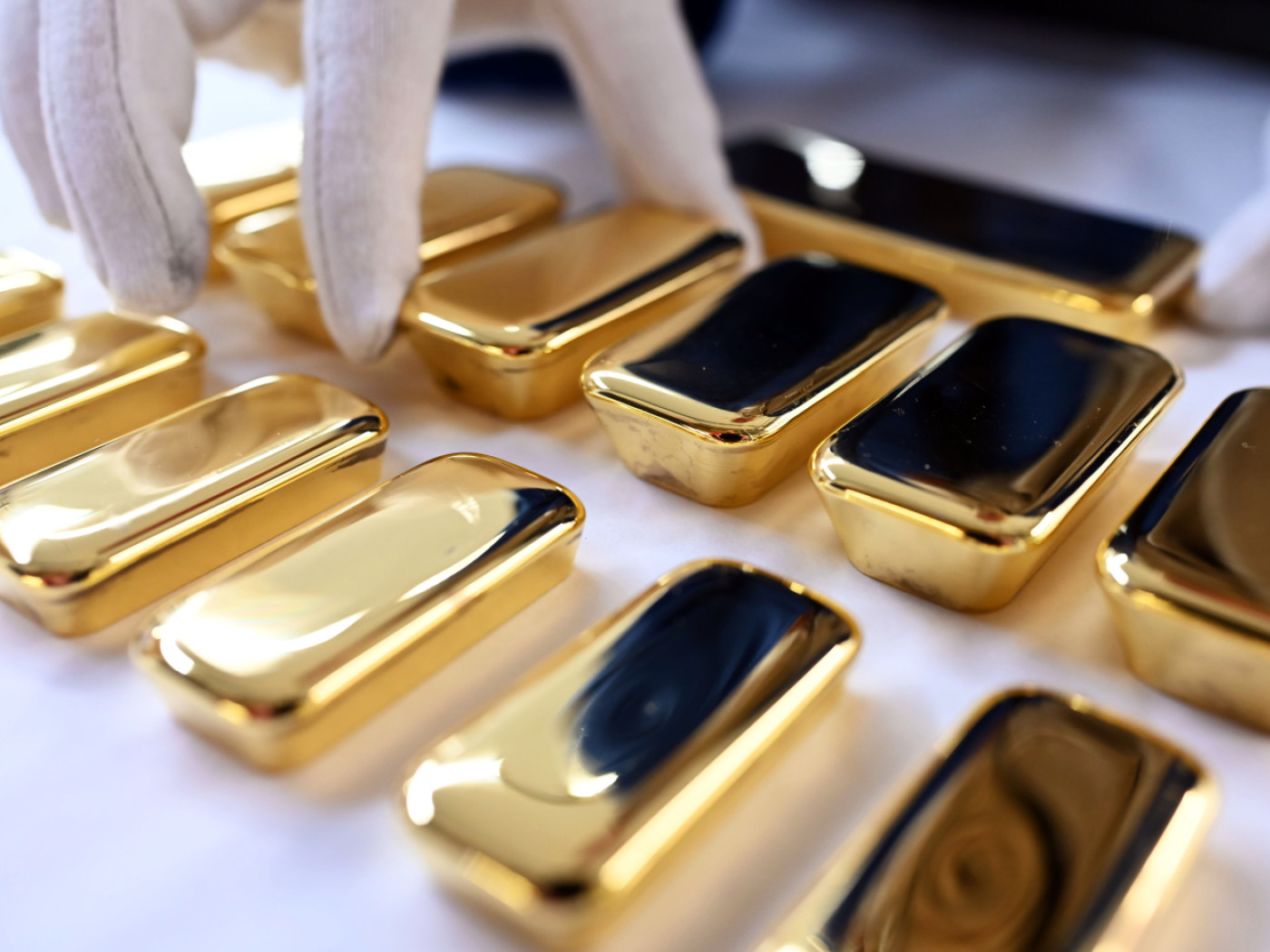
The year 2025 was a brilliant year for gold. The yellow metal gained more than 60%, steadily updating its records.
Monday, for the first time in history, the $4400 (CHF3488) per ounce has been exceeded (i.e. the kilo is at around CHF113,000). And according to experts, the ingredients are all there for 2026 to be favourable as well.
+Get the most important news from Switzerland in your inbox
One of the main factors behind the high price level is and remains global uncertainty. These range from the consequences of US President Donald Trump’s customs policy, which are still difficult to assess, to the numerous geopolitical conflicts, in particular the war in Ukraine.
In times like these, gold is the ultimate safe haven asset when it comes to protecting a portfolio and preserving its value. An approach that moreover transcends the centuries, suggesting that nothing has changed: in ancient Rome an ounce of gold made it possible to buy an elegant tunic, today with the same amount you can buy an elegant suit.
But central banks are also an important factor. Since the US dollar is the world’s reference currency, it has long been the reserve currency par excellence. Recently, however, a trend has been gaining momentum among the central banks of emerging countries: the detachment from the supremacy of the dollar. Gold serves as a substitute.
According to calculations by the experts of the investment company VanEck, as of 2022 central banks worldwide are net buyers of gold and store more than 1,000 tonnes annually. Even in 2025 this trend continued, with around 700 tonnes already at the end of October, according to gold producer Heraeus. These purchases are a great support for the metal’s price.
Especially in China, the abandonment of the dollar is part of the strategy and the current purchases could even be higher than the official figures, speculates Arthur Jurus, investment director of the private bank Oddo BHF Suisse. According to Commerzbank, however, central banks’ gold reserves are unlikely to increase indefinitely. In fact, reserves are traditionally meant to secure foreign trade and to provide importers with enough foreign currency to pay for their goods: this is hardly possible with gold.
Then there is monetary policy: lower interest rates equate to a higher gold price. Indeed, low real interest rates make the precious metal, which in itself does not generate any income, more attractive. And in 2026, interest rates are expected to continue to fall, at least in the United States.
In this context, the new Federal Reserve chairman will play a decisive role. The most likely successor to Jerome Powell is Kevin Hassett, a loyal Trump supporter and therefore a guarantor of the cuts in the cost of money repeatedly clamoured for by the American president. Until the end of Powell’s term of office in May, the interest rate situation could still remain quiet.
IG Markets provides another reason for the current trends, albeit a less fundamental one. In the US there will soon be mid-term elections and, according to statistics, such years are good for gold, explains Christian Henke, chief market analyst. In such periods, volatility increases, stocks are less in demand and investors seek safe havens.
But how rich will the gold buffet really be in 2026? Henrik Marx, head of sales at Heraeus Precious Metals, assumes a price range of between $3,500 and $5,000 per ounce. Other experts also predict further price increases, perhaps after a pause, given the rather high levels. Estimates range from $4500 at Oddo BHF to $4950 at Deutsche Bank. At the same time, many experts leave the door open: if, for example, the war in the Ukraine were to end or other events were to dampen the desire for security, a strong correction cannot be ruled out.
Adapted from Italian by DeepL/ds
We select the most relevant news for an international audience and use automatic translation tools to translate them into English. A journalist then reviews the translation for clarity and accuracy before publication.
Providing you with automatically translated news gives us the time to write more in-depth articles. The news stories we select have been written and carefully fact-checked by an external editorial team from news agencies such as Bloomberg or Keystone.
If you have any questions about how we work, write to us at english@swissinfo.ch
External Content

In compliance with the JTI standards
More: SWI swissinfo.ch certified by the Journalism Trust Initiative

You can find an overview of ongoing debates with our journalists here . Please join us!
If you want to start a conversation about a topic raised in this article or want to report factual errors, email us at english@swissinfo.ch.