








Is Switzerland losing its place in the world?
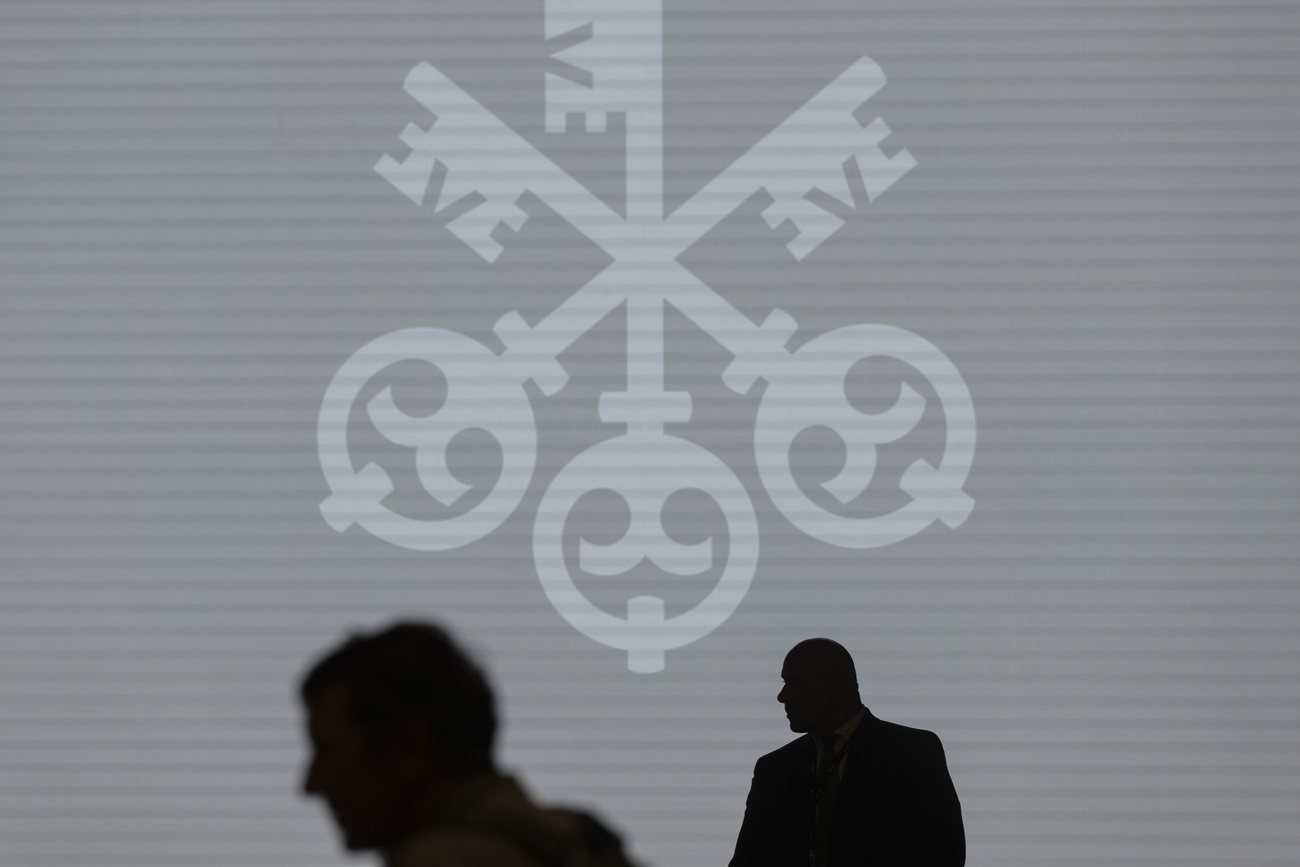
It was a remarkably blunt public warning from the top of Switzerland’s biggest bank. UBS chair Colm Kelleher declared last month that Switzerland was “losing its lustre” and had reached a “crossroads with major challenges”.
Select your language
Generated with artificial intelligence.
Listening:
Is Switzerland losing its place in the world?
As evidence, he cited fierce competition in wealth management, US tariffs that have hit pharmaceuticals and other export sectors, and a regulatory environment that he regards as increasingly out of sync with more liberal regimes.
External Content
He is not alone. Severin Schwan, the chair of Basel-based pharma giant Roche, warned at a panel discussion this month that Switzerland faces a “critical” moment and should be “very worried — even paranoid” that global investment pressures and slow political decision-making threaten its competitiveness.
In a country that prefers to avoid global headlines, such rebukes from pillars of its corporate establishment are a sign of how uncomfortable this year has been.
For much of the postwar period, Switzerland appeared insulated from many of the pressures affecting its European neighbours. Its decentralised direct democracy produced consensus; the franc was one of the world’s best safe-haven currencies; its industrial and diplomatic foundations were solid and predictable.

More
Switzerland ranked world’s ‘most competitive’ nation
The past year has challenged that sense of insulation. “Switzerland has had its crises over the years, but this one feels particularly sharp,” says Walter Thurnherr, a former chancellor and chief of staff of the Swiss Federal Council. “There is an uneasy feeling of being at a schoolyard, bullied by a sixth-grader without a teacher present.”
David Bach, president and geopolitical expert at business school IMD, adds: “The tension has come from multiple directions this year.” Long-simmering questions about Switzerland’s neutrality and its stalled relationship with the EU, once treated as distant background issues, have become urgent and unavoidable. Both threaten to spill into highly polarising referendum fights.
UBS, which acquired its rival Credit Suisse in 2023 in a government-directed rescue after the latter’s humiliating near collapse, is now at loggerheads with Bern over capital rules that it says threaten the sector’s competitiveness.
More
How a Swiss compromise could save UBS billions
The tariff confrontation with Washington — in which the Trump administration imposed the highest tariff rate of any developed economy — exposed Switzerland’s vulnerability as a small state with no economic bloc behind it.
Investigations surrounding Klaus Schwab, the ousted head of the World Economic Forum, whose annual Davos get-together is a symbol of Swiss convening power, added to the scrutiny. Genève Internationale, the network of international and non-governmental organisations, has meanwhile grappled with shrinking multilateral budgets and renewed questions over neutrality.
A recent headline in the NZZ am Sonntag, one of the country’s most-read business papers, declared: “Finally, Switzerland is no longer boring — a clear indication of an identity crisis.” Its editor-in-chief, Beat Balzli, warned of a “verbal coarsening” of public debate as another symptom of a society suddenly uncertain of its bearings.
More
Swiss authorities raise 2026 economic growth forecast
More idiosyncratic issues have added to the sense of unease. Nestlé’s chief executive Laurent Freixe and chair Paul Bulcke resigned after the former’s affair with a subordinate became public. Elsewhere this may have been unremarkable, but in a country that prizes discretion and low-drama corporate governance, it has been a jolt. Prominent Swiss private banks such as Julius Baer have been in the spotlight for anti-money laundering and compliance failings.
Traditional Swiss diplomacy was unprepared for the transactional, might-is-right approach of US President Donald Trump. The dispute over tariffs was resolved only after executives from prominent Swiss companies visited the White House and presented Trump with a gold bar and a Rolex clock — an episode that jarred with the country’s understated style.

More
Is offering a Rolex to a foreign official considered bribery under Swiss law?
“For our country, which until the end of the Cold War understood foreign policy as the cautious, neutral management of external relations, this is a difficult experience,” says Thurnherr. “For decades, we had been successful with our ‘foreign non-policy’. Suddenly, the happy outcome of this is no longer guaranteed.”
Others argue that the country has faced down such challenges in the past and will do so again. “I see many of these incidents on the economy and business side more as blips that make good headlines, rather than some sort of structural decline,” says the chair of one major Swiss financial institution.
But domestic controversies, plus the ructions in a global political order that had played to Switzerland’s strengths, contribute to a wider perception that the country’s bearings are shifting.
“You have UBS, you have the tariffs, you have Nestlé, you have WEF, Switzerland’s increasingly divisive debate on the EU. You can see why it is a moment when the Swiss system is being questioned again,” says Bach.
“It feels existential because it goes right to the heart of what the Swiss believe has made them successful in the past.”
Direct democracy
The modern Swiss state was created in the mid-19th century, through compromise among cantons with distinct identities. Power was devolved rather than centralised and an unusual system of direct democracy sits at its core.

More
How Swiss direct democracy works
A coalition cabinet, the Federal Council, oversees key functions, while plebiscites several times a year enforce broad legitimacy and mitigate against sudden changes, creating a culture of incrementalism and predictability. Paired with an export-driven economy and a highly skilled workforce, the system helped produce decades of prosperity and engendered a confidence that now feels unsettled.
Yet Switzerland enters this turbulent period with formidable economic strengths. It remains the world’s leading centre for cross-border wealth management even as rival hubs such as Dubai or Hong Kong grow. Assets under management hit a record last year, according to the Swiss Bankers Association, which says capital continues to flow into the country.
“In spite of Credit Suisse’s collapse, Switzerland remains a destination for capital, which is remarkable. It hasn’t sputtered,” says Michael Pellman Rowland at Baseline Wealth, a Swiss-based independent manager with global clients, who says there has been a surge in interest from clients worldwide looking to move assets to the country.
“Switzerland still has the best brand as a money centre. The Swiss franc’s strength as well as that of the economy plays into that.”
Highly innovative
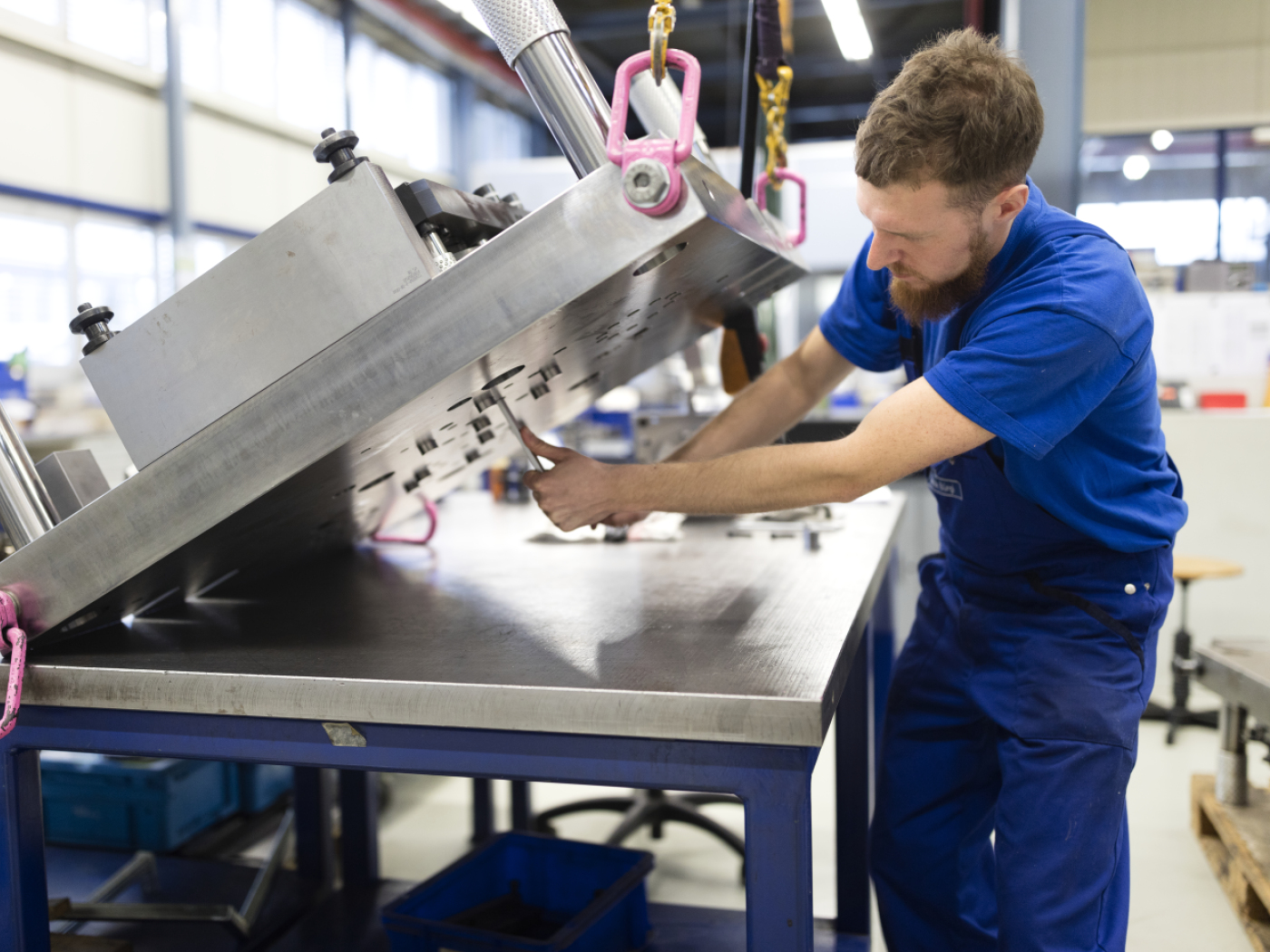
Its innovation ecosystem, anchored by the federal technology institute ETH Zürich and other universities, rivals that of much larger economies. Manufacturers tend to specialise in precision and high-margin niches that can absorb high labour costs and help insulate Switzerland’s exports from currency swings. Public services are widely regarded as among the best in the world.
Inflation and unemployment remain low by global standards; the difference in accumulated inflation since 2019 between the US, UK and Eurozone on the one hand and Switzerland on the other exceeds 20 percentage points. The Swiss franc has been the best-performing major currency over multiple horizons.
The country also has a long record of reinvention. The “quartz crisis” that began in the 1970s forced the country’s watch industry to rebuild; the end of banking secrecy in 2018 spurred a shift towards advisory-led wealth management; rising labour and currency costs pushed exporters into difficult-to-replicate niches.
“At a corporate level and from a business perspective, Switzerland has proven time and time again [that] we can adapt to pressure. We have excellent business leaders and entrepreneurs,” says Philipp Hildebrand, vice-chair of BlackRock and former chair of the Swiss National Bank.
“Just take the currency appreciation — they have been agile in reacting to the pressure of the surging franc and today our exports are still strong and our companies competitive.”
Resilience
This view — that Switzerland is fundamentally resilient — underpins much of the reaction to the year’s corporate turbulence. UBS’s dispute with the government, though unusually public, is widely expected to be resolved eventually through negotiation and few doubt that UBS will remain central to the country’s financial architecture, despite speculation about a headquarters relocation.
Scrutiny of the WEF and questions around compliance at private banks such as Julius Baer have been uncomfortable but are not regarded as evidence of systemic erosion. The challenges of Genève Internationale reflect broader pressures on global multilateral institutions.
Direct democracy adds to this sense of institutional ballast. The decisive rejection last month of a punitive 50 per cent inheritance tax proposal from the political left underscored the electorate’s tendency towards pragmatism.
Several referendums have appeared contentious. In 2009, the country voted to ban the construction of minarets on mosques, while a highly anticipated plebiscite next year seeks to cap the population at 10 million. It has much public support despite criticism that such a policy would harm the economy.
“But at the end of the day everyone gets their say, and the Swiss have a strong sense of what is best for the country,” says Peter Maurer, a former Swiss diplomat and past president of the Geneva-based International Committee of the Red Cross. “I am a strong believer in the resilience of our democratic system.”
More
A delicate export: how Swiss foreign policy promotes democracy
Still, he notes that such clarity weakens when Switzerland looks outward. “Once we turn to international power politics and stringent defence of national interests, the question is: what happens here, and what do we do to avoid drowning?”
It was in this context that the tariff episode landed with such force. For many in business and government, it demonstrated how quickly external shocks can now penetrate Switzerland’s previously insulated domestic ecosystem and unseat the assumptions that had long underpinned its success.
When Washington imposed a 39 per cent tariff on Swiss goods — from watches to chocolate and machinery — public and private actors moved quickly. Yet the unusually open disagreement over strategy marked a departure from Switzerland’s traditional quiet co-ordination. Export-oriented cantons pressed for closer alignment with Europe; others wanted a more combative approach towards the US. When a compromise to 15 per cent finally emerged — aided by direct lobbying from Swiss-based executives — the country remained split over both the optics and the outcome.
The tariff dispute crystallised a broader point: where Switzerland faces the greatest uncertainty is in external questions it has long deferred, such as neutrality, defence, Europe, immigration and the size of the state. Key decisions on many of these issues are now needed at once.
“The world is in a transition phase . . . You have all these alliances and blocs which are changing, while power and the way the world is governed is shifting,” says Peter Voser, chair of engineering conglomerate ABB. “Switzerland is usually at its best when we can be in the background using our diplomatic position. In a transition period that does not work.”
Ukraine, neutrality and EU
Russia’s invasion of Ukraine has placed Switzerland’s prized neutrality under pressure not seen in decades. The Federal Council’s decision to adopt EU and UN sanctions marked a significant shift in position, but left unresolved questions about neutrality’s application in cyber conflict, proxy war and clear breaches of international law. Debate continues over future sanctions policy, re-exports of Swiss-made military hardware and the country’s humanitarian responsibilities.
More

“I am somewhat ashamed of how Switzerland managed the Ukraine war in the beginning. It was viewed by many outside of our country as a tacit refusal to support the defender,” says Daniel Daeniker, senior partner at Homburger, the Swiss law firm. “But the debate in parliament over the export of materiel, such as getting our tanks to Germany to give to Ukraine, shows that we have adapted over time.”
Parliament this month agreed to ease restrictions on military re-exports, though the detail is vague. A new defence minister has also signalled a desire for closer security co-operation with Europe and Nato.
The future of Switzerland’s relationship with the EU is another weighty issue. The bilateral system — a patchwork of agreements granting access to the single market but without political integration — has served the country well. But it is becoming harder to sustain as the EU consolidates its regulatory framework. After years of talks, Bern and Brussels this year reached a draft deal, known as Bilateral III, to update Switzerland’s access to the single market.
The agreement touches on many of the same issues that complicated the UK’s departure from the EU, including budget contributions, migration and judicial oversight. It will probably require approval in a referendum, but domestic opinion is sharply divided. Supporters say market access is essential for competitiveness with the bloc, which takes 50 per cent of Swiss exports. Opponents warn deeper alignment risks eroding sovereignty and increasing regulation.
Elisa Cadelli, president of think-tank Foraus, says she is “most concerned” about the public appetite for the deal. “Supporters will have to convince the Swiss public that this matters for employment, for Swiss businesses, for the ability to export . . . yet the debate is already marked by occasionally inaccurate claims,” she says.
The EU pact, says Thomas Jordan, a director of Zurich Insurance and a former SNB chair, is essentially a “trade-off between ensuring relatively easy access to the European market on one hand and giving up a lot of sovereignty and accepting — in a dynamic and automatic way — future regulation of the EU on the other”. The long-term impact of this on Switzerland, he adds, “is almost impossible to figure out”.
Alongside the big geopolitical questions, a quieter domestic debate has emerged over the role and size of the state. Switzerland has long prided itself on a lean public sector and a tradition of private provision in areas from housing and pensions to childcare and infrastructure. But rising living costs, labour shortages and demographic pressures have begun to challenge that model.
Proposals for subsidised day care, expanded parental leave and more active federal involvement in housing have gained traction across parties, reflecting competing visions of what Switzerland’s social contract should look like in a more complex environment.
Adjustment not decline
Many see a focus on shoring up the internal system as more urgent than responding to the external geopolitical environment. “It is sometimes known as the porcupine method. We just need to curl into a ball with our spikes out and ride this out,” said one Swiss financier in Zurich. “People love to periodically call the death of Switzerland — they have not been right so far.”
Thomas Gürber, deputy state secretary at Switzerland’s foreign affairs department, frames the moment as adjustment not decline.
“I do not see us as being on a downward slope. I think we are in a process of reorienting ourselves regarding many challenges,” he says.
The central issue remains whether Switzerland can adjust its unique model to a world that intrudes more quickly than before. Its underlying strengths are considerable, but its room for manoeuvre is growing narrower — and warnings such as UBS chair Kelleher’s about the dangers of complacency resonate with business and political figures alike.
“Switzerland is very uniquely positioned to be successful in this new era,” says Mario Greco, chief executive of Zurich Insurance. “The question is whether it will take advantage of that position.”
Copyright The Financial Times Limited 2025

In compliance with the JTI standards
More: SWI swissinfo.ch certified by the Journalism Trust Initiative

You can find an overview of ongoing debates with our journalists here . Please join us!
If you want to start a conversation about a topic raised in this article or want to report factual errors, email us at english@swissinfo.ch.