








New arrivals make do with the dregs of the Zurich’s housing market
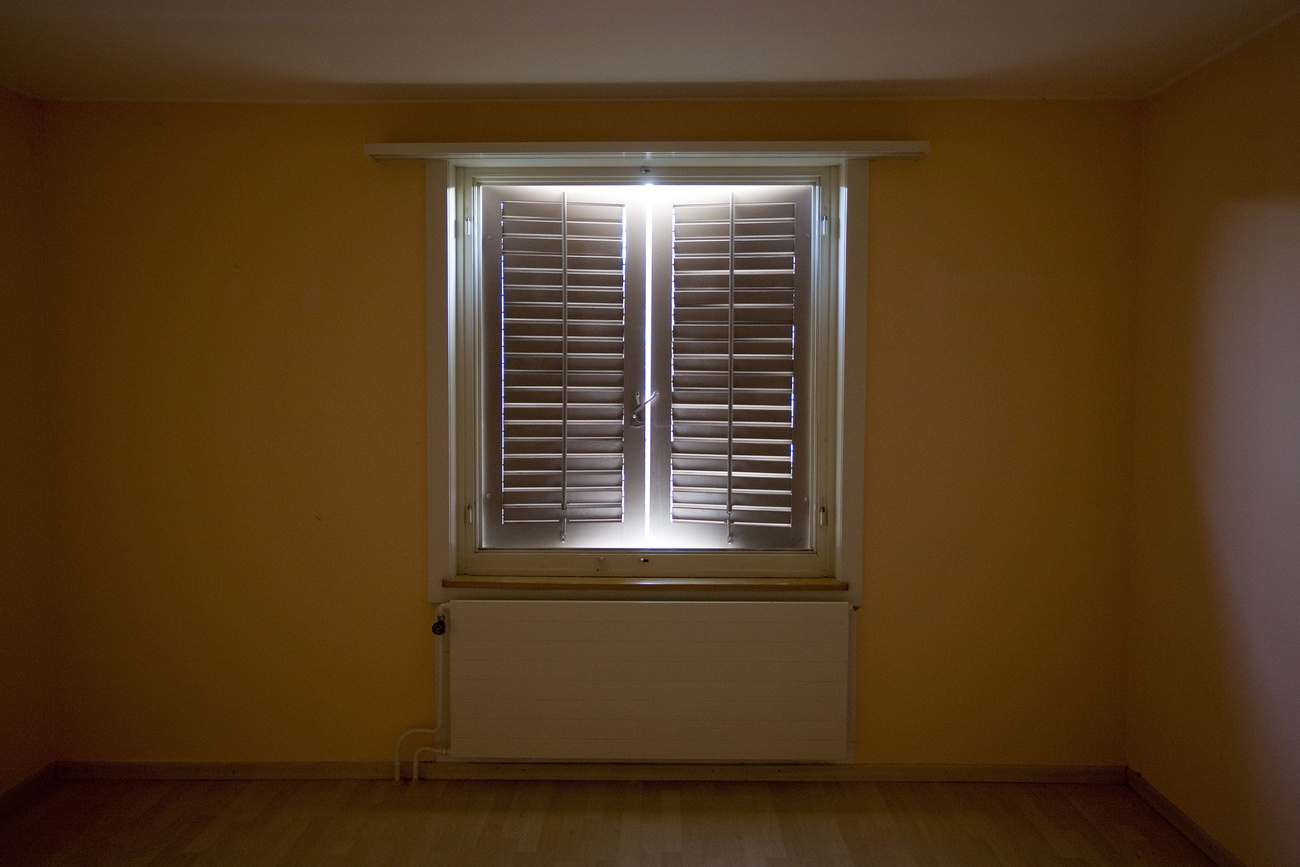
Immigrants pay exorbitant rents or move into run-down apartments. Newcomers from abroad are clearly disadvantaged in Zurich’s tight housing market, at least at the beginning.
Select your language
Generated with artificial intelligence.
Listening:
New arrivals make do with the dregs of the Zurich’s housing market

It’s a paradox! Even though Zurich is notorious far beyond Switzerland’s borders for its ruthless housing market, immigrants continue pouring into the country’s largest metropolis.
Of the nearly 120,000 immigrants who arrived in Switzerland in 2022, one in ten settled in Zurich. This is according to a new analysis by Zurich Cantonal BankExternal link (ZKB) based on data from the Federal Statistical Office. To put it into perspective, roughly one in twenty people in Switzerland lives in Zurich.
The high number of immigrants has consequences, even for the immigrants themselves. In Zurich, they are often blamed for driving gentrification and soaring prices. The right-wing Swiss People’s Party has launched an initiative to give locals priority in housing allocation. In reality, however, immigrants are left with whatever scraps remain on the market.

More
Zurich: Welcome to the world capital of housing shortages!
Young adults with flexible expectations
As most immigrants need an apartment quickly, they are largely excluded from the new-build market, the ZKB notes in its analysis.
As a result, newcomers are more likely to move into old apartments than people who relocate within Switzerland. “These are mostly older buildings that fail to meet locals’ quality expectations or are offered at excessive rents and are therefore left on the market,” notes the ZKB.
The odds of migrants finding an affordable cooperative flat are even slimmer. In Zurich, where one in four apartments is classified as non-profit, only 6% of immigrants moved into a cooperative flat, compared with 21% of people who relocate within Switzerland, the ZKB found. “And in most of those cases, they are moving in with someone,” the bank notes.
External Content
The majority of immigrants are between 20 and 40 years old and single, a fact that makes them more flexible and less demanding, at least in the short term. Many do not move into their own place at first but share an apartment or join relatives who arrived in Switzerland earlier. At an average of 36m2 per person, their living space is correspondingly smaller compared with 44m2 for Swiss residents who move house.
For many people, the first apartment in Switzerland is only an interim solution, according to the ZKB. One in five people relocate within Switzerland just one year after arriving.
No direct competition
In Zurich, the pattern is even more pronounced: 28% of those who arrived in 2022 had already moved into another apartment by 2023, with 60% staying in Zurich despite the tough housing market. Those who moved out of the city, however, were able to cut their rental costs substantially. According to the ZKB, they pay CHF26/m2 instead of CHF34/m2.
The ZKB analysis indicates that newcomers do not pose an immediate threat to locals on the housing market, at least not in their first year after arrival. After that, opportunities equalise in the housing hunt which makes their impact on the market a reality, at least in the medium-term.
In an analysis, the consultancy Wuest Partner has quantified the impact of immigration on the housing market and prices. According to their findings, a 1% increase in population also leads to a 1% rise in rents. In this scenario, rent for houses increase by 0.88% while condominium prices rise by 1.37%.
The stronghold of the locals
In the long term, immigrants remain largely excluded from non-profit housing developments, at least in the city of Zurich. “Swiss nationals are overrepresented in Zurich’s cooperatives as they make up 80% of the residents,” says a 2021 reportExternal link by the Zurich Housing Cooperatives. It also states that “above all, people who were born abroad are less likely to live in cooperative apartments.”
Many newcomers in Zurich belong to a mobile and well-educated elite who can relocate quickly which makes time a crucial factor. Even locals consider finding a cooperative flat in Zurich a multi-year project with no guarantee of success. Those uncertain they will still be in the city in a few years often don’t even bother trying.
What is your opinion? Join the debate:
External Content
Edited by Balz Rigendinger. Adapted from German by Billi Bierling/ac

More
No house generation: the impossibility of buying property in Switzerland

In compliance with the JTI standards
More: SWI swissinfo.ch certified by the Journalism Trust Initiative

You can find an overview of ongoing debates with our journalists here . Please join us!
If you want to start a conversation about a topic raised in this article or want to report factual errors, email us at english@swissinfo.ch.