








Housing, energy costs drive up inflation in Switzerland
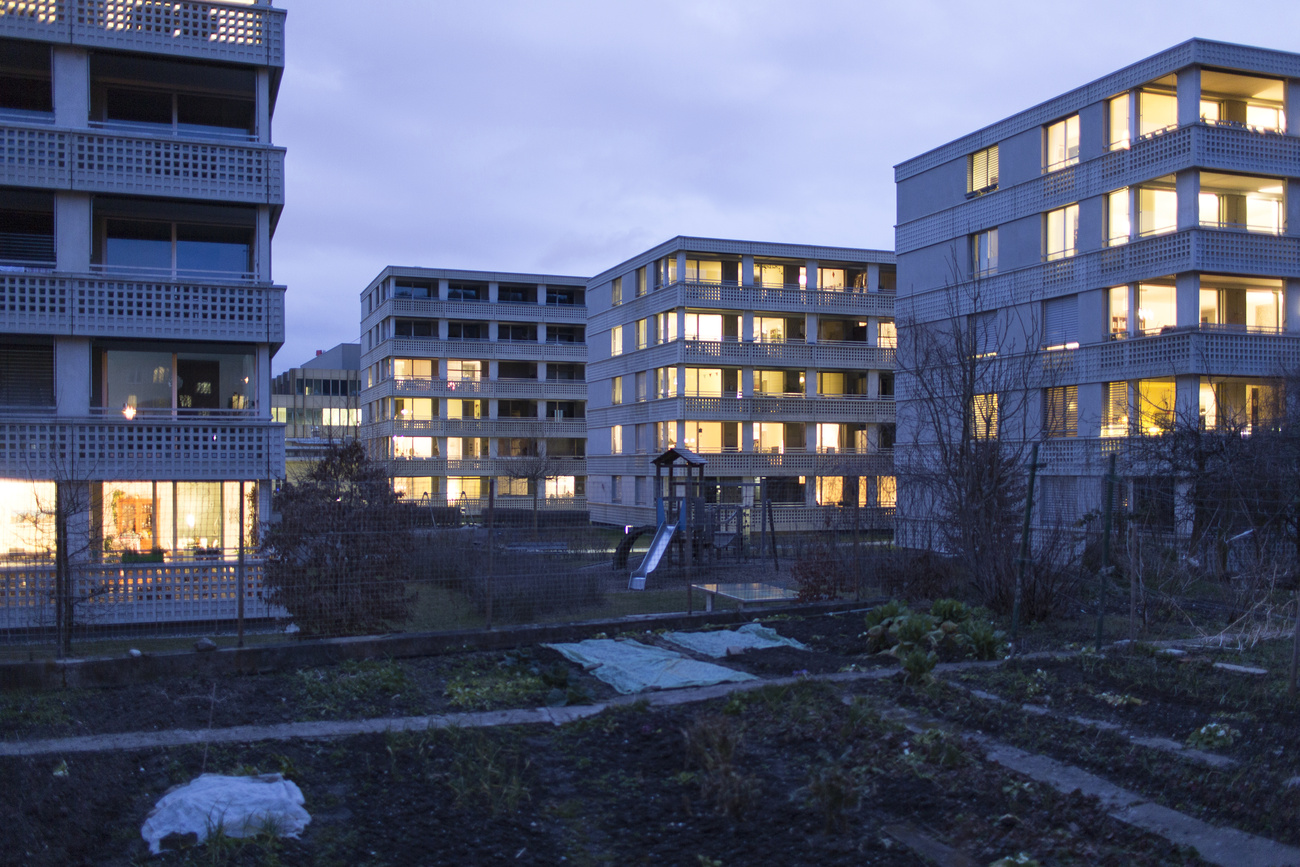
Consumer prices in Switzerland rose by 0.3% year-on-year in March, driven primarily by housing costs, says the Federal Statistical Office. Inflation had previously peaked at 0.1% in both January and February.
Select your language
Generated with artificial intelligence.
Listening:
Housing, energy costs drive up inflation in Switzerland
+Get the most important news from Switzerland in your inbox
Accounting for a good quarter of household expenditure, housing and energy costs rose by 1.3%, the Statistical Office indicated in a report published on Thursday. Healthcare and transportation, by contrast, recorded falls of 0.2% and 0.8%, with respective weightings of 17% and 11%.
Excluding rent, which rose by 1.4%, inflation would have been zero, according to the Federal Statistical Office.
Join the debate:
External Content
+ Rising rents are heavy burden on many Swiss households
On a month-on-month basis, the consumer price index rose by 0.2%. The cost of petroleum products rose by more than 10%, but account for only 2.1% of the expenditure taken into account by federal statisticians.
The rise remains modest compared with the forecasts of economists surveyed by the AWP news agency, who had predicted figures ranging from 0.3% to 0.6%.
An island of stability
Inflation in Switzerland remains significantly more moderate than in neighbouring countries, with the eurozone reporting on Wednesday a year-on-year rise of 2.5% in March, following 1.9% in February.

More
Life has become more expensive in Switzerland – despite low inflation
“The modest rise in inflation in March […] confirms Switzerland’s relative resilience to the oil shock,” said GianLuigi Mandruzzato, an economist at EFG, who also highlighted the low weighting of fuel prices in the consumer price index.
“Price dynamics remain dominated by domestic factors,” said Arthur Jurus, head of investment at Oddo BHF Switzerland, citing rent as the primary driver. “Imported goods continue to exert deflationary pressure, driven by a structurally strong franc,” he added.
Translated from French with AI/gw
We select the most relevant news for an international audience and use automatic translation tools to translate them into English. A journalist then reviews the translation for clarity and accuracy before publication.
Providing you with automatically translated news gives us the time to write more in-depth articles. The news stories we select have been written and carefully fact-checked by an external editorial team from news agencies such as Bloomberg or Keystone.
If you have any questions about how we work, write to us at english@swissinfo.ch.
External Content

In compliance with the JTI standards
More: SWI swissinfo.ch certified by the Journalism Trust Initiative

You can find an overview of ongoing debates with our journalists here . Please join us!
If you want to start a conversation about a topic raised in this article or want to report factual errors, email us at english@swissinfo.ch.