








Good news for Switzerland: US is fast-tracking psychedelics for mental health

Switzerland is one of the few countries in Europe where psychedelic treatments are available, but access remains extremely limited for patients. US support for novel treatments means things could change, analyses Swissinfo healthcare reporter Aylin Elçi.
Select your language
Generated with artificial intelligence.
Listening:
Good news for Switzerland: US is fast-tracking psychedelics for mental health

On April 18, the United States unexpectedly announced it would accelerate research and improve access to psychedelic treatments in psychiatry. The announcement came just a day before the anniversary of Swiss scientist Albert Hofmann’s experience with the hallucinogenic drug lysergic acid diethylamide (LSD) in 1943 – the first intentional acid trip in history.
Instead of six months or more, psychedelic drugs that qualify will now be assessed in one to two months in the same Food and Drug Administration (FDA) pilot programme previously used to speed up reviews for gene therapies and cancer treatments. Switzerland is one of the few countries in Europe where psychedelic assisted treatments is allowed under certain circumstances, but access remains extremely limited for patients. US support for novel treatments means things could change.
Through an executive orderExternal link, the administration has requested patient access to drugs that are still being investigated, such as the psychoactive compound ibogaine. It has also attributed $50 million (CHF39 million) to its research programme focused on breakthrough technologies, and it has highlighted the importance of these treatments for veterans, among whom suicide rates are twice as high as the rest the adult population.
Across the Atlantic, the news was met with optimism. Drug manufacturers often launch their products in the US – the world’s biggest medical market – before applying for registration in other countries, meaning FDA approvals can be an indication of drug approvals to come across Europe.
Spravato, Johnson & Johnson’s nasal spray to treat depression, was first approved in the US in March 2019, before being registered in Europe ten months later. The drug, which is based on ketamine, an anaesthetic with psychoactive effects, was introduced to the Swiss market a year after the US approval and is currently available in over 70 countries.
Towards an approved psychedelic drug?
The announcement broke from the traditional Republican position on drugs marked by President Nixon’s criminalisation of substances such as LSD in the 1970s, which stifled medical research in the field. While new pharmacological treatments such as antidepressants were launched in the second half of the 20th century, research on the use of psychedelics in mental health was deemed risky until recently and was heavily legislated.
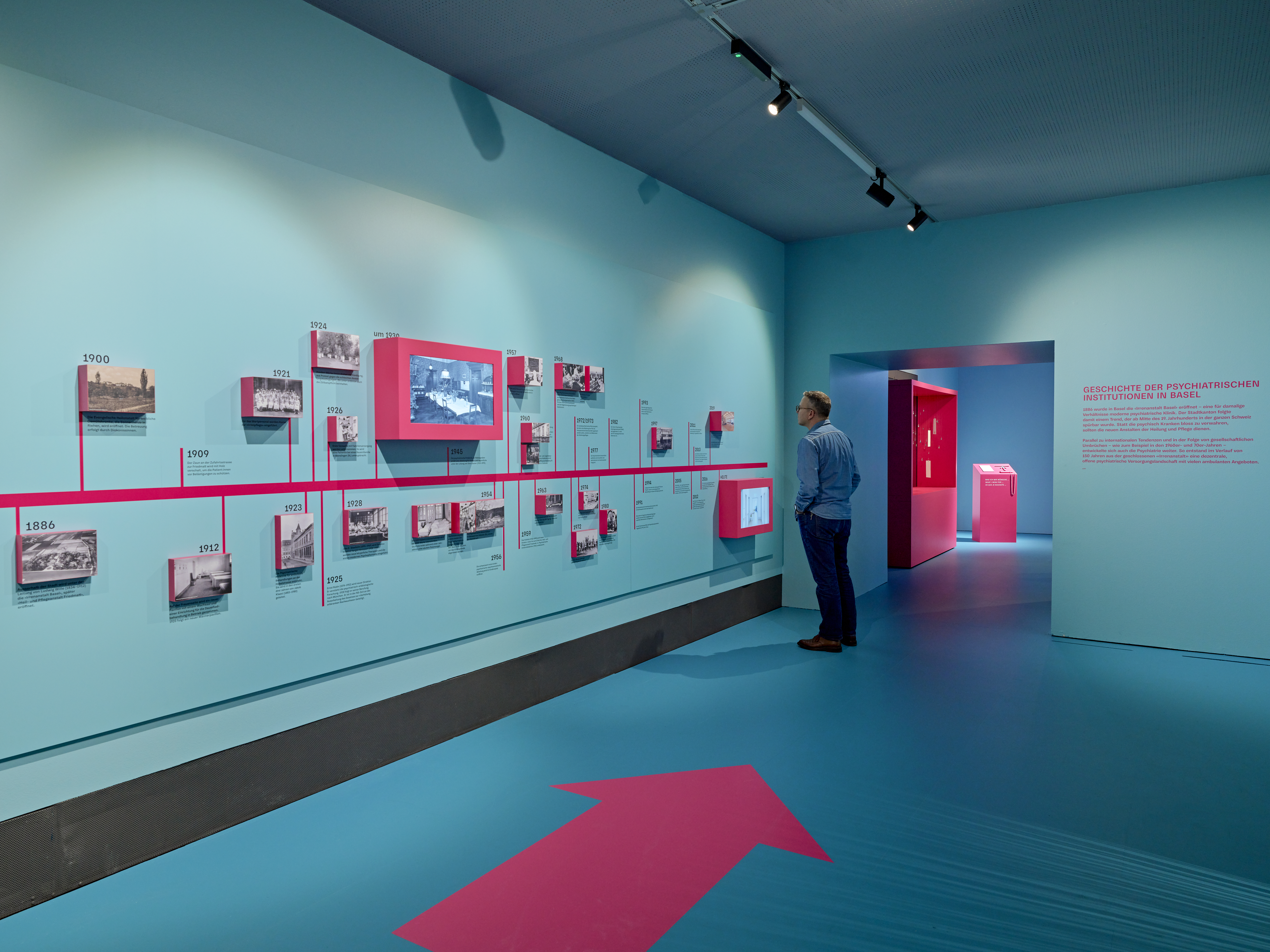
+ Mental health disorders have been picked apart since antiquity. Find out what Switzerland’s role was in treating them:
More
From Jung to psychedelics: a timeline of Switzerland’s contributions to psychiatry
But in Switzerland research has been ongoing ever since the discovery of one of the world’s most potent psychedelic. The country actively experimented with LSD, psychoactive mushrooms psilocybin, and MDMA, a stimulant sometimes known as ecstasy, to treat mental illnesses. Although the substances are still illegal in the country, since 2014 doctors can request exceptional authorisations from the Federal Office of Public Health (FOPH) for each treated patient suffering from conditions such as depression, post-traumatic stress disorder and anxiety. It is currently the only country in Europe where access to these three psychedelics outside of clinical trials is possible.
“US approvals will mean that Switzerland will eventually also approve the drugs, and special authorisations will no longer be required,” said Daniele Zullino, head of psychedelic-assisted therapy at Geneva University Hospitals (HUG). This is good news for Switzerland.
Psychedelic-assisted treatment
Treatments are approved under strict conditions, including following psychotherapy sessions before and after the use of psychedelics, which makes them time-consuming and expensive.
Nurses observe individuals for sessions that can last up to eight hours, and follow-up psychotherapy sessions take place the day following intake. Treatment options are limited to private practices, and the university clinics of Bern, Zurich, Fribourg and the HUG, where patients had to wait six months to a year for access in 2025.
+ How do psychedelics-assisted therapies work?

More
Switzerland is home to Europe’s only psychedelics treatment
While some insurance policies cover the surveillance and the therapy part of the treatment, the drugs are entirely paid for by patients because they aren’t approved by the country’s medical surveillance authority Swissmedic. At HUG one session of LSD therapy costs CHF200-300 ($255-385), while psilocybin starts at CHF400 and can reach CHF800 for higher doses. Sessions are repeated about three times a year.
Potential for the population
In 2021 about 770,000 people, or 9% of the Swiss population, were on anti-depressants. That same year, only 147 special authorisations for psychedelics were given out, and about 2,000 have been granted overall in the last decade. With one in three patients unresponsive to antidepressants, the number of patients who could benefit from psychedelics is potentially much higher.
Swissmedic registrations trickling down from the FDA could provide a solution to the high cost of psychedelics, but the approach to treatment is very different between the countries. Drug trials in the US will remain classical (proving efficacy over a placebo) and won’t include the therapy side of the treatment, which is important to Switzerland.
“The US approach believes that the molecules in the psychedelic drugs are going to treat patients, whereas the therapeutic alliance around a patient is also important,” said Jonathan Crespo, a recovered psychedelic patient and co-founder of Psychédelos, a patient group for therapy-assisted psychedelics.
Switzerland is ahead of the US in terms of application, because it is already carrying out treatment outside a clinical setting. But with only a handful of institutions offering psychedelic-assisted treatments, competent staff is limited and the FOPH will have to work on solutions to carry out treatments as intended once products are registered.
On April 24, three American companies received fast-track vouchers to review the results of psilocybin and methylone, a drug often used as a substitute for MDMA, on various types of depression. Switzerland has about five years until Swissmedic likely approves new psychedelic drugs. It has until then to figure out a system for the training of the medical staff and quality control for production and administration, Zullino said.
“We still have a lot of work to do because psychedelics aren’t highly toxic substances, but they can impact a person’s psyche,” he said.
Join the debate:
External Content
Edited by Virginie Mangin/ts
The story has been updated to include a sentence on Switzerland’s experience and to reflect developments in approval in Europe.

In compliance with the JTI standards
More: SWI swissinfo.ch certified by the Journalism Trust Initiative

You can find an overview of ongoing debates with our journalists here . Please join us!
If you want to start a conversation about a topic raised in this article or want to report factual errors, email us at english@swissinfo.ch.