








How sustainable are Christmas trees in Switzerland?
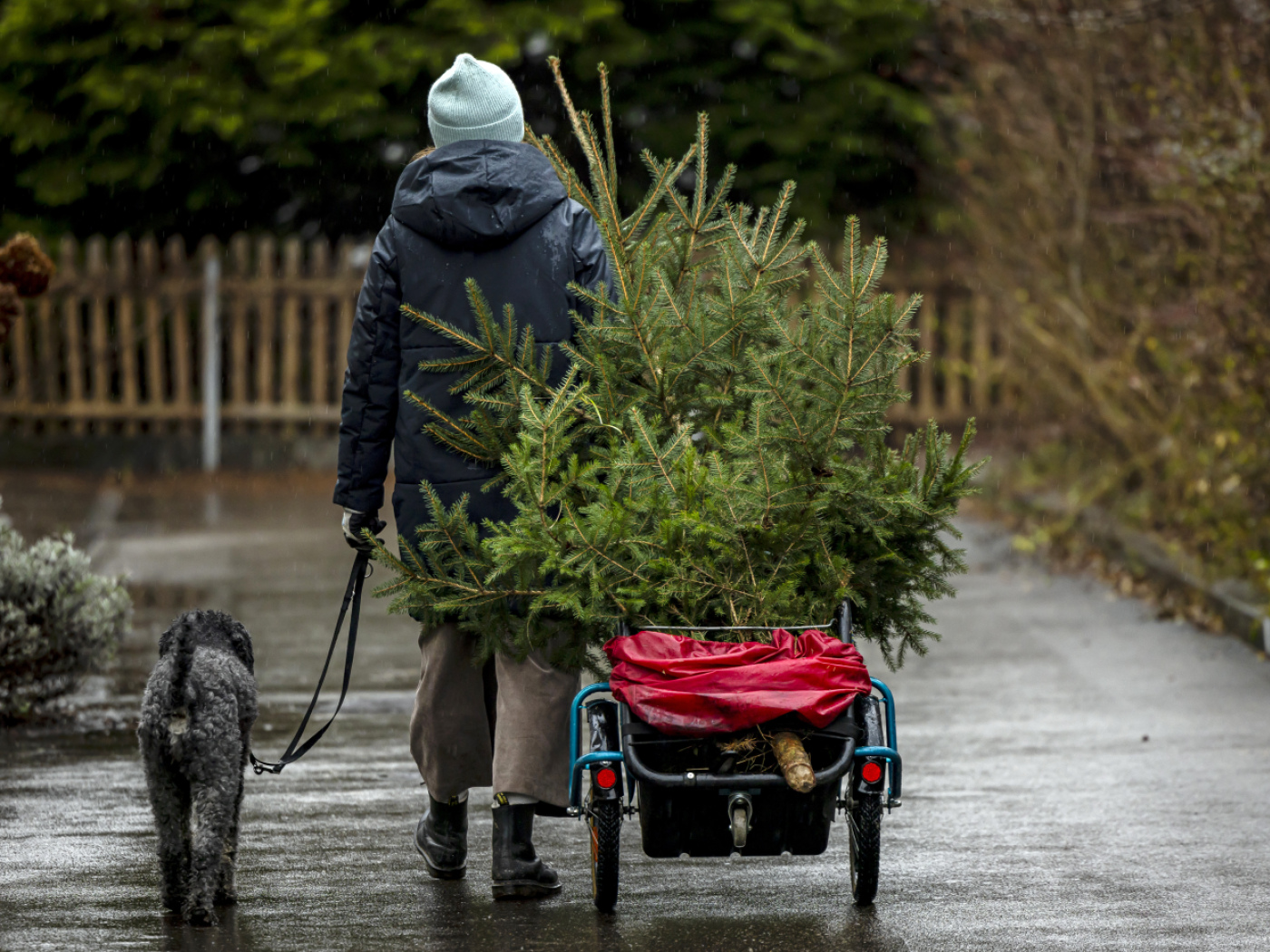
Eco-fir trees are a clear niche in Germany, one of the main suppliers of Christmas trees in Switzerland. Artificial trees are not necessarily sustainable either.
Select your language
Generated with artificial intelligence.
Listening:
How sustainable are Christmas trees in Switzerland?
+Get the most important news from Switzerland in your inbox
According to the German environmental authority, Christmas trees are usually grown in plantations. This has a negative impact on the environment due to the use of artificial fertilisers and pesticides. “Compared to other consumer goods, however, the environmental impact of Christmas trees can be categorised as low,” it explains.
Consumers can also look out for ecologically certified trees, which are grown without pesticides and mineral fertilisers. However, according to a survey by the organisation Robin Wood, such Christmas trees only have a market share of less than 1%.
The transport of the trees to the living room also has consequences for the environment, especially across national borders. The environmental authority therefore recommends buying Christmas trees at least in the region.
Those who opt for an artificial tree should also use it for as long as possible, the authority further advises. The decisive factor with regard to the environmental balance is how many natural Christmas trees it replaces in the course of its “life”.

More
A tree is not just for Christmas
Swiss trees cannot meet demand
As Switzerland cannot meet the demand for trees from its own production, a considerable proportion is imported from abroad. In addition to Germany, Denmark is also an important supplier.
Most wholesalers offer both domestic and imported Christmas trees. Landi, Coop and Migros also source a large proportion of their trees directly from the region. Aldi, on the other hand, relies solely on Nordmann firs from the EU.
Coop only sells Swiss firs directly. At its DIY subsidiary Jumbo, the Swiss share is currently 85% and is to be increased to 100% in the medium term, the group told the news agency AWP. At Migros, too, the proportion of Swiss production is 90%. Swiss trees are used wherever possible, it said.
Translated from German by DeepL/ts
We select the most relevant news for an international audience and use automatic translation tools to translate them into English. A journalist then reviews the translation for clarity and accuracy before publication.
Providing you with automatically translated news gives us the time to write more in-depth articles. The news stories we select have been written and carefully fact-checked by an external editorial team from news agencies such as Bloomberg or Keystone.
If you have any questions about how we work, write to us at english@swissinfo.ch
External Content

In compliance with the JTI standards
More: SWI swissinfo.ch certified by the Journalism Trust Initiative

You can find an overview of ongoing debates with our journalists here . Please join us!
If you want to start a conversation about a topic raised in this article or want to report factual errors, email us at english@swissinfo.ch.