








Lab-grown meat ‘not market ready for five years’: Bell CEO

A phase of strong growth in meat substitute products is over, according to the CEO of Swiss food producer Bell Food Group.
Select your language
Generated with artificial intelligence.
Listening:
Lab-grown meat ‘not market ready for five years’: Bell CEO
+Get the most important news from Switzerland in your inbox
Sales of Bell’s meat substitute range are only growing by 0-1% per year, Marco Tschanz said in an interview with the Neue Zürcher Zeitung newspaper.
+ How Switzerland can cut meat consumption by 2050
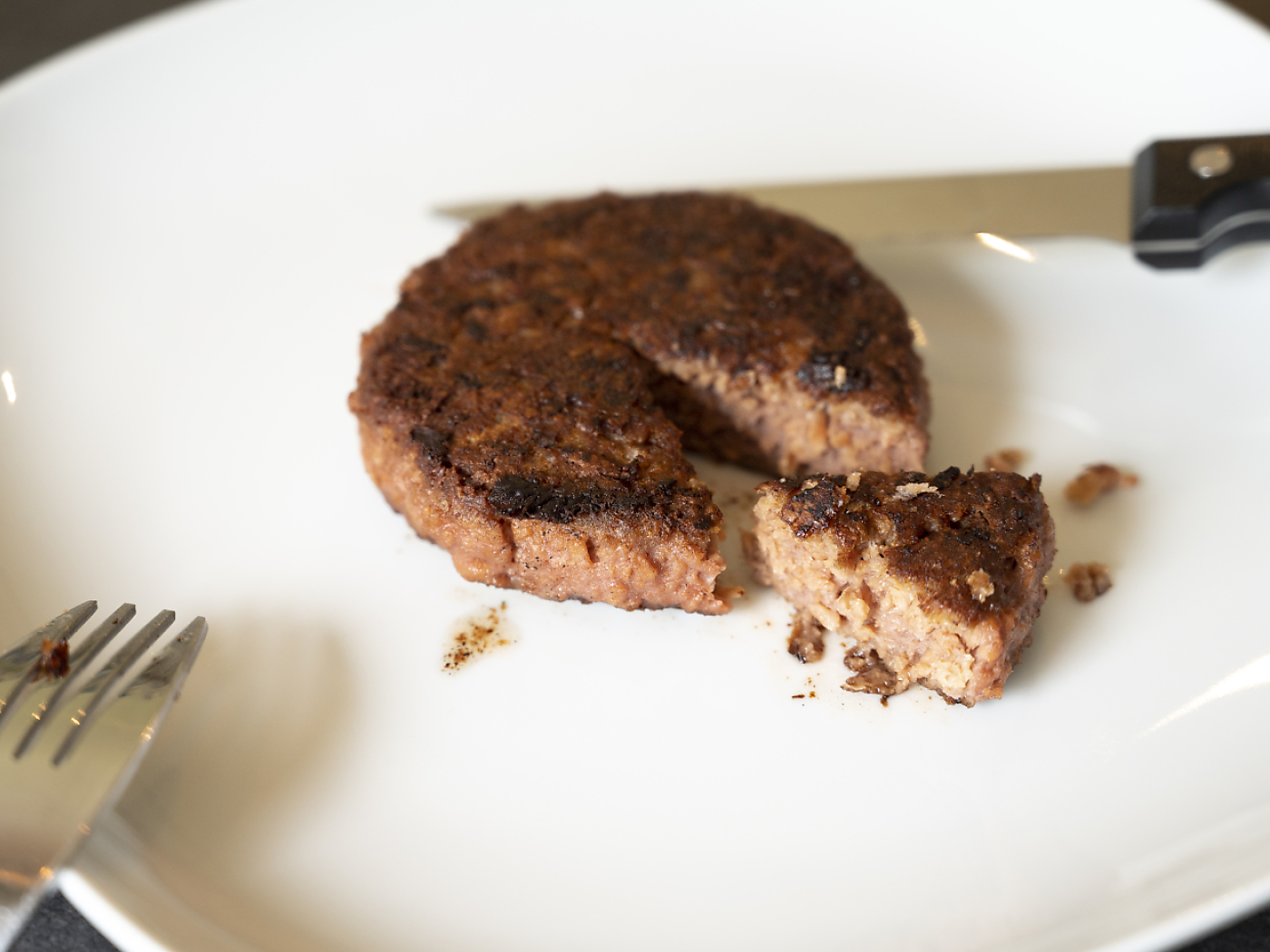
Although there was a boom during the coronavirus pandemic, this has tailed off. Meat substitutes have therefore “remained a niche product until now”.
One reason for this is the flavour, which is still not comparable to that of meat. In addition, these are often “highly processed products with many additives”, said Tschanz. In terms of price, the substitute products, which were often more expensive in the past, have now equalised with the original.
Bell also continues to rely on conventional meat. Per capita consumption in Switzerland has been stable for many years, explained Tschanz. At the same time, the population is growing and Bell is gaining market share.
Consumption of chicken meat in particular has recently increased significantly.
Meat from the lab
In the long term, however, Bell also attaches importance to laboratory grown meat. In 2018, the company acquired a stake in the Dutch start-up Mosa Meat, which produces meat in a laboratory.
“If a technology emerges to produce the raw material meat without slaughtering and cutting up an animal, then we have to be part of it,” said Tschanz. Thanks to its involvement, Bell is “close to research and development” and has “backed the right horse”.
More

However, it will be some time before such a product reaches the mass market. The authorisation process is “very complex and highly regulated”, said Tschanz. In the EU, the test procedures take two to three years, after which politicians have to decide. “So it will take at least another five years.”
Initially, lab meat will probably be offered in restaurants, where it can be specially labelled, and not in supermarkets. According to Tschanz, it will not replace conventional products, but rather complement them.
The global demand for meat is increasing and “can no longer be met in the traditional way”.
More
Sales of meat substitutes fall in Switzerland
Adapted from German by DeepL/mga
We select the most relevant news for an international audience and use automatic translation tools to translate them into English. A journalist then reviews the translation for clarity and accuracy before publication.
Providing you with automatically translated news gives us the time to write more in-depth articles. The news stories we select have been written and carefully fact-checked by an external editorial team from news agencies such as Bloomberg or Keystone.
If you have any questions about how we work, write to us at english@swissinfo.ch
External Content

In compliance with the JTI standards
More: SWI swissinfo.ch certified by the Journalism Trust Initiative

You can find an overview of ongoing debates with our journalists here . Please join us!
If you want to start a conversation about a topic raised in this article or want to report factual errors, email us at english@swissinfo.ch.