








Hoverfly named new Swiss Species of the Year

The hoverfly species Monoceromyia ndidiae is the “New Species of the Year 2026”. Its discovery shows how important citizen science is, wrote the Swiss Systematics Society (SSS).
+Get the most important news from Switzerland in your inbox
The newly discovered species belongs to the hoverfly family, many of which mimic wasps with their yellow-orange colouring, the SSS announced on Tuesday. The camouflage protects them from predators, although these hoverflies are completely harmless and cannot sting.
The discovery of the new species was special and began in the Dominican Republic. There, people interested in insects shared their photos on the online platform iNaturalist. One of these images caught the attention of an entomologist who noticed the unusual morphology of the fly depicted. He shared the picture with other experts, the SSS wrote. Nobody knew what species it was.
More
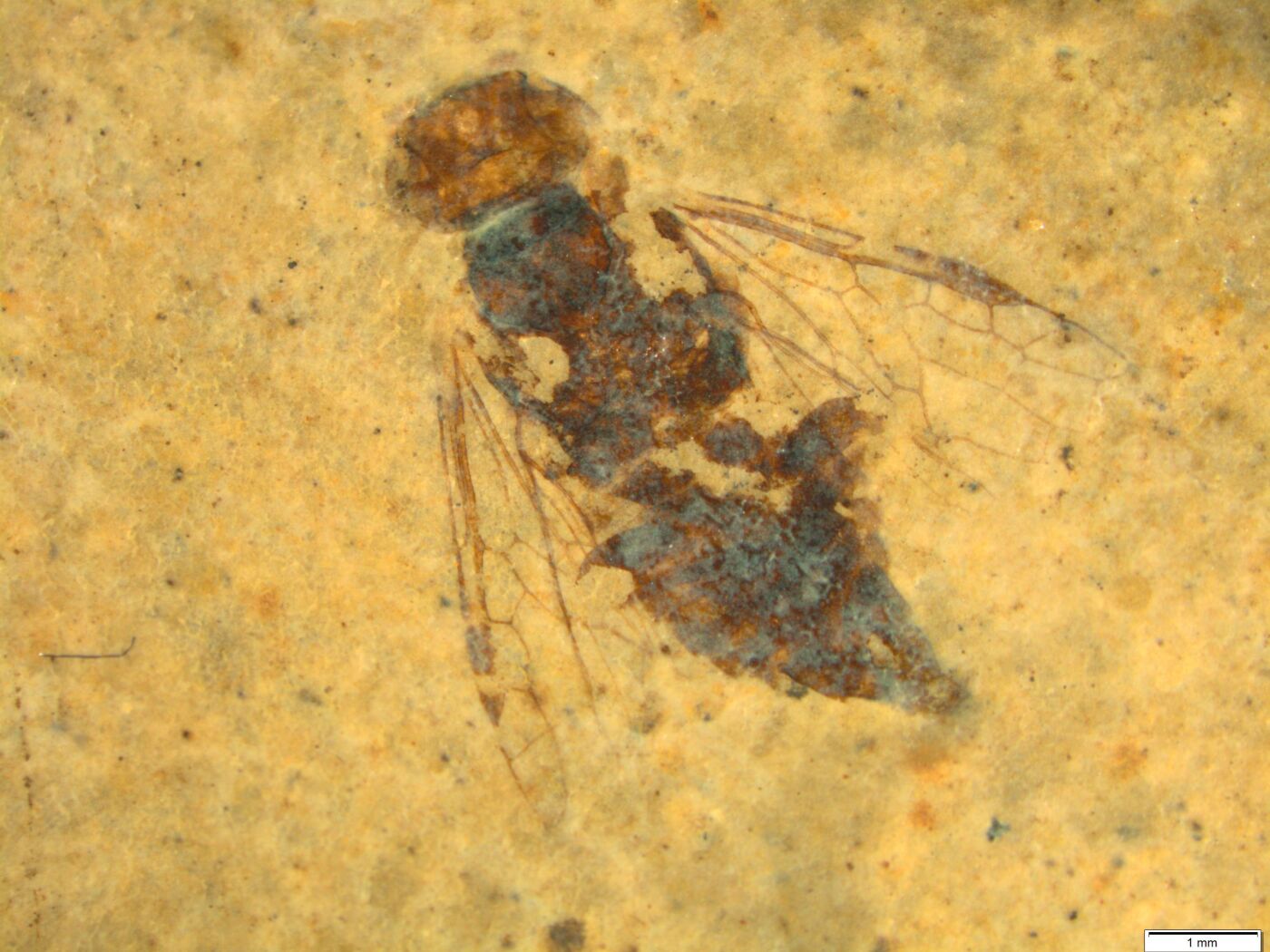
Fossil of world’s oldest wasp discovered in Ticino
Finally, a specimen was successfully caught in a light trap during a field expedition in the Valle Nuevo National Park. Laboratory tests at the University of Lausanne showed that it was a previously unknown species, according to the SSS. The researchers have now scientifically described it and named it Monoceromyia ndidiae.
Around 500 species of hoverflies are known in Switzerland, according to the statement. In addition to their fascinating appearance, they are also extremely useful insects, as the larvae of many species feed on aphids, it said. The adults are also important pollinators. Hoverflies are also biodiversity indicators whose presence indicates healthy ecosystems, it said.
Adapted from German by AI/ts
We select the most relevant news for an international audience and use automatic translation tools to translate them into English. A journalist then reviews the translation for clarity and accuracy before publication.
Providing you with automatically translated news gives us the time to write more in-depth articles. The news stories we select have been written and carefully fact-checked by an external editorial team from news agencies such as Bloomberg or Keystone.
If you have any questions about how we work, write to us at english@swissinfo.ch
External Content

In compliance with the JTI standards
More: SWI swissinfo.ch certified by the Journalism Trust Initiative

You can find an overview of ongoing debates with our journalists here . Please join us!
If you want to start a conversation about a topic raised in this article or want to report factual errors, email us at english@swissinfo.ch.