








Departing Swiss army chief bemoans lack of urgency despite Russian aggression

Despite the Russia's attack on Ukraine almost four years ago, army chief Thomas Süssli rates the Swiss political response as blasé.
Select your language
Generated with artificial intelligence.
Listening:
Departing Swiss army chief bemoans lack of urgency despite Russian aggression
“I don’t have the feeling that a jolt has gone through the country since then,” he says in an interview with the NZZ newspaper on Saturday.
+Get the most important news from Switzerland in your inbox
Süssli accepts that in a democracy, politics determines the means. However, he said it is stressful to know that only a third of all soldiers would be fully equipped in an emergency.
“I still remember February 24, 2022, when Russia attacked Ukraine. It was clear to me that what was needed now was ruthless honesty. The population and politicians must not believe that the army is capable of defence when it is not,” warns the head of the army, who is stepping down at the end of the year.

More
Seven weaknesses in ‘Fortress Switzerland’
False hope in neutrality
Süssli gave three reasons why has Switzerland not been jolted after the Russian invasion of Ukraine. Firstly, the last war on Swiss soil was almost 180 years ago – the Sonderbund War of 1847. “Fortunately, we don’t have a collective memory of wars, unlike Estonia or Poland, for example,” he says.
Secondly, the Ukraine war seems far away for many people. “In fact, there are only two countries between us and Ukraine: Hungary and Austria,” warns Süssli.
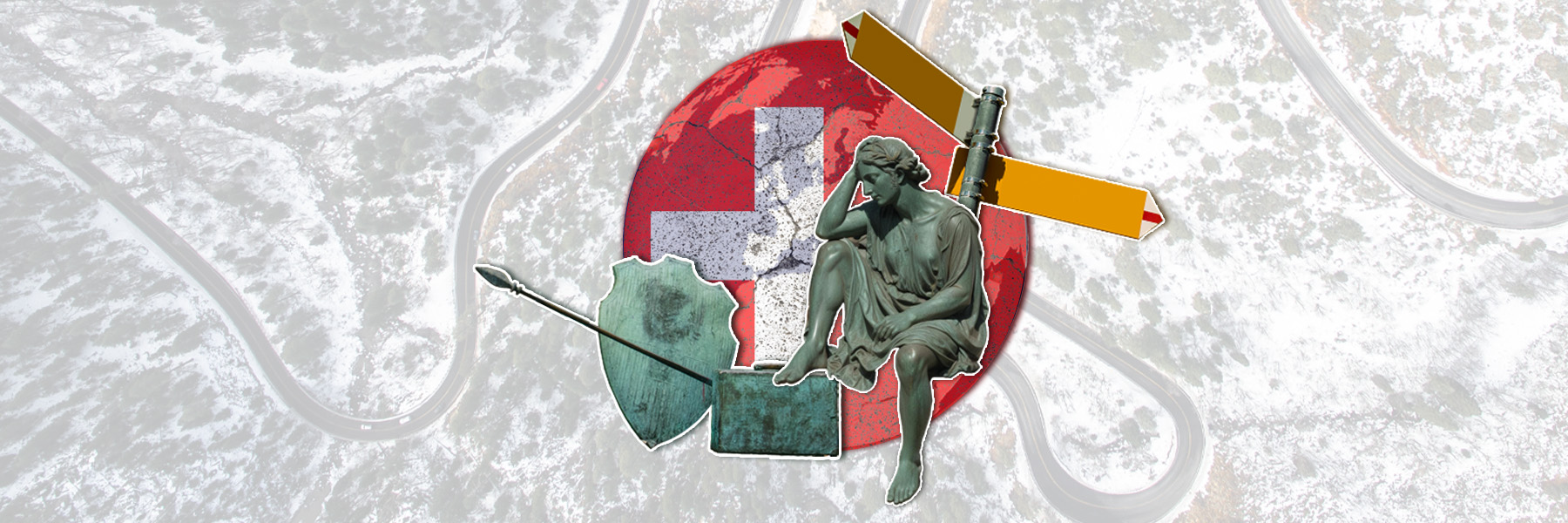
And thirdly, there is the idea that neutrality automatically protects. But this is historically wrong. There are several neutral countries that were unarmed and were dragged into a war. Neutrality only has value if it can be defended with weapons.
More
What does the future hold for Swiss neutrality?
If Switzerland only wanted to invest one per cent of its gross domestic product from 2032 or 2035, it would take until around 2050 to make the country ready for defence. However, this is too long in view of the threat.
Innovation system for flexibility
But the Swiss Armed Forces are making progress in order to keep up with the rapid changes on the battlefield. “For example, we have set up an innovation system where militia soldiers can contribute their ideas,” says Süssli. This innovation system is crucial. “It allows us to bring new technologies to the troops quickly, regardless of what they are,” emphasises the army chief.
Despite the cumbersome processes involved in armaments purchases, new approaches are being taken to speed things up. “In the case of drones, for example, we don’t buy a specific model in stock,” says Süssli.
“Instead, we look for technologically interesting manufacturers with whom we conclude framework agreements. This allows us to call up the latest technology at a later date. Or we no longer invite tenders for a clearly defined product, but describe the problem that we want to have solved. Then it’s a competition of ideas.”
A plea for international cooperation
However, Süssli also warns of an increasing shift of the war to the cyber sphere. The Swiss intelligence service, for example, says that “over 80 Russian nationals with links to Russian intelligence services live here”.
The army chief also pleads for international cooperation. “Switzerland cannot defend itself autonomously. We must therefore be able to cooperate with other armies and be interoperable, i.e. function together. This requires years of preparation, which has already begun,” he emphasises.
Adapted from German by DeepL/ac
We select the most relevant news for an international audience and use automatic translation tools to translate them into English. A journalist then reviews the translation for clarity and accuracy before publication.
Providing you with automatically translated news gives us the time to write more in-depth articles. The news stories we select have been written and carefully fact-checked by an external editorial team from news agencies such as Bloomberg or Keystone.
If you have any questions about how we work, write to us at english@swissinfo.ch
External Content

In compliance with the JTI standards
More: SWI swissinfo.ch certified by the Journalism Trust Initiative

You can find an overview of ongoing debates with our journalists here . Please join us!
If you want to start a conversation about a topic raised in this article or want to report factual errors, email us at english@swissinfo.ch.