








Syngenta loses appeal against Swiss ban on chlorothalonil fungicides

The use of chlorothalonil remains prohibited in Switzerland, the Federal Administrative Court ruled in a judgment published on Thursday. The judges rejected Syngenta's appeal, which contested Switzerland's ban on fungicides containing this substance.
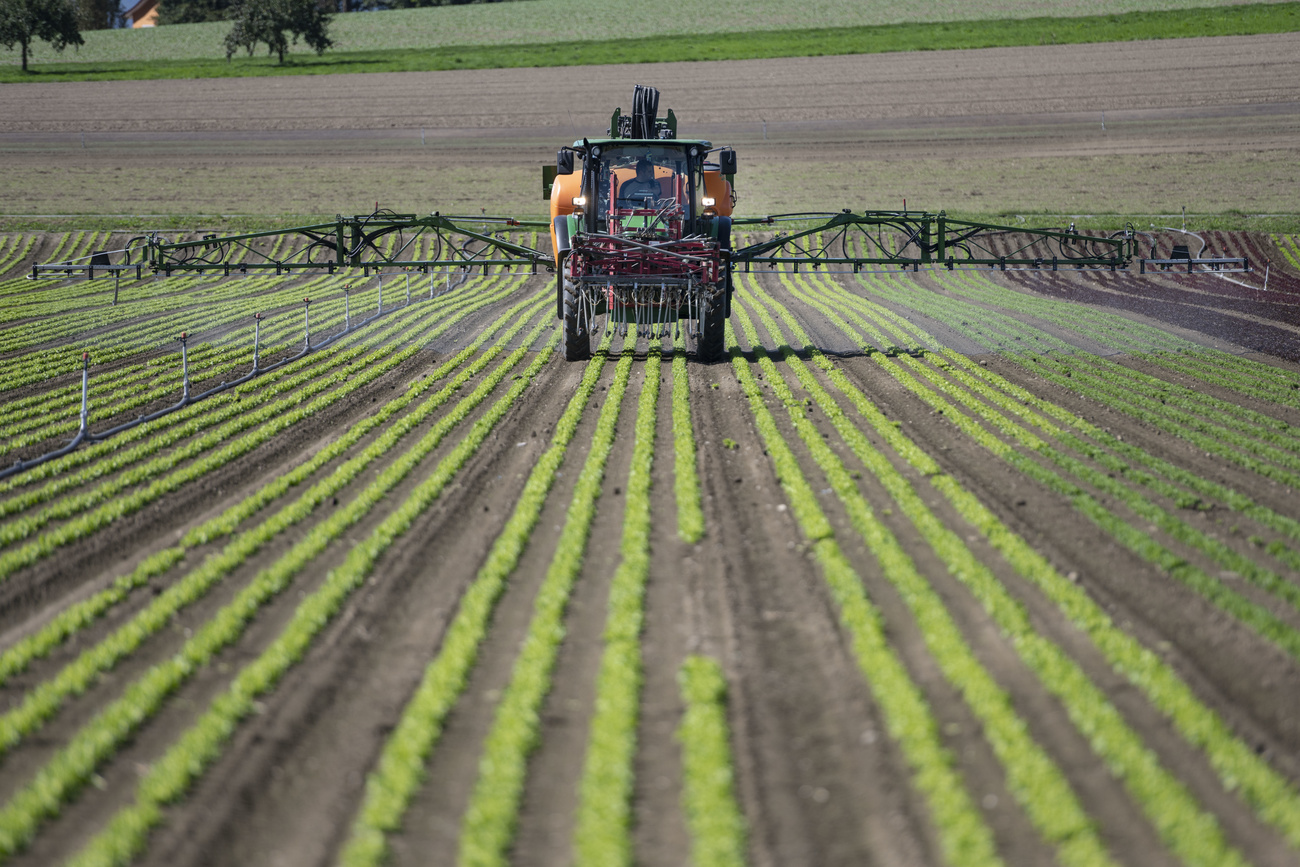
In December 2019, the Federal Office for Agriculture (FOAG) withdrew the authorisation of plant protection products based on chlorothalonil. This substance can be found in groundwater and drinking water in the form of metabolites that are harmful to health.
+ Get the most important news from Switzerland in your inbox
The FOAG decision was issued with effect on January 1, 2020, which meant that stocks of products containing this substance could no longer be sold.
In 2020, the agrochemical group Syngenta, which produces fungicides containing chlorothalonil, filed an appeal before the Federal Administrative Court. According to the manufacturer of plant protection products, the metabolites of the substance found in groundwater would not be harmful to humans.
The Court noted the significant risk of the substance for amphibians and for fish. This observation alone is sufficient to confirm the legality of the ban.
Exceeded limit values
In addition to this danger for the environment, the Court also noted that metabolites exceeding the threshold of 0.1 micrograms per liter of groundwater have been detected.
Even if these cases were identified in isolation, the presence of metabolites in the samples implies that the limit values were not respected. The ban is thus also relevant from the point of view of the protection of groundwater and drinking water.
More
Pesticide-free but not organic: Swiss offer alternative to wean agriculture off chemicals
Environmental lobby group WWF participated in the proceedings by arguing that the substance in question posed a risk to aquatic fauna, in particular amphibians, and that its presence in groundwater also constituted a risk to public health.
The European Union banned chlorothalonil as early as April 2019, pointing out the risk for fish and amphibians represented by groundwater and drinking water pollution.
Syngenta can still appeal to the Federal Court, the highest court in the country.
Adapted from French by AI/ac
We select the most relevant news for an international audience and use automatic translation tools to translate them into English. A journalist then reviews the translation for clarity and accuracy before publication.
Providing you with automatically translated news gives us the time to write more in-depth articles. The news stories we select have been written and carefully fact-checked by an external editorial team from news agencies such as Bloomberg or Keystone.
If you have any questions about how we work, write to us at english@swissinfo.ch.
External Content

In compliance with the JTI standards
More: SWI swissinfo.ch certified by the Journalism Trust Initiative

You can find an overview of ongoing debates with our journalists here . Please join us!
If you want to start a conversation about a topic raised in this article or want to report factual errors, email us at english@swissinfo.ch.