








SWI swissinfo.ch Annual Report 2025

Dear readers interested in Switzerland, Swiss citizens living abroad, and friends of Swissinfo,
Select your language
Generated with artificial intelligence.

Listening:
SWI swissinfo.ch Annual Report 2025
In 2025, SWI swissinfo.ch further strengthened its role as the Swiss Broadcasting Corporation’s multilingual, journalistically independent international service in an environment characterised by uncertainty, geopolitical tensions and a growing need for guidance. With around 49 million visits and nearly 37 million unique visitors, Swissinfo achieved significant audience growth, and at the same time the number of repeat visitors continued to rise.
This underlines the relevance of a service that contextualises, explains and places Swiss perspectives within a broader context for an international audience.

More
Facts and figures 2025
In terms of content, the central topics of 2025 were notably those where Switzerland was particularly prominent on the international stage: geopolitical shifts, neutrality and security, international diplomacy, as an economic and financial centre, climate and natural events, technological developments, and democratic processes and votes. For Swiss citizens abroad, Swissinfo remained in addition a central source of information, guidance and engagement, with specific services, contextual analysis and community content
The impact of the service remained significant in 2025: Swissinfo makes Switzerland not only visible, but comprehensible, in ten languages. By providing an independent journalistic analysis of political, social and economic developments within different cultural and media contexts, the offering makes a meaningful contribution in conveying a credible, differentiated and internationally accessible picture of Switzerland.
Our journalists and the editorial board have compiled a list of the articles from and about Switzerland that generated the most interest and sparked the most discussion over the past year across our ten language services:
Enjoy reading it.
German
Since the 1930s, our German-language service has been bringing Swiss topics closer to the public and enabling the global Swiss Abroad community to participate with and to connect to Switzerland.
German has historically been at the core of Switzerland’s international offering. Since the beginning of the shortwave service, the language has been a means of keeping Swiss citizens abroad connected to their homeland and of promoting Switzerland abroad as a democratic, federal and independent state. Today, the German-language service continues to fulfil this function in digital form: it serves an audience that follows Switzerland from a distance but remains closely connected to it politically, legally or through personal ties.

The focus is on Swiss citizens living abroad, as well as people who are planning to emigrate or who have specific questions about life, rights and integration in Switzerland. For these target groups, Swissinfo provides guidance, context and connection in an environment where political participation, practical information and preserving a connection to Switzerland are particularly important.
Just how tangible this need for context and support is can be seen in the high engagement with articles on integration, citizenship and the realities of life for Swiss Abroad. Examples include the case of an adopted daughter of a Swiss Abroad facing deportation, or the following article on the unexpected loss of Swiss citizenship:

More
Lost Swiss citizenship a surprising reality for many
In 2025, this relevance was also reflected in usage figures: the German-language version of Swissinfo saw a 33% increase in visits. This growth is linked to the strategic expansion of the Swiss Abroad offering with a focus on content that facilitates political participation, clarifies questions about life abroad and approaches Swiss developments from a perspective that is coherent to the diaspora and relevant to their everyday lives. This includes information on elections and votes, services and everyday topics relating to citizenship, identity documents or banking questions, as well as articles that explain Swiss idiosyncrasies and help readers to maintain a connection with Switzerland from a distance.
The community accesses this service through a variety of channels. Alongside the website, newsletters and revamped SWIplus app, formats that focus more on life hacks and transitions are increasingly important. This includes the bilingual podcast Ade merci, Schweiz / Adieu, merci la Suisse, launched in 2025, which is aimed at people who have recently emigrated or are preparing to move away:
Subscribe to
 Apple Podcasts
 Spotify
 Amazon Music
 Podcast Index
 Overcast
 iHeartRadio
 Castro
 Castbox
 Player FM
 Goodpods
 True Fans
External Content
The German-language service clearly demonstrates what Swissinfo provides the Swiss Abroad community: an editorially independent service that facilitates political participation, offers practical guidance and the ability to maintain a connection to Switzerland even across geographical distances.
French
Our French-language reporting connects Switzerland with the francophone world and strengthens democratic participation, diplomacy and a sense of belonging.
French is simultaneously a national language, an international cultural language and the language of diplomacy. Historically, the French-language services have been therefore justified on two counts: providing information to French-speaking Swiss citizens living abroad, while at the same time maintaining Switzerland’s presence in a vast francophone world that encompasses Europe, Canada, parts of Africa and international organisations. Geneva, as the centre of multilateral diplomacy and Switzerland’s humanitarian tradition, shows that French has a significance that extends beyond national multilingualism.

Swissinfo’s French-language service also focuses on an audience that follows Swiss news from abroad while remaining closely linked to the country. This includes Swiss citizens living abroad, as well as people who are preparing to move away or who, due to specific circumstances, are seeking guidance on their rights, everyday life and political participation. For them, Swissinfo provides a service that contextualises developments in Switzerland comprehensively and enables them to engage with political and social debates from afar. One of 2025’s most-read articles in French dealt with the impending deportation of the adopted daughter of a Swiss Abroad:

More
Adopted daughter of Swiss Abroad faces deportation from Switzerland
In 2025, usage of the French-language version of Swissinfo rose by 9%. Here, too, the strategic focus on the Swiss Abroad community is evident. Particularly relevant is content that facilitates political participation, addresses everyday issues abroad and places Swiss developments in a context that is clear and directly useful to a French-speaking audience outside Switzerland.
This service is used across multiple channels: via the website, newsletters and the revamped SWIplus app, but also through formats to address the specific life situations of Swiss citizens living abroad. These include the bilingual podcast Ade merci, Schweiz / Adieu, merci la Suisse, launched in 2025.
Subscribe to
External Content
The French-speaking content therefore demonstrates just as clearly as the German how Swissinfo functions journalistically: as a reliable service for guidance on, participation with and connection to Switzerland, tailored to the needs of people who live outside the country but maintain a close relationship with it.
Italian
The Italian editorial content provided by tvsvizzera.it and Swissinfo portray Switzerland as a shared space for work, life and business in everyday cross-border life.
The rationale behind the Italian-language service lies, on the one hand, in the public service mandate towards Italian-speaking Swiss citizens living abroad and, on the other, in Switzerland’s particular proximity to Italy and the Mediterranean region. Italian content not only highlights Switzerland as a multilingual country, but also as a neighbour and a place to work and live.

In the Italian-speaking space, Swissinfo’s content is aimed at an audience that often perceives Switzerland not from a great distance, but from close proximity: from border regions, due to mobility or work-related connections, through experiences of migration, or from a daily life in which the interconnectedness of Italy and Switzerland is tangibly experienced. The focus is therefore less on traditional Swiss Abroad topics and more on questions that arise from a shared economic, living and transport space. In 2025, the audience’s greatest interest was in two articles that bring this proximity to life: the economic downturn at Nestlé and the Swiss engineering behind the world’s steepest cable car:

More
‘Swiss engineering at its best’: the steepest cable car in the world
Accordingly, topics such as the labour market, bilateral relations, cross-border mobility, infrastructure, health, the cost of living, migration, and economic and political developments in Switzerland characterise news coverage. In particular 2025 demonstrated just how closely these topics are linked to the audience’s everyday lives, with discussions, among other things, on the consequences of the tax agreement between Switzerland and Italy, labour market trends in border regions, shopping tourism, transport axes such as AlpTransit, or the interdependencies of rail transport between the two countries.
Usage figures also underscore this function. The Italian-language version of Swissinfo saw a 15% increase in visits in 2025. For tvsvizzera.it, a particularly large proportion of traffic originated from Milan, Rome and Ticino; other regions of northern Italy and areas close to the border, such as Como, Varese and Bergamo, are also among the most significant source regions. This confirms that the service resonates precisely where Switzerland is experienced as a neighbouring country, a labour market, a transport hub and a political reference point. We can observe this relevance to people’s daily lives particularly through the discussions and reactions on our social media channels. For example, the following post on early cancer detection in Switzerland, which generated a significant response on Facebook:

More
More young adults are getting bowel cancer. Is Switzerland screening too late?
The Italian-language service therefore makes Switzerland recognisable as a tangible neighbour, workplace and living environment, providing guidance within a web of relationships characterised by proximity, mutual dependence and daily border crossings.
English
Our English-language reporting makes Switzerland globally visible as a democratic, innovative and internationally connected nation.
English is Swissinfo’s primary international language. Historically, English was introduced when Switzerland needed to amplify its voice abroad via shortwave radio. Today, it fulfils this function in the digital global sphere. The rationale is clear: English is the most important international language of communication, science, business and diplomacy, and anyone wishing to explain Switzerland to the world needs English.

The English-speaking space is therefore, for Swissinfo, the international arena in which Swiss issues become globally visible and intelligible. The English-language service is aimed not only at the Swiss Abroad, but also at a globally interested audience that perceives Switzerland as a political, economic, scientific and diplomatic player. This is not simply a matter of translating Swiss content, but of placing it within a global context.
The spectrum of topics is correspondingly broad: democracy, foreign policy, neutrality, International Geneva, science, innovation, climate, the economy and social developments form the core of the service. The strength of the English-language service lies in presenting Swiss perspectives in a way that is relevant to an international audience, not as an internal perspective, but as a contribution to global debates.
This was particularly evident in 2025, as demonstrated by the strong response to articles on federal votes, technological developments and innovative solutions in Switzerland. For example: an article on solar panels installed between railway tracks in canton Neuchâtel; an analysis of the vote roundly rejecting inheritance tax and civic duty proposals; and a report on the vote in favour of approving e-ID and the abolition of the imputed rental-value tax, all of which attracted considerable international interest. The launch of the Swiss AI model Apertus also sparked a great deal of discussion:

More
Switzerland launches transparent ChatGPT alternative
In 2025, English was the most cited language in Swissinfo content. At the same time, the English-language edition recorded a 15% increase in visits. The English-speaking community is particularly active on Instagram and Facebook, where posts on Swiss democracy, the country’s innovative strength and international topics from a Swiss perspective achieved high reach and strong engagement. One example of this is a post on the Ukrainian drone industry, which generated the most social engagement in English.
The reach of this linguistic content is also evident in interactive and audiovisual formats. The debate that generated the most interaction centred on the question of whether democracies can withstand attacks. The fact that the content also resonates in video formats is demonstrated, for example, by the YouTube video How Swiss direct democracy worksExternal link, which explains direct democracy and has generated several thousand views.
In the English-speaking space, it is particularly evident how Swissinfo makes Switzerland distinguishable to the world as a democratic, strongly innovative and internationally connected country whose developments have significance beyond the national context.
Arabic
Our reporting in Arabic strengthens understanding of Switzerland as a credible player in diplomacy, humanitarian affairs and international mediation.
Arabic was added to the language portfolio in the 1960s by Swissinfo’s predecessor, Swiss Radio International (SRI). From the outset, its mandate was rooted in foreign policy: Switzerland sought to be perceived in the Arabic world as an independent, neutral, humanitarian and diplomatically credible state, an objective which remains central to this day. Arabic is not only an important international language but also opens up a geopolitically sensitive region where trust, nuance and credibility are particularly important.

Swissinfo’s Arabic-language content is aimed at an audience that views Switzerland as a political, institutional and social point of reference. This includes diplomats, university and expert audiences, those with a tourist or economic interest in Switzerland, as well as readers interested in geopolitics, human rights, and war and peace in the Middle East. For them, Switzerland is not only a country of economic stability and scenic beauty, but also a place where issues of governance, neutrality, international mediation, science and social reliability can be observed.
Topics relevant to the Arabic-speaking world include innovation and science, Swiss idiosyncrasies, Switzerland’s global contributions, political participation and good governance, as well as critical reflections on banking, tax evasion and the credibility of Swiss neutrality in international conflicts. This is precisely where the strength of the offering lies: it does not present an idealised picture but rather shows Switzerland as a real political and institutional space with strengths, contradictions and international responsibilities.
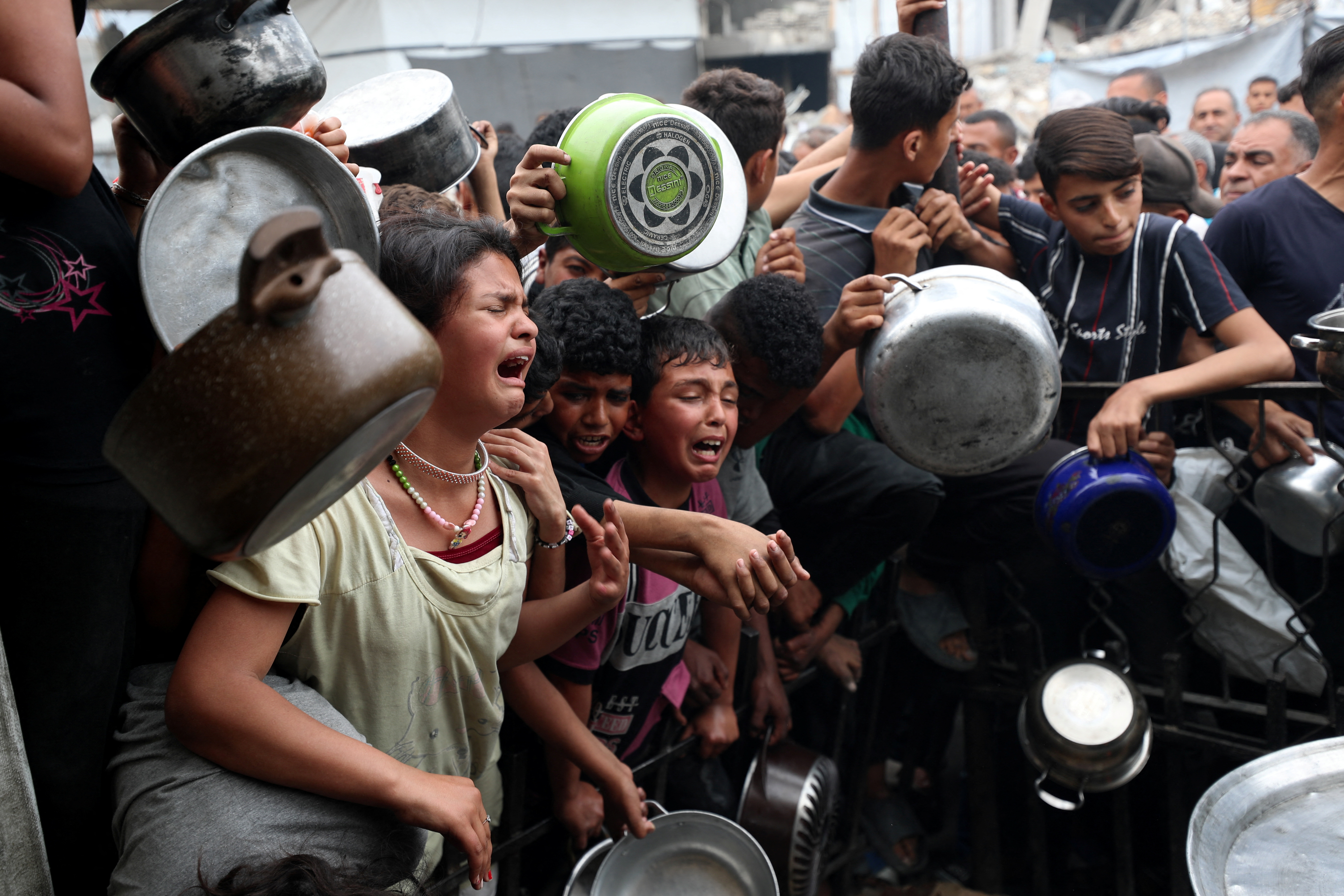
This was particularly evident in 2025 on social media and in public debates. Articles on the war in Gaza and on the humanitarian, diplomatic and international legal dimensions of the conflict generated a strong response. Articles such as that on the humanitarian situation in the Gaza StripExternal link were among the most widely read. An article on the decision by the US and Israel to mandate a Geneva-based NGO to deliver humanitarian aid in Gaza sparked considerable international discussion in this language:
More
A Geneva-based NGO is Israel’s answer to aid in Gaza
This highlights the particular value of Swissinfo, especially in the Arabic-speaking space: Switzerland is presented as a diplomatic, humanitarian and institutional actor, in a field where credibility, nuance and political context are particularly crucial.
Chinese
The Chinese-language service presents Switzerland as a reference point for education, lifestyle, stability, property investment and social orientation.
Swissinfo had long recognised Chinese as a strategic language for the future; earlier strategy papers had already described China as an emerging economic and geopolitical player. The introduction of the Chinese-language service was therefore logical: China had become a key location for trade, education, research, tourism and Switzerland’s international profile. The rationale lies in China’s long-term global significance and the need to make Switzerland comprehensible within a highly independent information landscape.
Swissinfo’s Chinese-language service is aimed at an audience that perceives Switzerland not merely as a country, but as a tangible place to live and study, and a reference point. This includes users outside China with an interest in Switzerland, students, media professionals and politically interested circles. For them, Switzerland is simultaneously a potential place to live, a place of study, an economic area and a model for comparison on issues of property, social security, migration and political order.

Correspondingly, there is strong demand for topics such as immigration and naturalisation, home ownership, studying and career prospects, as well as democracy, political power, neutrality and banking. The journalistic value of the offering lies in the fact that it does not describe Swiss realities in abstract terms but places them in a context that is directly relevant to a Chinese-speaking audience.
This relevance was particularly evident in 2025 in the response to articles explaining Switzerland as a place to live and study, and how to navigate the legal sphere. Among the most widely read articles were those on citizenship, the property market, and migration and social prospects. An article on new Swiss examination and security criteria in higher education for applications from international students met with particular interest among the Chinese-speaking community:

More
How a top Swiss university is screening Chinese students
Platform-specific distribution channels are key to the impact of this offering. In the Chinese-speaking world, content reaches its widest audience via WeChat and RedNote. Swissinfo’s WeChat channel alone had around 48,000 followers by the end of 2025. The most-read article of the year, a piece on the luxurious lifestyle of the Cameroonian ruling family in Switzerland, was read around 300,000 times. On top of this is an interest in formats that contextualise political developments and questions of power beyond Switzerland, such as the Chinese-language press review.
In the Chinese-speaking sphere it is particularly clear how Swissinfo presents Switzerland as a place for education, stability, property, life planning and political comparability, and therefore addresses precisely those issues that are of concrete importance to this audience.
Japanese
Our reporting in the Japanese-speaking space presents Switzerland as a credible point of comparison and perspective on innovation, democracy and social change.
Japanese was added to Swissinfo’s range of services around the turn of the millennium. Historically, this decision can be explained by the then strategic reorientation of SRI, and later of Swissinfo; digitalisation made it possible to reach key international markets directly and in a targeted way. At the time, Japan was one of the world’s largest economies, a leading centre for technology, industry and finance, and an important trading partner for Switzerland in Asia. The rationale behind the Japanese service therefore lies in the combination of business, technology, research, tourism and an information-savvy audience.

More
Switzerland’s international voice in a changing world
Swissinfo’s Japanese-language service is aimed at an audience that perceives Switzerland above all as a point of comparison and perspective, as a country of political stability, technological innovation, direct democracy, scientific excellence and international reliability. The focus is on content that offers Swiss or international perspectives on major social and political debates in Japan, particularly when these are inherently comparable or shed light on topics from a perspective that is not necessarily self-evident in the Japanese media.

This is precisely where the journalistic value of this offering lies. Topics such as migration, assisted suicide, natural disasters and climate risks, or questions around military security guarantees, are attracting interest because they offer the Japanese audience an international context. In addition, this is an audience that also responds to highly current or breaking news. The main channels for accessing this content are Google, the news aggregator app SmartNews, and X.
Among the most-read articles of 2025 in Japanese was a piece about a pilot project for solar panels on Swiss railway lines, which resonated in Japan partly because it linked Swiss innovative approaches with a parallel technological debate taking place in Japan. Also widely read were a press review of US President Donald Trump’s visit to Japan and a widely discussed incident of violence, as well as an article on US customs policy:

More
Trump tariff shock: how Switzerland is positioning itself
To this day, our Japanese-language content serves a clearly identifiable purpose: it presents Switzerland not primarily as an exotic counterpoint but as a credible point of reference and comparison for economic, technological and social developments that are also of direct relevance to Japan itself.
Portuguese
For Portuguese speakers, we present Swiss issues in an everyday and accessible context for a broad lusophone audience.
Portuguese is historically one of the earliest languages used in Switzerland’s international outreach. Its legitimacy initially stemmed from its global prevalence in Portugal, Brazil and lusophone regions of Africa. Later, Brazil in particular gained in significance as a major economic and social hub. Portuguese therefore does not open up just a single market but a widely dispersed linguistic area in which Switzerland is perceived as a place to live, work, do business and as a point of reference.

Swissinfo’s Portuguese-language service is aimed at a broad, generalist audience with an interest in Switzerland for a variety of reasons. It appeals to people who view the country as a potential place to live or work, who are interested in its social and economic realities, or who follow Swiss affairs out of curiosity, a desire to compare, or a specific need for information. The service has a particularly strong foothold in Brazil: since February 2024, around three-quarters of the Portuguese-language service’s reach has come from abroad, with more than half of readers coming from Brazil, followed by Portugal and Switzerland.
The strength of this service lies in its accessibility. It explains Switzerland not to a specialist audience, but to a broad public seeking practical guidance as well as surprising or contextualising content. Service topics such as job hunting, housing or practical steps for settling in Switzerland are particularly in demand. At the same time, articles on science, history and Swiss idiosyncrasies and oddities also attract great interest, for example an article on the most important legislative changes and political developments of 2025.
The Portuguese-speaking community is particularly active on social media, especially Facebook and Instagram. At the same time, the impact of the service is evident on the website. The post that sparked the most discussion and generated the most traffic throughout 2025 on the Portuguese-language site was an analysis of the historic emergence of anti-Semitism in Christian Europe and its long-term social consequences:

More
How Christian Europe created anti-Semitism in the Middle Ages
The strong response to this post shows that in the Portuguese-language space, there is demand not only for service-oriented content but also for historical and socio-political contextualisation that places contemporary debates on religion, identity, discrimination and democracy within a broader international context.
The content addresses this interest not with clichés, but with journalistic contextualisation. It presents Switzerland as a real society with clear structures, opportunities and contradictions, thereby making sense of a country that is often both a place of projection and a dream destination in the Portuguese-speaking world. For this linguistic group, Swissinfo therefore achieves one thing above all: it translates Switzerland into an everyday, comprehensible and credible context for a wide audience that is drawn to the country for a variety of reasons.
Russian
Our reporting for speakers of Russian provides reliable guidance on neutrality, security and democracy in a polarised information landscape.
Russian plays a special role in the history of Switzerland’s international outreach. The language has long been recognised as a strategic gap, as it opens up not only Russia but the entire post-Soviet region. Even after the end of the Cold War, Russian was discussed as the lingua franca of the Commonwealth of Independent States (CIS) and as a tool for communication, democratisation and independent information. Its subsequent introduction was therefore no accident, but the result of a long-standing geopolitical justification.

Swissinfo’s Russian-language service is aimed at an audience seeking reliable context in a highly polarised and conflict-ridden information landscape characterised by disinformation. This includes the Russian-speaking diaspora and target groups in Ukraine and other post-Soviet states, as well as an audience with an interest in politics and economics that keenly follows international developments.
For these users, Switzerland is particularly relevant where issues of neutrality, sanctions, finance, security, diplomacy and institutional credibility are concerned. Since the war in Ukraine in particular, the need for factual, contextualised and precise institutional information in clear, professional Russian has risen; at the outbreak of the war, demand briefly tripled.
In 2025, analyses concerned particularly with the role of Swiss neutrality in the context of the war in Ukraine, the implementation and impact of sanctions, and debates on security and defence policy in Switzerland sparked intense discussions and generated a strong response. The most-read article deals with the S status of those who have fled Ukraine:

More
Swiss refugee policy for Ukrainians leaves many questions unanswered
Overall, usage is more discourse- and analysis-oriented than consumption-driven. The decline in visits to the Russian-language website in 2025 is also a consequence of access restrictions in Russia; concurrently, Swissinfo maintains a presence on other channels. The greatest reach in the Russian-speaking space is achieved via Telegram, while the most active direct dialogue with the audience takes place primarily on Facebook and Instagram.
It is particularly evident in the Russian-speaking space how important Swissinfo is as a reliable reference source, not as a voice of sensationalism, but as a journalistic service that explains Swiss positioning and offers guidance in a tense international environment.
Spanish
Our Spanish-language content presents Switzerland as a benchmark for democracy, economic stability and institutional reliability.
Spanish was one of the first languages to be included in Switzerland’s international outreach programme. Even in the shortwave era, the Spanish-speaking sphere was recognised as a major international communication space. This rationale remains valid today: Spanish opens up Europe, Latin America and large Hispanic communities in the US. It connects Switzerland with a diverse audience that often views political stability, economic order and democratic institutions as benchmarks.

Swissinfo’s Spanish-language service is primarily aimed at an international audience in Europe and the Americas, particularly in countries such as Mexico, Argentina, Spain and the US, who are interested in Switzerland as a political, economic and institutional reference model. It also reaches the Swiss diaspora in Spain and Latin America, particularly on topics such as political participation, social security, institutional developments and migration:

More
In Switzerland four out of ten people have a migrant background – who are they?
The main interest lies in issues where Switzerland is seen internationally as a benchmark: the stability of the financial system, the role of the financial centre, direct democracy and political decision-making processes, as well as relations with the European Union, neutrality, and Geneva’s multilateral role.
This is in addition to questions regarding mobility and the labour market, as well as the climate, the Alpine region and natural disasters. These topics are particularly relevant because, from a Spanish-language perspective, they are often linked to structural issues within their own political and economic systems, either as a model, a counterexample or a projection.
Interest in economic issues is particularly pronounced. Switzerland continues to be perceived in the Spanish-speaking world as a stable financial centre and a safe location, yet it is also viewed critically, for instance in connection with international cases of embezzlement or capital flight. This ambivalence between stability, appeal and critical controversy significantly shapes the perception of Switzerland in this linguistic region.
Usage shows a clearly selective pattern: broader discussions among users are rare, but when they occur, they are specifically concentrated on interactive formats such as Swissinfo’s debate platform. On social media, particularly on Instagram, users primarily engage with accessible, explanatory content, such as on the fundamentals of Swiss politics. In 2025, posts on votes and the political system attracted several hundred comments, albeit mostly in short and point-specificExternal link form.
The Spanish-language service therefore fulfils a clear function: it makes Switzerland comprehensible to a large, diverse and internationally minded audience, particularly in contexts where economic stability, political systems and social developments are not merely observed but actively compared with one’s own realities.
Text: Selina Haefelin. Edited by Reto Gysi von Wartburg. Adapted from German by Katherine Price/ts
