








What lies ahead for Switzerland: an economic outlook for 2026
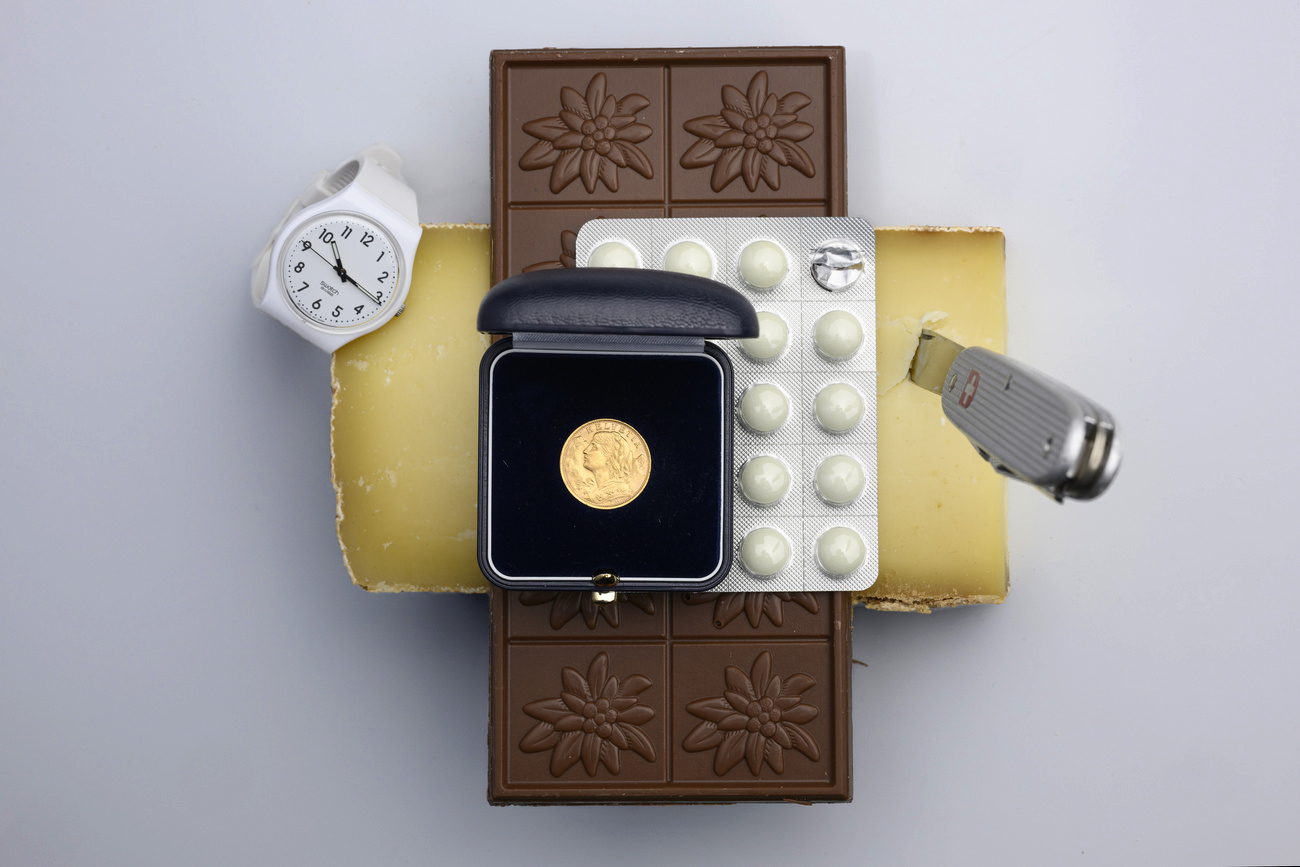
Next year the Swiss economy will face downward pressure from weaker domestic demand and ongoing uncertainty related to US import tariffs.
Select your language
Generated with artificial intelligence.
Listening:
What lies ahead for Switzerland: an economic outlook for 2026


The Swiss economy remained stable in 2025 with wage growth and domestic demand offsetting the negative impact of the tariffs imposed on Swiss exports to the United States. Domestic demand is expected to grow 1.4% in 2025 and the unemployment rate to reach 2.9%. Real wages rose by 0.7% in 2024 and the Federal Statistical Office (FSO) has said growth should continue in 2025.
Gross domestic product (GDP) is estimated to grow by 1.3-1.4% in 2025 in line with analysts’ forecasts. This is despite uncertainties linked to announcements in April by the Trump administration to tax Swiss imports into the United States by 39%; much higher than those planned on European goods.
In November, Switzerland inked a deal to reduce the headline figure to 15%, in line with its neighbours. It has yet to be implemented but will offer some relief to the watch and pharmaceutical sectors.
The Swiss economy shrank by 0.5% in the third quarter as initial tariffs hurt the chemical-pharmaceutical industry which dropped 7.9% between July and September. In 2026, economists expect GDP growth to hover just under 1% due to a tighter labour market and persistent uncertainties around the implementation of the US tariff deal.
“A potential deterioration in the labour market next year poses a downside risk for the Swiss economy,” UBS said in its 2026 outlook.
“We expect only limited impetus from foreign trade in 2026. It will likely be held back by US tariffs but supported by an improved German economy,” the bank said.
In March 2025, Germany changed its constitution to allow unlimited debt financing for defence spending above 1% of its GDP, and to create a €500 billion (CHF470 billion) (11% of annual GDP, spread over 12 years) extrabudgetary fund for additional infrastructure spending. This is expected to have some positive spillover effects into the Swiss economy.
“The risk is that this does not happen and that the fiscal push fails to materialise,” Alessandro Bee, senior economist for UBS said.
Nominal wage growth is estimated to slow next year after rising for two straight years.
Inflation should remain subdued at under 1% in 2026.
External Content
Trade: a welcome deal but uncertainties remain
The deal to bring import tariffs down to 15% will bring some relief to Switzerland’s key exports to the United States, mainly watches and pharmaceuticals. Overall, the KOF InstituteExternal link expects the November announcement to boost GDP by 0.3-0.5%. KOF says the deal has saved 7,500 -15,000 mechanical jobs in Switzerland.
It has come at the cost of investments totalling CHF200 billion ($250 billion) by Swiss companies into the US and the commitment for Switzerland to import American agricultural products.
“The new tariff rate brings relief, but considerable burdens and risks remain for the Swiss economy,” said Hans Gersbach, Deputy head of the KOF Institute, following the announcement.
Nonetheless, the Swiss economy will still be saddled with 15% tariffs on US imports which could negatively impact Swiss GDP by 0.2%, KOF estimates.
“The industries hit by the 15% are the same as those by the 39%,” Bee at UBS said.
Pharmaceuticals, the watch industry, precision instruments, mechanical engineering and the food industry are those most exposed to tariffs.
In the medium term a lack of investment into the pharmaceutical industry, a key pillar of Swiss growth, as it shifts to the US will negatively impact the domestic economy, analysts warn.
External Content
The US stokes Swiss pharma’s fears
Swiss pharmaceuticals avoided US tariffs in 2025, but the industry will remain a target of the US government in 2026. The Trump administration will continue to use tariffs as a bargaining chip and pressure the industry to lower drug prices in the largest pharmaceutical market in the world.
Despite the uncertainty, shares of the two big Swiss pharmaceutical giants – Roche and Novartis – were buoyed by strong sales, acquisitions, and positive drug trial results at the end of 2025. The companies are expected to continue the momentum into the new year.
Novartis told investors in November that it expects sales to increase by 5-6% annually between 2025 and 2030. In October, the company announced its biggest deal in a decade – $12 billion (CHF9.65 billion) for US-based Avidity Biosciences. In November, shares of Basel-based rival Roche had their best month since 1997 after positive trial results of its pill for breast cancer.
But the positive outlook for Switzerland’s largest pharma companies isn’t enough to ease concerns domestically. The pharmaceutical sector is the largest export industry in Switzerland, accounting for half of Swiss economic growth and some 45% of exports.
Under tariff and drug pricing pressure from the US, Roche and Novartis committed to invest nearly $75 billion in the US, stoking fears of falling investment in Switzerland. The country is also facing more competition for investment from places like China and Denmark.
“Pharma is a strong pillar of the Swiss economy. If it grows less strongly or stagnates, this will impact overall Swiss GDP,” said Alessandro Bee.
The industry has been at odds with the Swiss government over regulation and drug prices that they argue is worsening the investment climate. More US pressure to raise drug prices in Switzerland could aggravate tensions between industry and Swiss health authorities in 2026.
Watches: An expected rebound in China
The US is the Swiss watch industry’s biggest market, accounting for some 17% of global Swiss watch exports and reaching CHF4.4 billion in 2024. In October Swiss watch exports fell 4.4% and shipments to the US plunged by 47%.
External Content
The 15% tariff rate announced last month will therefore allow for some respite to the Swiss watch industry heavily dependent on overseas shipments.
Nonetheless the industry has proved resilient so far in 2025. A report published by consultants Deloitte in October showed that the value of exported watches fell by only 1% between January and August 2025 compared to the previous year. For the whole year, exports to the US are still expected to grow by 4%, according to Vontobel, a Swiss investment management firm.
“The strong US stock market has in part offset negative impact by the tariffs,” said Jean-Philippe Bertschy, Head of Swiss Equity Research at Vontobel.
The S&P 500, the main US stock market index, has gained 19.6% over the past 12 months, as of November 2025.
“Furthermore, Switzerland’s watchmakers won’t pass on all costs to the end user. They have some margin to mitigate the tariffs,” Bertschy said.
Looking forward to 2026, the luxury watch market could rebound in China, hit by a post-Covid slump and tepid real estate market over the past two years.
In 2024 the Chinese luxury market dropped by 18%–20%, Bain & Co, a consultancy, said in its report on luxury published at the beginning of the year. That same year exports of Swiss watches to China dropped by nearly 26%. The Bain & Co report expected sales of luxury watches to fall by 28-33% in China in 2025.
Analysts say there are signs the market has bottomed out though and could pick up next year.
“We sense a slight rebound in the Chinese market which will pull growth in 2026. We expect exports to China to pick up, mainly due to a low base effect,” Bertschy said.
Overall, luxury watches – Rolex, Patek Philippe, Audemars Piguet and Cartier – have so far proved more resilient compared to the mid-market segment.
“A handful of flagship brands are masking what remains a very challenging backdrop for the broader Swiss watch sector,” Bertschy said in a statement following the publication of October sales.
No food price relief for consumers despite stabilising raw material costs
After steadily falling from the 2022 highs caused by the start of the war in Ukraine, food prices have risen again since 2024 due to bad weather and rising costs of inputs like fertiliser. According to the World Bank’s economic forecastExternal link, food and raw material prices will remain the same in 2026 as in 2025 as supply growth keeps pace with increasing demand. Improved weather conditions have ensured ample grain harvests and good production of cocoa and coffee beans.
External Content
However, this does not mean lower food prices for consumers at supermarkets worldwide. Over the past two years food companies have staggered price increases to avoid losing customers. The cost of raw materials like cocoa is still almost 65% higher than 2023 levels. Chocolate manufacturers have responded by hiking prices even at the risk of selling less chocolate.
For example, Lindt & Sprüngli increased prices by 15.8% this year which led to a 5% drop in sales volumes in the first half of 2025. The chocolate manufacturer still managed to post organic sales growth of 11.2% on the basis of price hikes alone.
“One thing is clear: the dimension of price increases that we were forced to impose this year, we will not see again in 2026,” said Lindt CEO Adalbert Lechner at the half-year report presentation in July.
To offset the trend of declining sales volumes from continued price increases, food companies have said they will have to cut costs. Nestlé is planning to cut 16,000 workers over the next two years to achieve annual savings of CHF1 billion by the end of 2027.
Chocolate manufacturer Barry Callebaut has announced plans to use cocoa alternativesExternal link made from oats and sunflower seeds to reduce risks from cocoa price volatility.
The food industry will get some relief from the recently negotiated drop in US tariffs once it comes into force. Data for August (when the tariff came into force) released in October shows a 55.4% drop in Swiss cheese exports to the US compared to a 9.4% drop in worldwide exports. But Swiss cheesemakers are still cautious about the prognosis for 2026.
“The situation is developing in the right direction. But it’s not the end… we don’t know the details yet,” says Christa Brügger of Swissmilk.
The reduction in US tariffs to 15% comes with concessions to allow duty-free imports of fixed quotas of American beef, chicken and seafood into Switzerland.
Edited by Samuel Jaberg/vm/ts

In compliance with the JTI standards
More: SWI swissinfo.ch certified by the Journalism Trust Initiative

You can find an overview of ongoing debates with our journalists here . Please join us!
If you want to start a conversation about a topic raised in this article or want to report factual errors, email us at english@swissinfo.ch.