








Can Ticino’s ski resorts survive a warming climate?
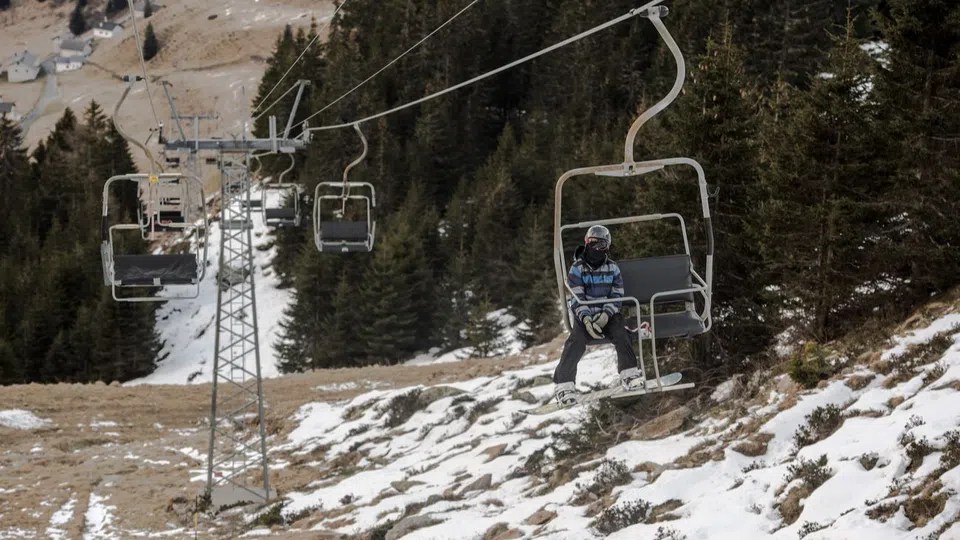
This is once again a difficult winter for Swiss ski resorts, with reports of low snowfalls in some regions. Resorts in southern Switzerland have been particularly hit hard. Snow levels in canton Ticino are among the lowest in years.
Select your language
Generated with artificial intelligence.
Listening:
Can Ticino’s ski resorts survive a warming climate?
The resorts where Swiss champions such as Doris De Agostini and Lara Gut-Behrami once learned to ski are now struggling to stay afloat.
Cari is a ski area located at 1,650-2,300 metres altitude. Until recently – even in early January – large parts of the slopes were green. Resort managers are now examining whether to introduce short-time working for employees.
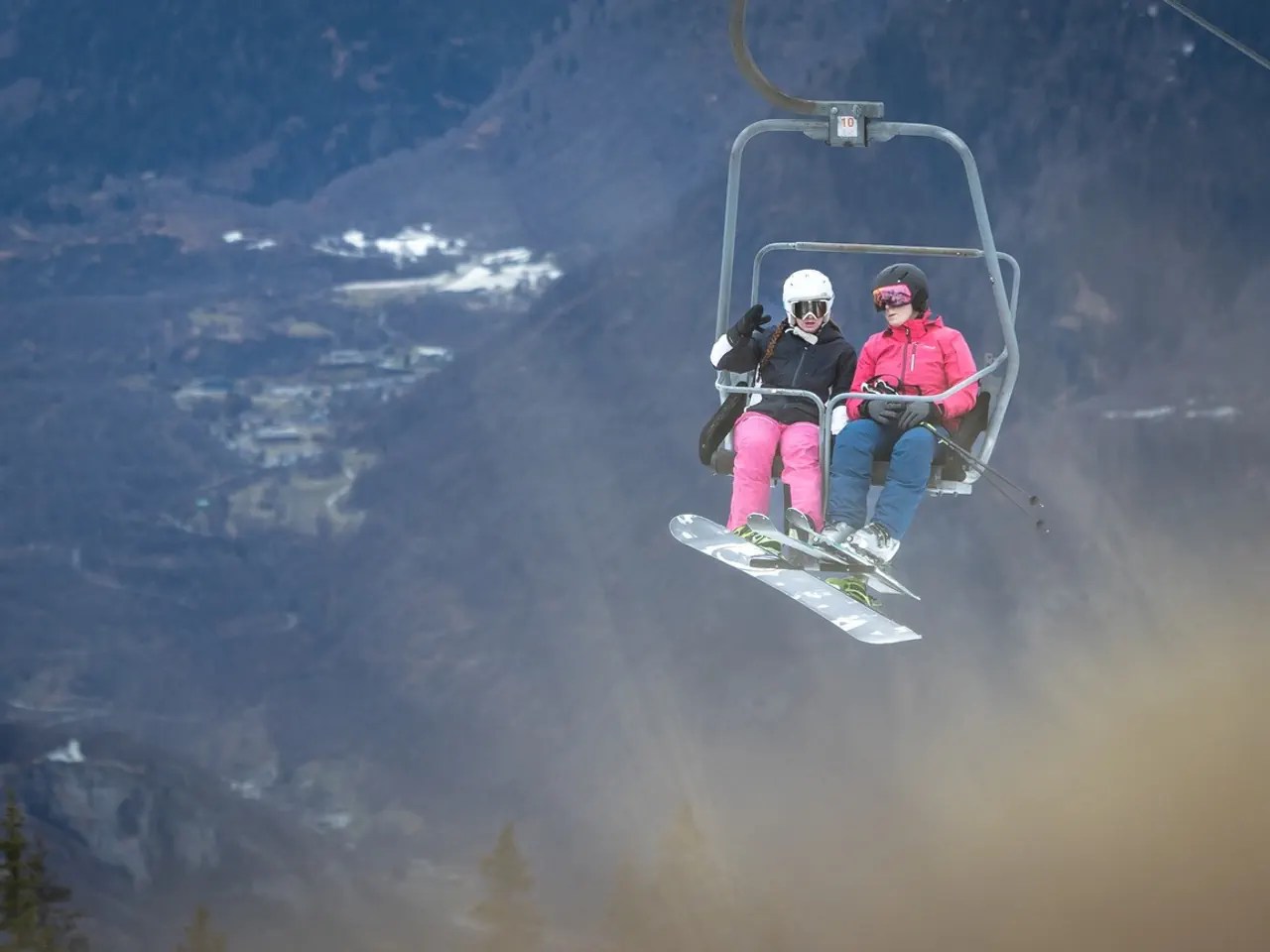
Further up the valley, the situation is similar in Airolo, where the ski area is at roughly the same altitude as Carì. Insufficient snow has meant that only a limited number of pistes can be groomed and opened. The resort has already applied to the canton for short-time working for its 40 employees.
The season also got off to a poor start over the Christmas period in the Blenio Valley and in Bosco/Gurin.
Giovanni Frapolli, owner of winter sports facilities in Bosco/Gurin, confirmed the difficult situation to the Swiss public broadcaster RSI.
“We had an average of 250 guests over Christmas. On one day, there were 320 – which is very few,” he said. He attributed the situation to what he called a “bizarre climate”.

More
‘Snow Compass’ guides Swiss resorts through declining snowfall
Climate change felt more strongly
The effects of climate change are being felt more strongly south of the Gotthard Pass than in many northern regions. But despite the challenges, Ticino’s ski resorts are not ready to give up.
New snowmaking systems have recently been installed in the Blenio Valley. In Bosco/Gurin, plans are under way for a solar installation and a water reservoir to produce artificial snow more efficiently and at lower cost. The aim is to start the season earlier, as has already been achieved in the Blenio Valley.
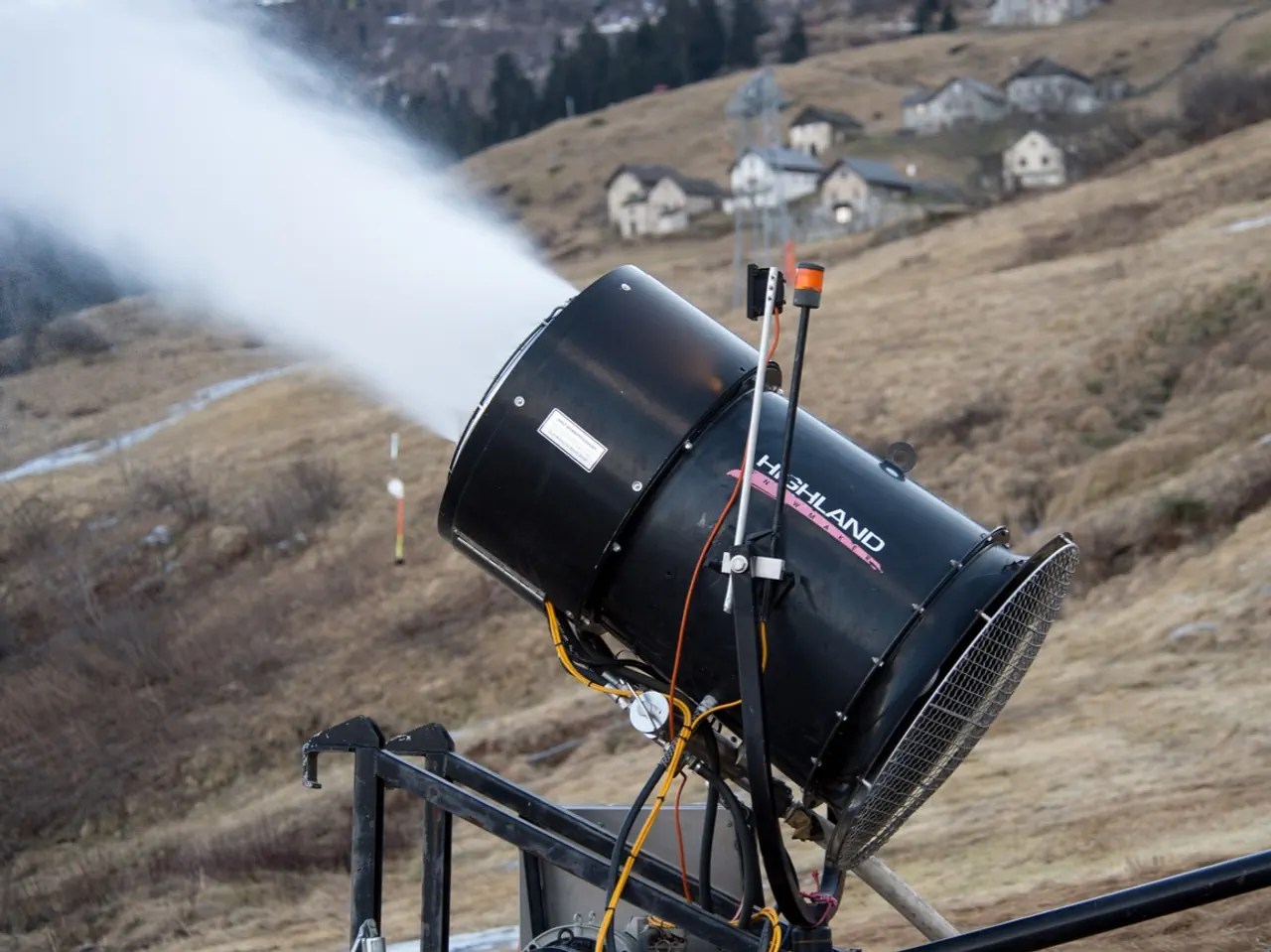
Denis Vanbianchi, director of the Blenio ski resort, said he was cautiously satisfied despite the poor start. Speaking to Tele Ticino, he noted that although producing artificial snow is costly, the resort was still able to offer guests usable slopes. “That makes us very happy,” he said.
Join the debate:
External Content
The resorts also benefit from financial support from the canton. Most of Ticino’s ski areas would struggle to survive without subsidies. The cantonal parliament recently approved a new loan of almost CHF6 million ($7.7 million) to support the resorts over the next four winter seasons.
For now, that support is helping to keep the lifts running, but the long-term future of skiing in southern Switzerland remains uncertain.
External Content
Translated from German using AI/amva/sb
How we translate with AI
We use automatic translation tools, such as DeepL and Google Translate, for some content.
Each translated article is carefully reviewed by a journalist for accuracy. Using translation tools gives us the time for more in-depth articles.
Learn more here about how we work with AI.
External Content

In compliance with the JTI standards
More: SWI swissinfo.ch certified by the Journalism Trust Initiative

You can find an overview of ongoing debates with our journalists here . Please join us!
If you want to start a conversation about a topic raised in this article or want to report factual errors, email us at english@swissinfo.ch.