








Swiss chosen to develop four museums in Benin
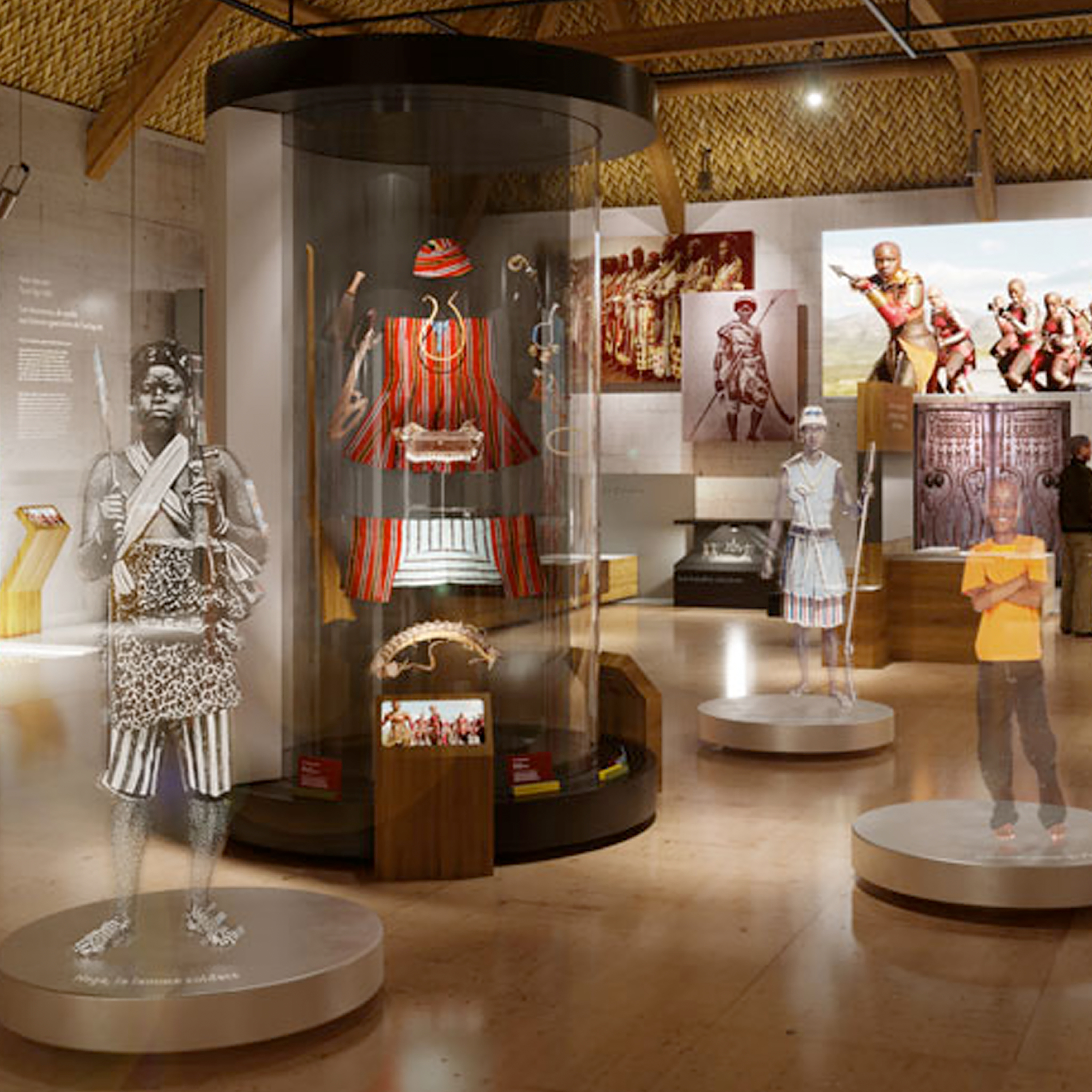
Swiss palaeontologist Jacques Ayer has been appointed by the government of Benin as managing director of four new public museums that will showcase Beninese art, culture and history.
Select your language
Generated with artificial intelligence.
Listening:
Swiss chosen to develop four museums in Benin
Jacques Ayer, a palaeontologist from canton Fribourg, couldn’t have been more surprised by his appointment as managing director of the Réunion des Musées publics (RMP, a consortium of public museums) in Benin, West Africa.

This monumental project involves four museums currently under construction in four cities: the Musée international de la Mémoire de l’Esclavage (international museum of the memory of slavery) in Ouidah, dedicated to the history of the slave trade in the 17th and 18th centuries; the Musée des Rois et des Amazones du Dahomey (museum of kings and Amazons of Dahomey) in Abomey, which will restore the city’s royal palaces; the Musée international du Vodun (international Vodun museum) in Porto-Novo, which will focus on Benin’s religious heritage and Africa’s Vodun communities; and the Musée d’art contemporain (contemporary art museum) in Cotonou, to promote Beninese and other African artists working today.
Ayer was appointed by Benin’s council of ministers at the recommendation of the country’s president, Patrice Talon. Now based in Cotonou, the country’s economic capital, Ayer began his new job in January. He has until 2029 to complete his ambitious work on the museums.
Eclectic background
Ayer comes well prepared for the job ahead. A palaeontologist by training, with a master’s degree in geology from the University of Neuchâtel, he has “been around the block a few times”, as he puts it.
From 1994 to 2004, he was the curator of the Earth sciences department at the Muséum d’histoire naturelle (museum of natural history) in Neuchâtel. He then ran the Jurassica Museum in Porrentruy, canton Jura, before directing the Muséum d’histoire naturelle in Geneva from 2012 to 2020.
Just over four years ago, he established his own consulting firm called Muséolis, based in Geneva. This allows him to develop museum projects, for which he can draw on 30 years of experience and contacts.
“My eclectic profile worked in my favour with the Beninese government,” Ayer says. “In addition, there’s my personal interest in Africa. My wife is originally from Nigeria. She’s not involved in setting up the RMP, but she opened my eyes to the question of African heritage quite a while ago.”

More
Africa’s relevance is growing – and everyone wants in
Ayer’s passion for African art is a huge asset. But he is not from Benin. It was unclear whether the Beninese would approve of a European at the head of a national project focused on the country’s heritage.
“I have to admit that I received a very warm welcome,” Ayer says. “But the reactions online were mixed. Some people were surprised by my appointment, but never opposed.” He adds that “these four institutions must be established rapidly, under optimal conditions. And Benin does not yet have much experience in this area. With this large-scale project, the country is acting as a pioneer in Africa. It therefore needed technical assistance and practical skills to ensure that the museums are developed in a way that is lasting”.
A pioneering project
That said, Ayer does not intend to import a Western model of museum science to Benin, which, as he points out, would not necessarily meet the expectations of the local population. “My goal,” he says, “is to create a model here that incorporates African artistic sensibilities”.
He cites the future Musée international du Vodun as an example. “It will allow us to highlight art used mainly for religious or social rituals and therefore deeply rooted in local traditions. I plan to restore the original function of these works. So there’s no question of enclosing them in glass cases, as is the custom in Europe. You could imagine, for example, creating historical tours for the public through certain villages in the country where these items are still used in ceremonies.”
More
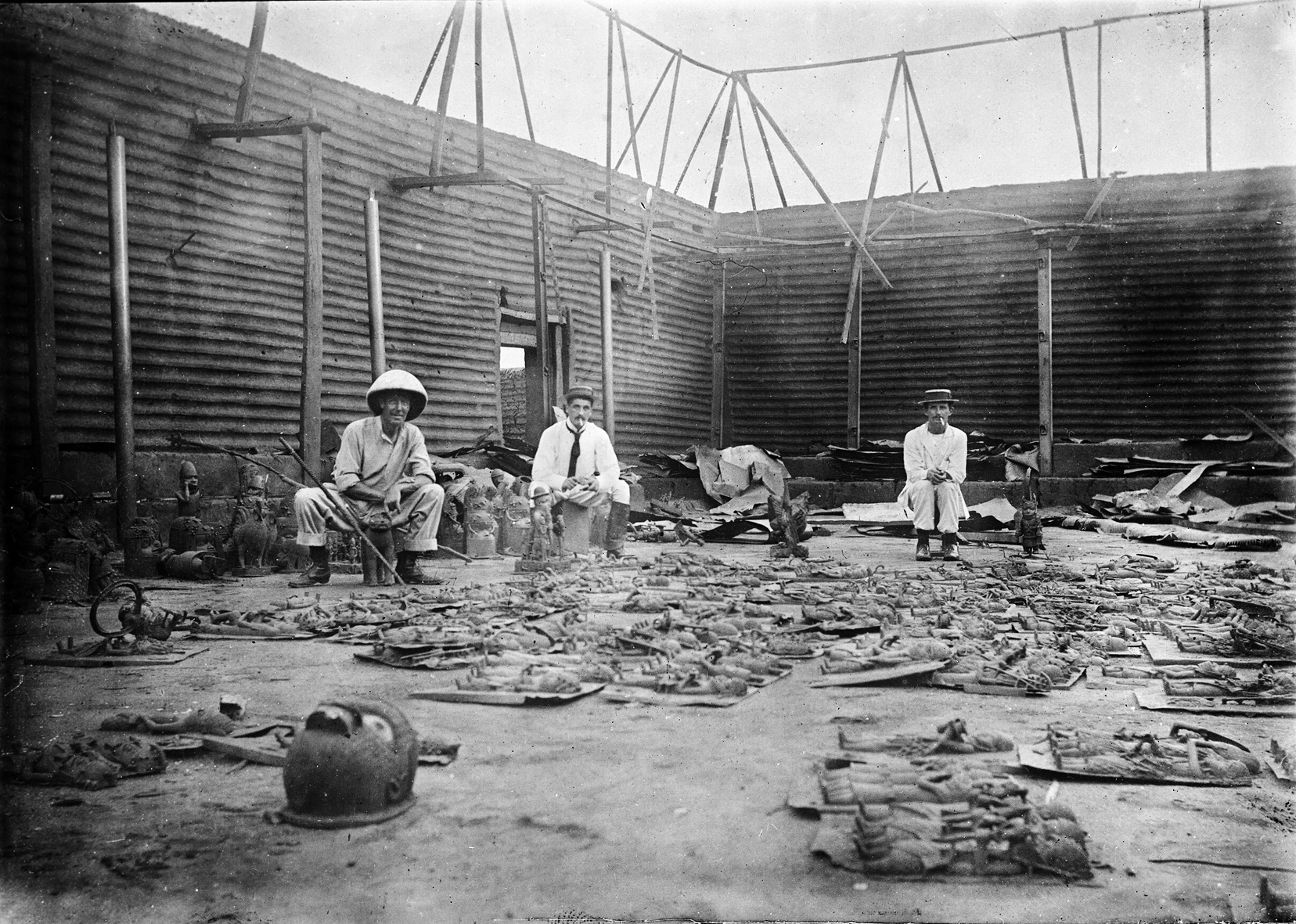
Looted colonial art: ‘There are no limits to restitution’
Before Ayer arrived in Cotonou, Beninese religious institutions, historians, and scientists had already started examining how to promote the country’s heritage. “What I can add to this,” Ayer says, “is my experience in strategy and operations. In short, establishing an organisational framework”.
As he is eager to strengthen cultural programmes and foster interaction with the public, he is planning educational workshops for museum staff that provide suitable training in the arts. Ayer believes that knowledge transfer is essential. “It’s very important to think of my mission as transitional. The field of museum science is complex, so I want to prepare the future management personnel, to train them so they can take full ownership of the artistic projects after I leave,” he explains.

Creating partnerships
Ayer believes cultural exchange is another important element of this training. He sees in Benin an admirable openness and flexibility. “It’s an asset that will allow me to create partnerships with Swiss museums and even to consider university exchanges,” he says. These would allow Swiss art students to benefit from organised programmes in Benin. In turn, Beninese students wishing to enrich their education could spend time in Switzerland. “We mustn’t forget that our country has some great innovative institutions,” Ayer says.
The RMP will also create new opportunities for the restitution of Beninese art stolen during the colonial era. “Switzerland is a springboard for my contacts with Europe. I will apply all of my expertise in the service of cultural cooperation between the ‘old continent’ and Benin,” he says.
In 2021, France returned 26 of Abomey’s royal treasures to Benin. “They represent only a tiny fraction of the Beninese and African heritage still held in Europe. The 26 treasures will be exhibited in the future Musée des Rois et des Amazones du Dahomey,” Ayer says. “The RMP will, I hope, give European countries a sense of security when they recognise the capacity of Benin’s institutions to house works of art under excellent conditions.”
Edited by Pauline Turuban. Adapted from French by K. Bidwell/ts

More
Culture stories by SWI swissinfo.ch

In compliance with the JTI standards
More: SWI swissinfo.ch certified by the Journalism Trust Initiative

You can find an overview of ongoing debates with our journalists here . Please join us!
If you want to start a conversation about a topic raised in this article or want to report factual errors, email us at english@swissinfo.ch.