








The drug-pricing problem no one wants to talk about
The misuse of patents by some of the world’s biggest pharma companies to stifle competition is rarely discussed in global drug-pricing debates. Yet rectifying this problem could help to lower drug prices for patients everywhere, explains healthcare reporter Jessica Davis Plüss.
Select your language
Generated with artificial intelligence.
Listening:
The drug-pricing problem no one wants to talk about

For the past year countries have been at odds over how to lower drug prices. As United States President Donald Trump sees it, US prices should drop and other countries’ prices should rise to make up for lost pharma revenue. For Swiss authorities, raising prices simply because the US wants them to is out of the questionExternal link at a time when healthcare costs are soaring.
But there are other ways to bring down drug prices that don’t make as many headlines. One is tackling the misuse of patents by some pharma companies to prevent cheaper copycat drugs from coming on the market.

More
Swiss pharma’s global success meets worries at home
A couple of weeks ago, the International Consortium of Investigative Journalists (ICIJ) together with 47 media partners revealedExternal link a sprawling web of patents on the blockbuster cancer drug Keytruda that could help its maker MSD (known as Merck in the United States) maintain its monopoly for years.
Keytruda (pembrolizumab) was the first US-approved PD-1 inhibitor, a type of immunotherapy that blocks PD-1 receptors on T-cells to enable the immune system to fight cancer cells. First approved in 2014 for advanced melanoma, it is now approved for some 40 different conditions across at least 18 cancer types, dramatically improving survival for some cancer patients.
It’s also been one of the best-selling medicines globally for years, generating over $160 billion (CHF148 billion) in sales in just over a decade. In 2025 alone Keytruda brought in $31.7 billion in salesExternal link, surpassing weight-loss drugs Mounjaro and Ozempic. The drug currently accounts for about half of MSD’s revenue.
But it’s still out of reach for many. Even in wealthy countries like Switzerland, its cost is weighing heavily on health systems. Swiss insurers spent CHF183 million on Keytruda in 2024 – the most of any drug on the national reimbursement list, according to a reportExternal link by Swiss health insurer Helsana.
Swiss authorities have actually managed to bring down the price of Keytruda by 40% in the last decade to about CHF73,000 per year per patient accordingExternal link to Republik news magazine. Annual treatment cost in the US is much higher, at around $210,000 per patientExternal link.
Theoretically, relief for patients’ wallets and health insurers was expected to come soon. The main patents on the drug expire in 2028, which would allow competition to come in, dropping the price. But based on patent databases shared by I-MAK, a nonprofit that examines inequities in the patent system, the ICIJ investigation found 50 active US patents that could maintain Keytruda’s monopoly until 2042.
These are part of at least 1,212 patent applications in 53 countries and territories, many of which were filed years after the first patents.
More
How drug prices are negotiated in Switzerland and beyond
Patent abuse as a systemic problem
Keytruda isn’t an anomaly, says Tahir Amin, an intellectual property lawyer and CEO of I-MAK.
“We would expect a company’s patents to expire and a sudden drop in revenue for pharma companies as generics or biosimilars come in, but that’s not what’s happening,” said Amin. “Business has started to use patents as a defensive measure to extract a longer monopoly as a way to prevent competition coming in earlier.”
Patents are intended to incentivise innovation by granting exclusive rights to inventors for a limited period, typically 20 years from the filing date. During this time other companies aren’t allowed to make, use, sell or import their invention, giving companies time to recoup their investment.
More
The high stakes fight over drug prices
But in the last couple of decades, companies have been filing more secondary patents, often long after approval. Some of these patents are real inventive steps that benefit patients, such as a much easier to administer formulation.
However, some are only minor modifications that do little for patients and instead create roadblocks for cheaper generics, said Amin. Many of the patents get rejected in the end but they often deter generic makers from even trying to develop cheaper versions.
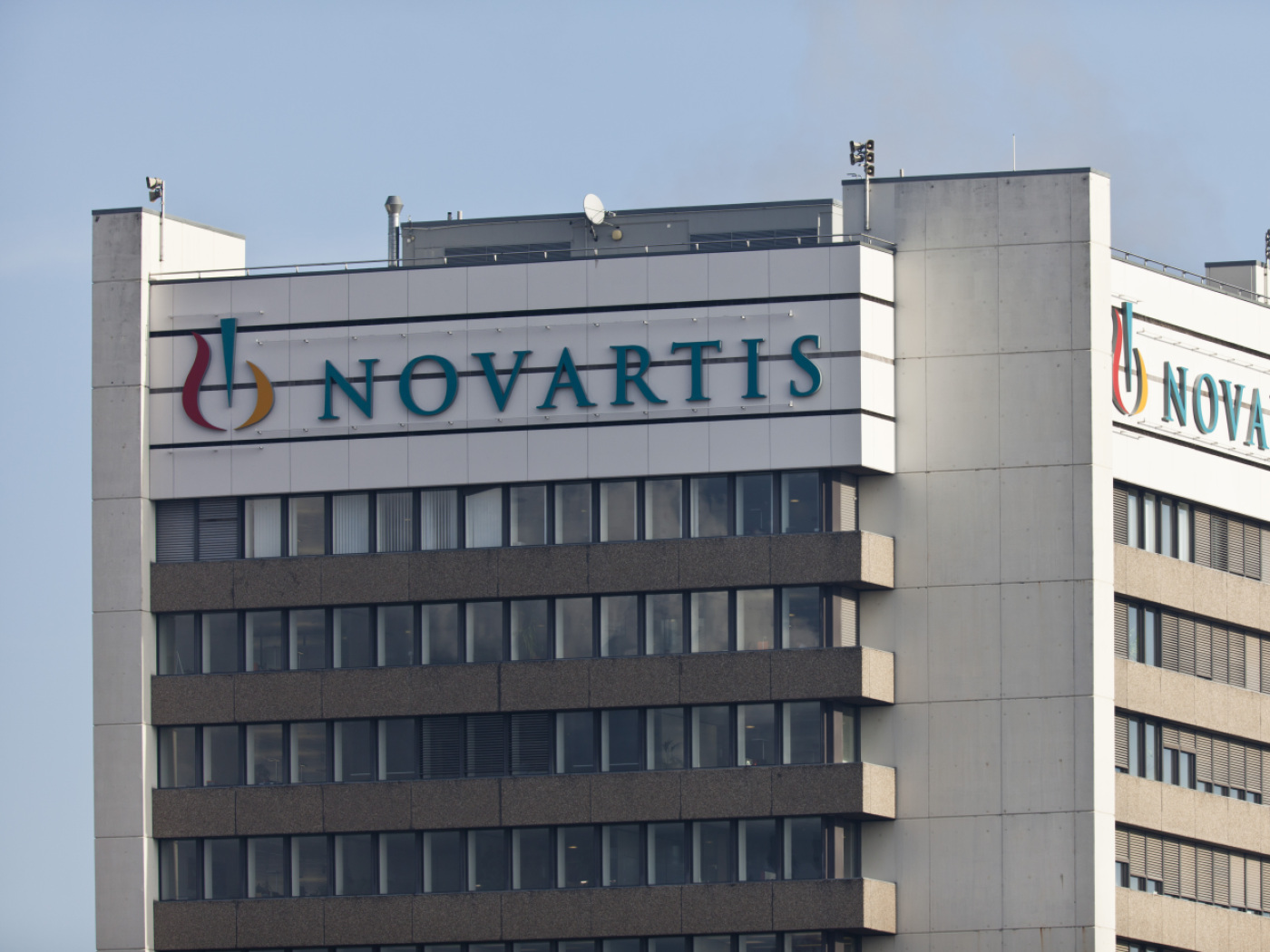
“Companies use a web of patents to buy more time,” he told Swissinfo. “Once they get into litigation, they use those patents to eke out an extra four or five years because every day in this business is worth millions of dollars.” Novartis saw revenue from its heart failure blockbuster Entresto fall by 42% to $1.31 billion in the first quarter of this year, after US patents expired and generics came on the market.
More
Novartis feels heat from copycat drugs
Generics and biosimilars can bring down prices dramatically. At least six copycats of Roche’s breast cancer drug Herceptin (trastuzumab) have entered the market since 2019, causing the sales price to drop by 76%, US healthcare services company Cardinal HealthExternal link found.
There are now drugs with hundreds, and in the case of Keytruda, even thousands of patents. I-MAK foundExternal link that on average, there are 143 patents filed and 69 patents granted on the 12 best-selling drugs in the US, with 56% after FDA approval.
US company AbbVie securedExternal link over 100 additional patents on its blockbuster drug Humira (adalimumab) for autoimmune diseases. Litigation and settlement agreements with biosimilar makers delayedExternal link cheaper copies from launching in the US until 2023, despite the original patent expiring in 2016.
Many companies strike “pay to delay” deals to protect revenue a bit longer. Last week US firm Pfizer reached settlementsExternal link with three generic drugmakers, delaying the entry of off-patent competitors to its blockbuster heart disease drug Vyndamax from 2029 until mid-2031.
A US-made problem with global impact
The problem is much worse in the US than in Europe because it is easier to file continuous patents that create patent thickets, which are complicated, overlapping systems of patents on one drug.
Last year, Swiss generics maker Sandoz filed an antitrust lawsuit in the US against drug company Amgen over its blockbuster Enbrel (etanercept), launched in 1998. The suit contends that Amgen extended its market exclusivity for Enbrel by “unlawfully purchasing and using certain patent rights to entrench its position in the market”.
Sandoz said these patents are delaying competition from alternatives, including its own biosimilar Erelzi (etanercept-szzs), which was approved in the US in 2016 and launched in Europe in 2017. Sandoz has been blocked from launching its biosimilar in the US due to Amgen’s patents, which extend into 2029.
“You see time and time again, but even more so now, patent abuse and patent thickets. [Originators] are using every game, every trick in the book to block competition,” Richard Saynor, CEO of Sandoz, told an audience at the Financial Times Global Pharma Summit last November. “I’m all for true innovation, but not lazy innovation.”
Several biosimilars of Enbrel are approved and available at much lower prices in Europe. “If the US curbed patent abuse practices at home, thereby lowering prices sooner, this would change the current narrative that Europeans aren’t paying their share of innovation,” said Amin.

More
Drugmakers reassess Europe as Trump overhauls drug-pricing rules
There have been some efforts to crack down on patent abuse. In an executive order signed last April, Trump called for a report on “anti-competitive behaviour” by pharmaceutical manufacturers. US lawmakers also introduced the ETHIC Act to eliminate patent thickets. US Senator Bernie Sanders has also proposedExternal link allowing competition if prices for new drugs are too high. But progress on these initiatives has been slow and there is little pressure from other countries.
Swiss industriesExternal link that make intensive use of intellectual property, such as pharma, account for a good 60% of Switzerland’s gross domestic product, which gives it little incentive to push hard for changes in the US. Switzerland has called for stronger intellectual property protection for pharma to be included in trade agreements with countries like the United KingdomExternal link and India.
There is good reason for strong intellectual property protection in the pharma industry – companies invest billions to discover and develop a new drug, and this deserves to be rewarded. But at what point does it go too far?
Edited by Virginie Mangin/gw

In compliance with the JTI standards
More: SWI swissinfo.ch certified by the Journalism Trust Initiative

You can find an overview of ongoing debates with our journalists here . Please join us!
If you want to start a conversation about a topic raised in this article or want to report factual errors, email us at english@swissinfo.ch.