








Swiss glaciers have already used up their winter reserves

Swiss glaciers are set to exhaust their winter reserves within days – an unusually early milestone driven not only by the current heatwave but also by months of unfavourable conditions.
Select your language
Generated with artificial intelligence.
Listening:
Swiss glaciers have already used up their winter reserves
The heat is being felt even at high altitudes. By the end of June, Switzerland is expected to reach the so‑called “glacier loss day” – the point at which glaciers have lost all the snow and ice accumulated over the winter.
According to calculations by a glacier research group at the federal technology institute ETH Zurich, this would mark the second-earliest such date on record.
“According to our calculations and forecasts, glacier loss day this year will fall on June 29,” said glaciologist Matthias Huss.
By then, Swiss glaciers will have already lost all the volume accumulated over the winter. While the exact date may still shift slightly, the overall trend is clear, Huss notes.
External Content
The heat wave eating away the snow on the Alps' biggest glacier…
— Matthias Huss (@matthias_huss) June 23, 2026External link
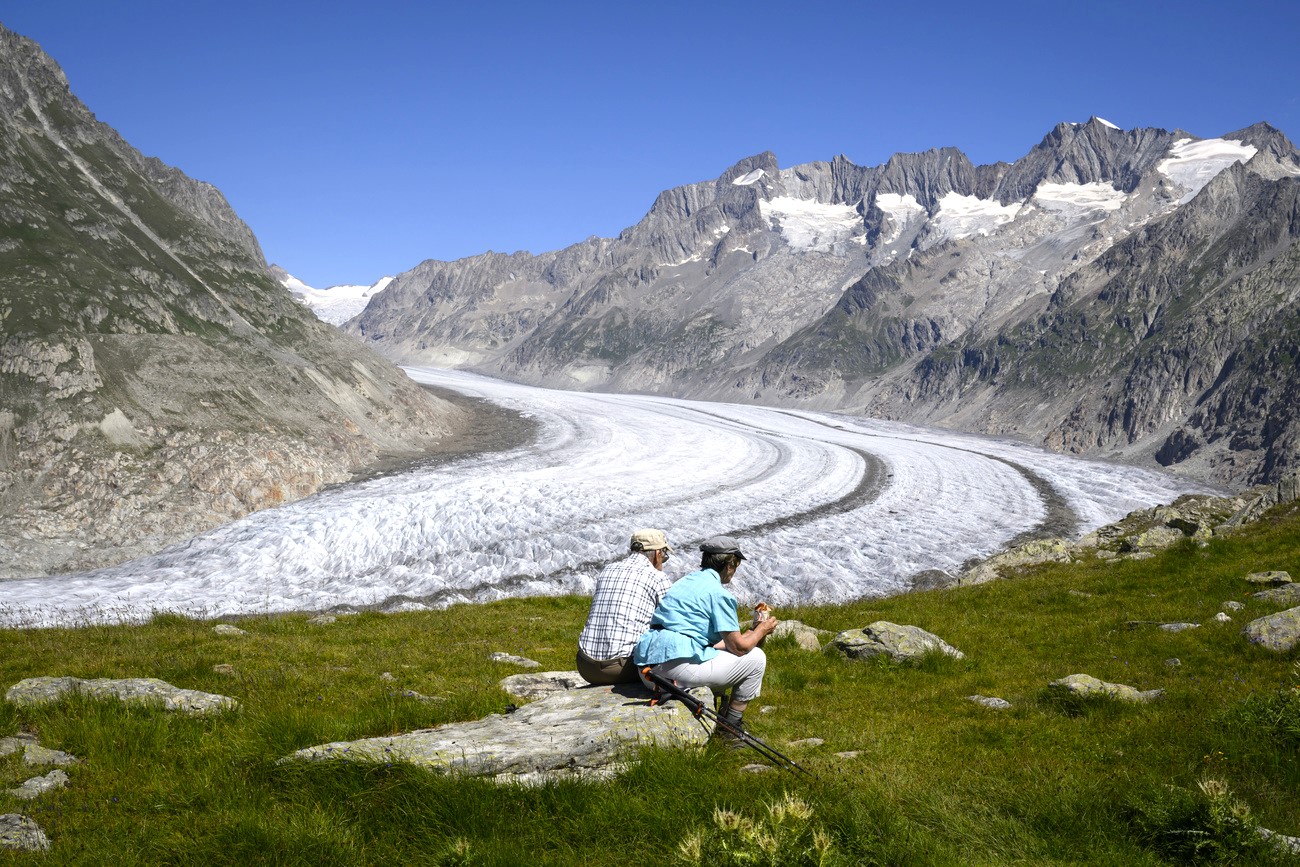
Within just two weeks Konkordiaplatz on Great Aletschgletscher has gone from snow-covered to bare ice. Not absolutely exceptional. It's the timing that is worrying: This should occur 1-2 months later in the season pic.twitter.com/QOGVeRPfafExternal link
No new record
“The situation is truly exceptional. Only in 2022 – when all glacier melt records were broken – did this day come earlier. Otherwise, this ranks second,” he said.
External Content
Typically, glacier loss day does not occur until August. This year, however, the ongoing heatwave is rapidly depleting the remaining winter reserves.
Huss and his team estimate that meltwater from Swiss glaciers is currently flowing at a rate equivalent to filling an Olympic-sized swimming pool every six seconds
More
The international consequences of a glacier-free Switzerland
However, the fact that Swiss glaciers are already at a critical point is not solely down to the recent high temperatures.
“We’ve once again had a winter with too little snow, leaving glaciers with a weak protective layer,” Huss said.
In addition, summer-like heat arrived very early. “We saw the first heatwaves with temperatures of 30°C in the lowlands as early as May,” he said, followed by the current spell of sustained and unusually intense heat.
“All the high temperatures we are very likely to experience in July and August will lead directly to long-term glacier loss. We will certainly lose a large amount of ice this year,” said Huss.
Translated from German, sub-edited by sb

In compliance with the JTI standards
More: SWI swissinfo.ch certified by the Journalism Trust Initiative

You can find an overview of ongoing debates with our journalists here . Please join us!
If you want to start a conversation about a topic raised in this article or want to report factual errors, email us at english@swissinfo.ch.