








UN Commission of Inquiry concludes genocide is taking place in Gaza

A report by the UN Commission of Inquiry on the Occupied Palestinian Territory concludes that genocide is ongoing in Gaza. Its authors point to the responsibility of Israeli leaders and call on states to act. Its publication has drawn little reaction in Europe.
Select your language
Generated with artificial intelligence.
Listening:
UN Commission of Inquiry concludes genocide is taking place in Gaza

Presenting the findings of the latest report in Geneva on Tuesday, Navi Pillay, Chair of the UN Commission of Inquiry on the Occupied Palestinian Territory, did not prolong the suspense: “The Commission concluded that Israel has committed genocide against the Palestinian people in Gaza and that it continues to commit this genocide,” she told reporters.
In their detailed 72-page reportExternal link, the result of two years of investigation, the three members of the Commission conclude that the “Israeli authorities and the country’s security forces” have committed, and continue to commit, four of the five acts of genocide defined in the 1948 Genocide Convention against Palestinians in the Gaza Strip.
These acts are: killing members of the group, causing them serious bodily or mental harm, deliberately inflicting living conditions intended to bring about the group’s physical destruction in whole or in part, and imposing measures intended to prevent births within the group.
‘An important report’
“This is an important report,” says Vincent Chetail, Professor of International Law at the Geneva Graduate Institute. “It is a thorough, factual inquiry which, unlike previous reports from NGOs such as Amnesty International and Human Rights Watch, comes from an official commission mandated by the UN Human Rights Council.”
Pillay, former UN High Commissioner for Human Rights, together with the Commission’s two other members, jurists Miloon Kothari and Chris Sidoti, had already documented crimes against humanity and war crimes in the Palestinian enclave. But they had never before investigated the crime of genocide.
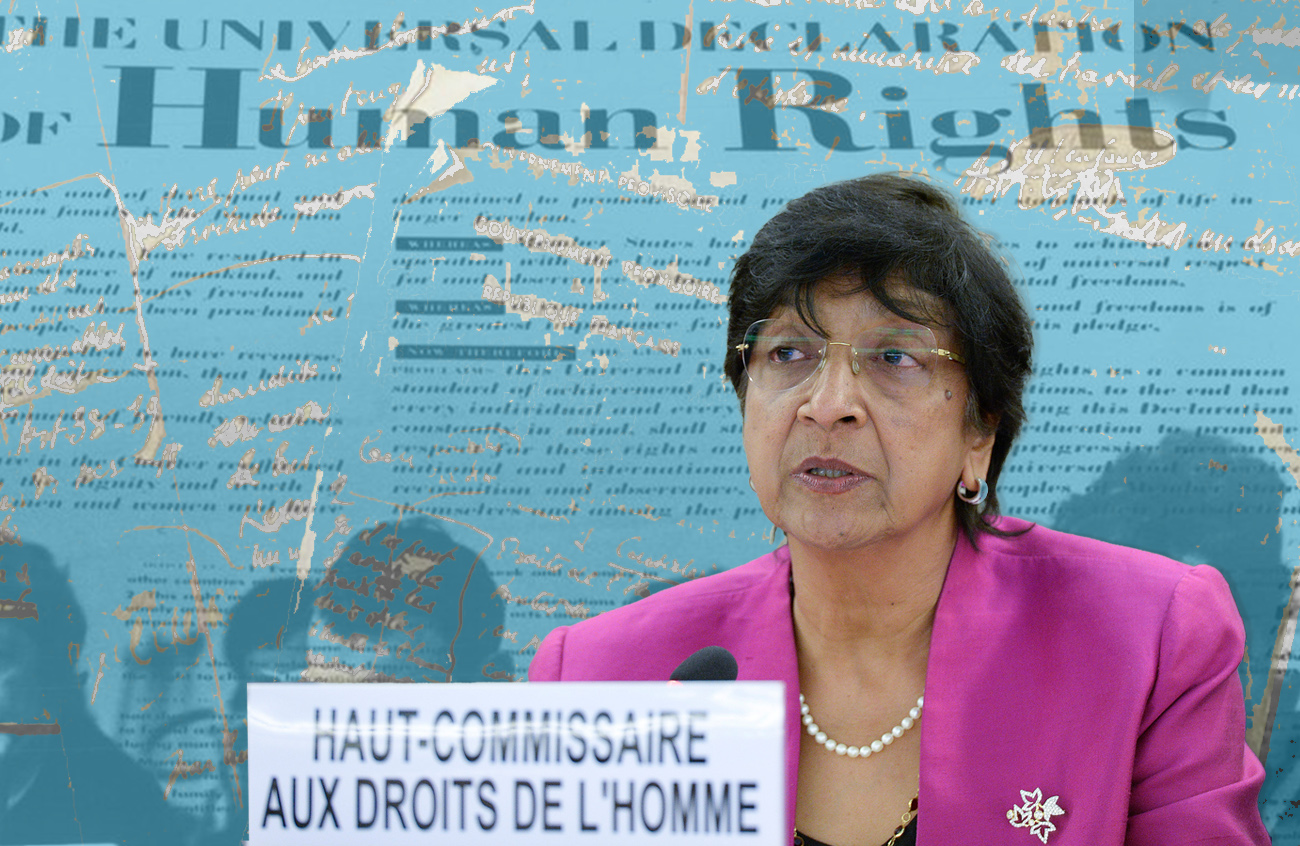
>> In 2023, on the 75th anniversary of the Universal Declaration of Human Rights, we published a profile of Navi Pillay, retracing her long career in defence of human rights. Read it here:
More
Navi Pillay: an intrepid fighter for rights and equality
In recent months, other independent UN experts – including the Special Rapporteur on the Occupied Palestinian Territory, Francesca Albanese – have also concluded that genocide is underway in Gaza. Several countries, including Qatar, Brazil and Namibia, have likewise raised the issue.
On the key element of genocidal intent – the hardest aspect of the crime of genocide to prove – Navi Pillay explained that the Commission drew its conclusions from “statements made” by Israeli authorities as well as the “pattern of conduct” of the country’s armed forces.
Israel rejects all allegations of genocide and invokes self-defence against Hamas following the October 7, 2023 terror attacks.
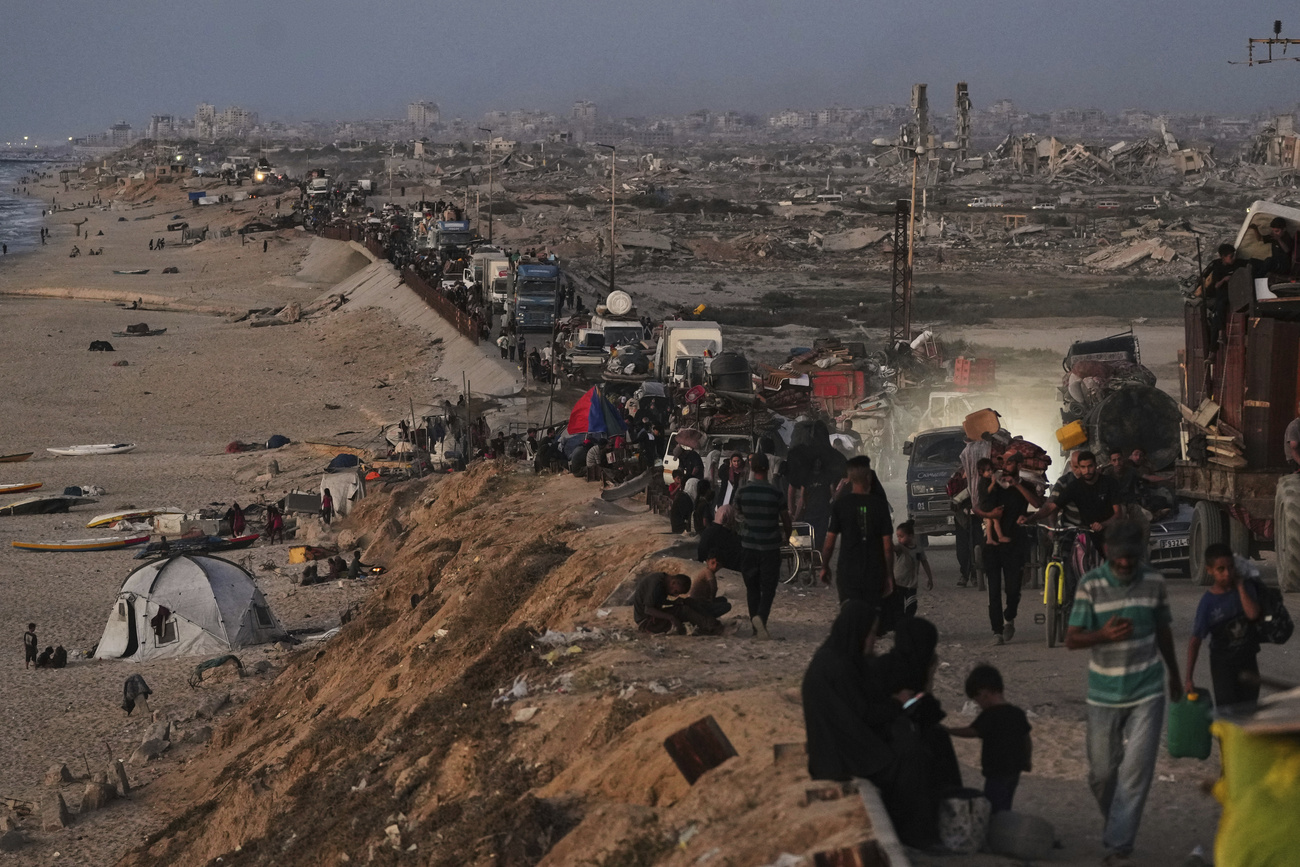
Since the start of the war, more than 62,000 Palestinians, including 18,000 children, have been killed, according to figures cited by the UN. Nearly two million people have been displaced. While famine has been declared in northern Gaza, humanitarian aid continues to trickle in.
Israeli leaders named
In their report, the investigators accuse Israel’s President Isaac Herzog, Prime Minister Benjamin Netanyahu, and former Defence Minister Yoav Gallant of having “incited” the commission of genocide. Gallant has said that Israel was “fighting human animals.”
The International Criminal Court (ICC) has issued arrest warrants for Benjamin Netanyahu and Yoav Gallant for war crimes and crimes against humanity. The Commission of Inquiry urges the ICC Prosecutor to also investigate the acts of genocide described in the report.
State responsibility
“If the law is applied and states draw the consequences from this report, various measures should follow, including an arms embargo and diplomatic action to end the massacre,” says Chetail of the Geneva Graduate Institute. He nonetheless underlines the gap between respect for international law and political interests.
So far, the report has not triggered a wave of reactions in Europe. Some, including Bern, Brussels and Paris, did however denounce on Wednesday the intensification of the Israeli assault on Gaza City.
The International Court of Justice (ICJ) – the UN’s principal judicial organ – has not yet ruled on the merits of the case brought by South Africa against Israel. But European countries remain particularly reluctant to label events in Gaza as genocide before the international justice mechanism delivers its conclusions, a process that will take years.
“There is no need to wait for the International Court of Justice to declare a genocide,” added the Commission Chair, a former judge at the International Criminal Tribunal for Rwanda, urging countries to halt arms deliveries to Israel.
“It is entirely conceivable that states party to the Genocide Convention – for instance, countries of the ‘Global South’ – could turn to the ICJ to challenge the complicity of Western states, which could ultimately be required to pay reparations,” says Chetail.
The Commission members hope their report will push senior UN officials, including Secretary-General António Guterres and High Commissioner for Human Rights Volker Türk, to use the term. Neither has done so yet.
Israeli response
On Tuesday morning, Israel’s Ambassador to the UN in Geneva, Daniel Meron, had convened the press to denounce what he called a “scandalous” and “fake” report produced by investigators known for their “antisemitism.”
Pillay and Sidoti rejected that accusation, with the Australian jurist adding that he wished Israeli authorities would “address the substance of the report, but they never do.”
The three members of the Commission of Inquiry recently announced their upcoming resignation, emphasising that their decision was not linked to pressure from Israel and the United States, which have sanctioned the Special Rapporteur on the Occupied Palestinian Territory.
Edited by Virginie Mangin/livm

In compliance with the JTI standards
More: SWI swissinfo.ch certified by the Journalism Trust Initiative

You can find an overview of ongoing debates with our journalists here . Please join us!
If you want to start a conversation about a topic raised in this article or want to report factual errors, email us at english@swissinfo.ch.