








Swiss parliament votes down direct counter-proposal to neutrality initiative
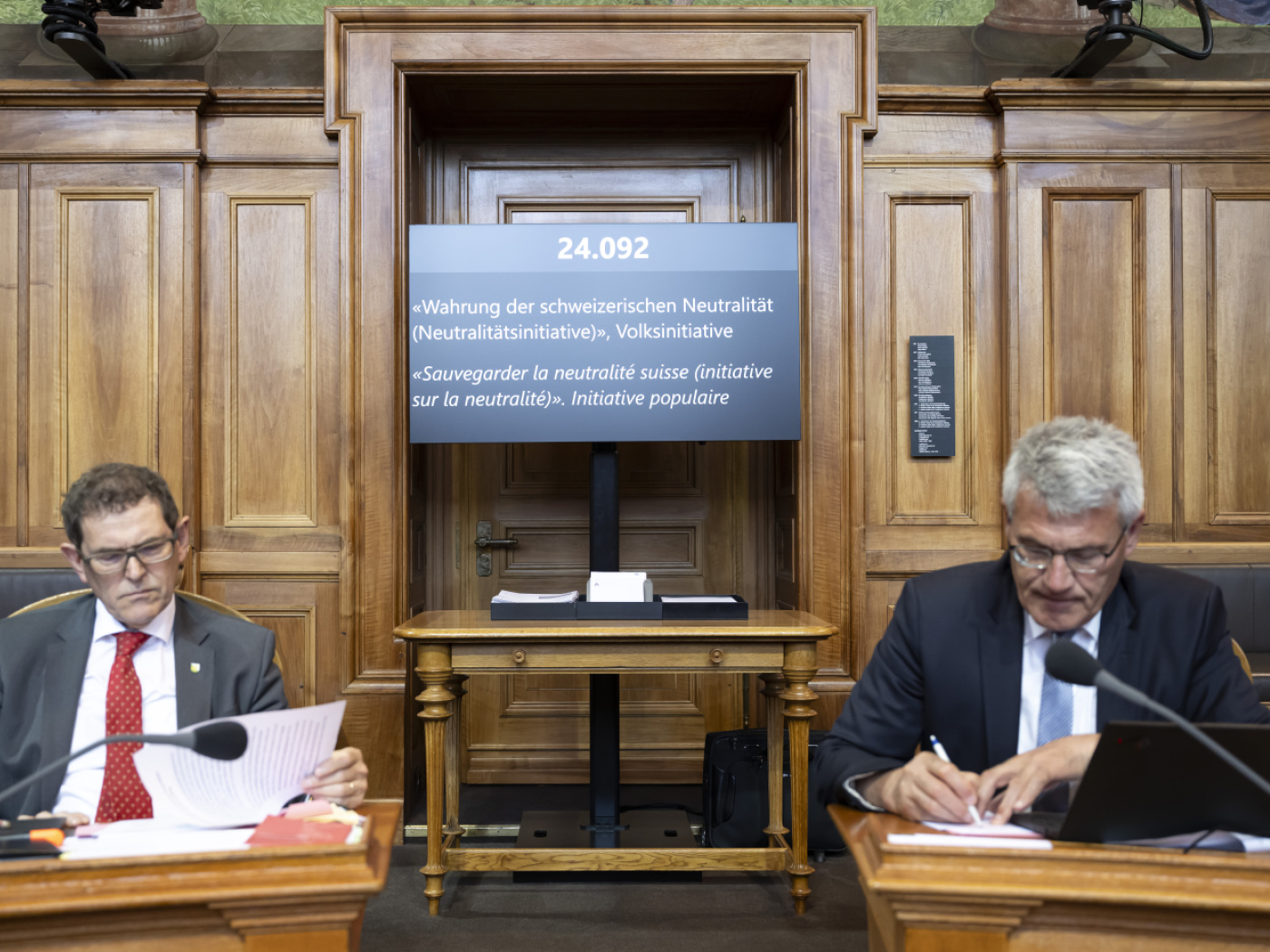
Swiss neutrality will not be defined further in the Constitution, after the two chambers of parliament accepted a proposal to turn down a direct counter-proposal to the so-called neutrality initiative.
Select your language
Generated with artificial intelligence.
Listening:
Swiss parliament votes down direct counter-proposal to neutrality initiative
+Get the most important news from Switzerland in your inbox
The popular initiative to safeguard Swiss neutrality, tabled by the association Pro Switzerland and members of the right-wing Swiss People’s Party, seeks to enshrine “perpetual and armed neutrality” in the Constitution. It also demands that Switzerland not join any military or defence alliance, nor adopt economic or diplomatic sanctions against a belligerent state under its obligations as a member of the United Nations.

More
How the neutrality initiative could affect Swiss policy
From the outset, the two chambers categorically rejected the initiative. However, the Senate had been in favour of a direct counter-proposal, thanks to the votes of the People’s Party and the Centre. It had considered it necessary to anchor current practice on neutrality in the Constitution.
In the end, however, the senators rejected the counter-proposal by 29 votes to 11 on Thursday. The House of Representatives later accepted the conciliation proposal by 126 votes to 64. It had long vetoed the counter-proposal, having decided it was superfluous to add a constitutional article when nothing would actually change.
+ How should a neutral country like Switzerland handle arms exports to conflict zones?
The decision means that parliament can now make a recommendation on how to vote on the initiative. The elected representatives, including a majority of those who had previously argued in favour of a counter-proposal, wanted to avoid not being able to make a recommendation.
Foreign Minister Ignazio Cassis was satisfied with the result on Thursday. This is the first time he is to face a popular vote as the neutrality will now go the people for a final say.
Join the debate:
External Content
Translated from French with AI/gw
We select the most relevant news for an international audience and use automatic translation tools to translate them into English. A journalist then reviews the translation for clarity and accuracy before publication.
Providing you with automatically translated news gives us the time to write more in-depth articles. The news stories we select have been written and carefully fact-checked by an external editorial team from news agencies such as Bloomberg or Keystone.
If you have any questions about how we work, write to us at english@swissinfo.ch.
External Content

In compliance with the JTI standards
More: SWI swissinfo.ch certified by the Journalism Trust Initiative

You can find an overview of ongoing debates with our journalists here . Please join us!
If you want to start a conversation about a topic raised in this article or want to report factual errors, email us at english@swissinfo.ch.